As the global memory and storage chip market encounters unprecedented price shocks, the production costs of Apple's next flagship model, iPhone 18 Pro Max, are facing tremendous pressure. According to the latest forecast data from market research firm Counterpoint, the cost structure of this top-of-the-line model has changed significantly, with NAND flash memory replacing other components and becoming the single component with the highest proportion of cost in the device.
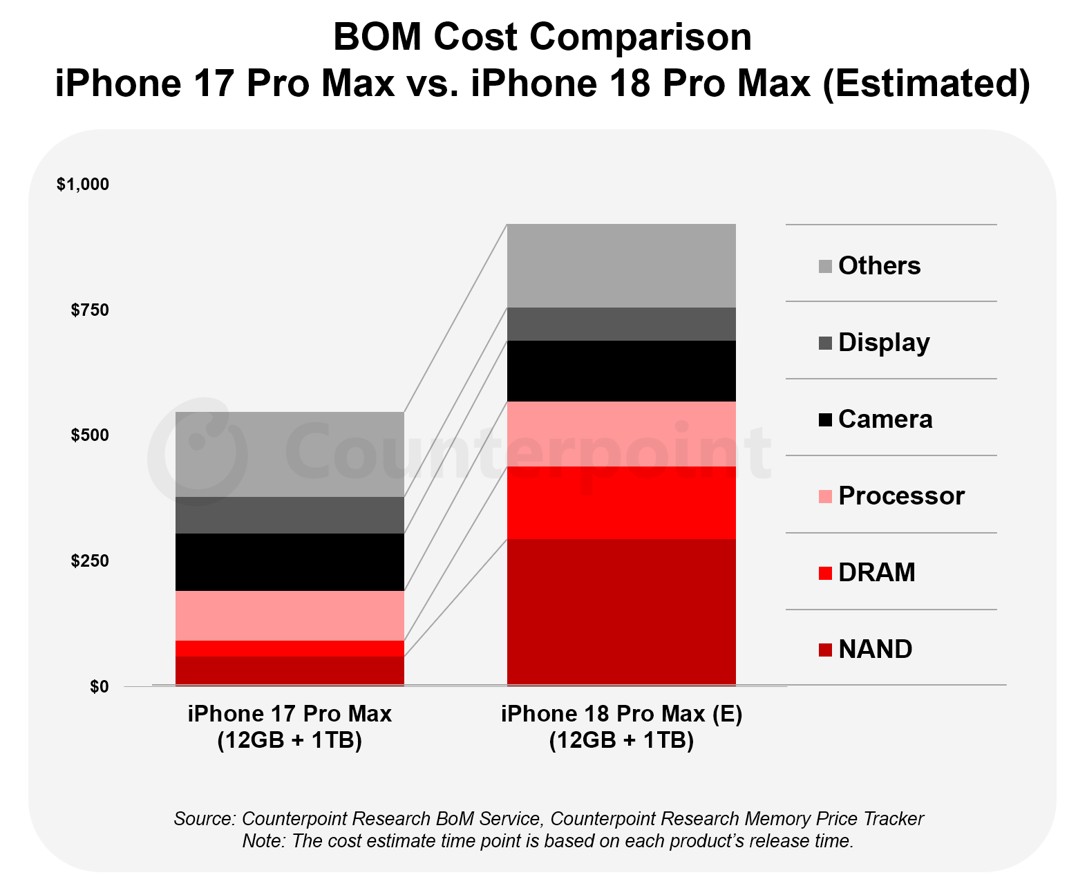
Data shows that in the bill of materials (BOM) of the iPhone 18 Pro Max (1TB version), the purchase cost of NAND flash memory alone has exceeded US$250. This single expenditure is almost equivalent to half of the overall manufacturing cost of the iPhone 17 Pro Max in the past. If the expenses of DRAM memory and NAND flash memory are combined, the total cost is as high as about US$400. For reference, the previous contract purchase price of 12GB capacity LPDDR5X memory chips on the market has remained at a high level of around US$145 per chip.
This drastic change in cost structure is in stark contrast to last year. Looking back in 2025, the combined cost of memory and flash memory will only account for about 9% of the total bill of materials for the 256GB version of the iPhone 17 Pro; but this year, this proportion has climbed to 27% for the 256GB version of the iPhone 18 Pro.
In order to cope with the huge profit pressure brought by rising costs, Apple is compensating by cutting expenditures on other components such as display panels, but it is expected that the overall BOM cost will still increase by about US$300 compared with the previous generation. Industry analysts believe that since the market retail price is only expected to increase by US$200, Apple's profit margins will be squeezed to a certain extent on this model. In addition, due to high costs, the iPhone 18 Pro series will most likely miss out on the more advanced LPDDR6 memory specifications, and will instead choose to continue to use existing memory technology solutions. Facing a market environment that Tim Cook described as "unprecedented in 40 years of business", how Apple seeks a balance between maintaining high-end premiums and controlling costs has become the focus of the industry.