The U.S. Federal Communications Commission (FCC) has officially approved a highly controversial aerospace project, allowing a California startup called Reflect Orbital to conduct orbital testing. The company plans to achieve regional lighting at night by deploying satellites carrying giant Mylar reflectors to reflect sunlight back to Earth.

It is understood that the test satellite approved this time is called "Eärendil-1". The satellite is expected to operate in a near-polar orbit about 625 kilometers from the Earth. After deployment, it will unfold a 324-square-meter aluminum Mylar reflector. The project is designed to test the ability to deploy, control and precisely maneuver mirrors in orbit, with the goal of focusing a moving beam of sunlight onto an area approximately 5 kilometers in diameter on the Earth's surface.
Reflect Orbital said the technology's core business vision is to sell "on-demand sunlight" to solar power stations to solve the problem of interruptions in power production at night. In addition, the company also proposed that the technology can be applied to multiple scenarios such as emergency response, construction, agricultural production, military operations, and outdoor large-scale events. In order to achieve large-scale application, the company plans to increase the number of satellites to thousands within ten years and looks forward to deploying as many as 50,000 satellites by 2035.
In response to the FCC's ruling, the regulatory agency pointed out that although there have been calls from the outside to prevent the project from being carried out due to the huge reflective surface it brings, the mirror itself does not fall within the scope of the FCC's regulatory authority because the agency is mainly responsible for managing the communications spectrum, and this approval only covers the operation of satellite radio equipment.
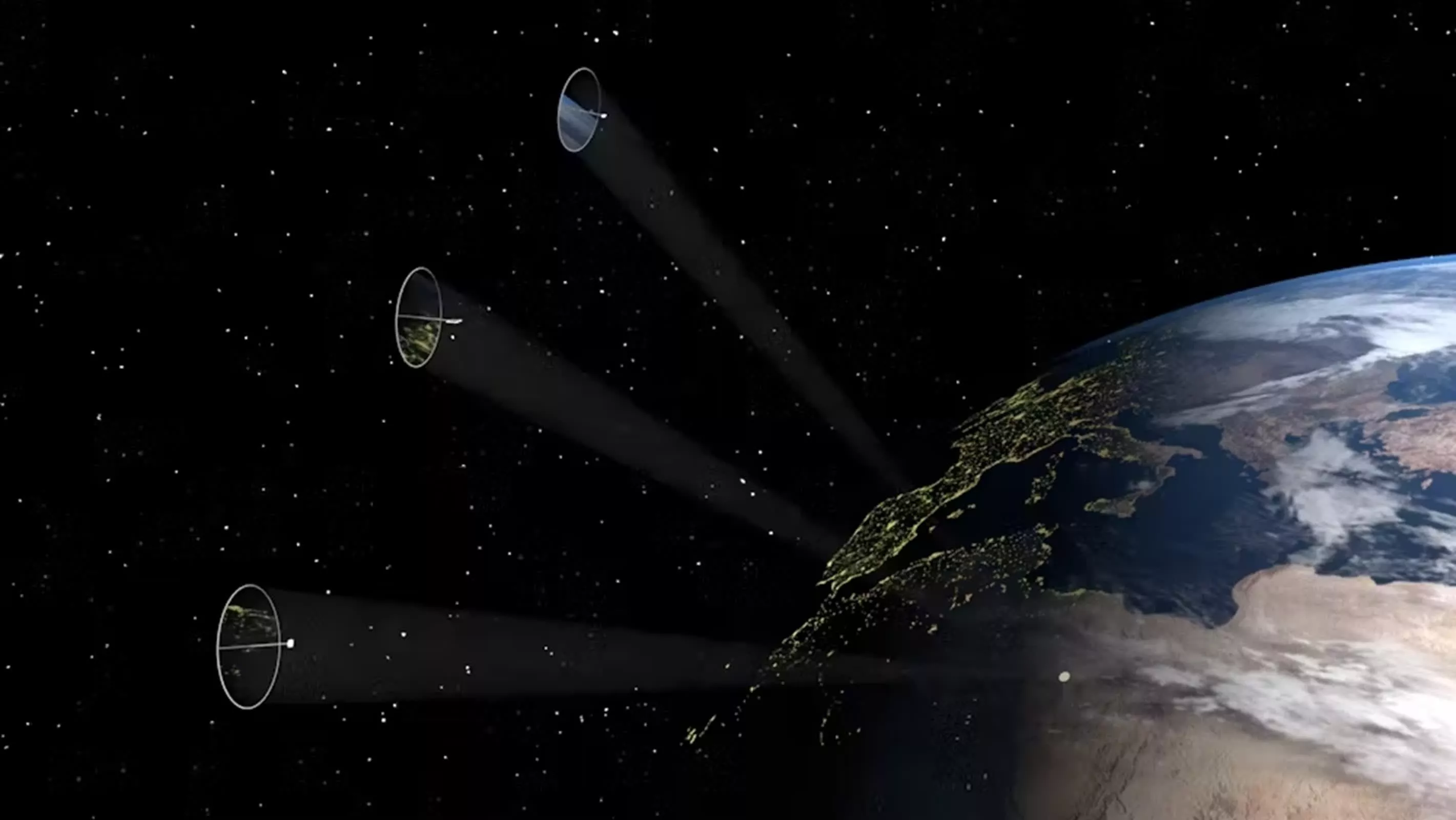
The plan has aroused great alarm in the astronomical community. The European Southern Observatory warned that these giant reflecting satellites may become the brightest man-made objects in orbit, which will not only interfere with the observations of ground telescopes and leave bright trails on astronomical images, but will also increase the brightness of the night sky and make it more difficult to observe faint celestial objects. In addition, ethical issues such as nighttime ecological impact, human sleep quality, aviation safety, and whether private commercial institutions have the right to determine the local lighting time of the earth have also triggered widespread concerns.
In response to the above concerns, Reflect Orbital emphasized that the beam will be strictly controlled and will only be directed toward approved areas, and the reflector can avoid the earth when not in working condition. At the same time, the company promises to coordinate with the astronomical community to minimize the impact on scientific research. In addition, under regulatory requirements, the company must also ensure that the satellite is deorbited within 25 years after the mission ends to alleviate the growing problem of space debris.
For now, the authorization does not equate to approval of its massive future satellite constellation. Reflect Orbital still needs to complete the construction, launch and precise control testing of "Eärendil-1" in the subsequent stages. The relevant demonstration mission has been planned to be performed by SpaceX's Falcon 9 rocket. Historically, Russia tried a similar "Znamya" experiment in the 1990s, but was limited by technical complexity and ultimately did not achieve sustained success.