In recent years, the construction scale of artificial intelligence (AI) data centers in the United States has expanded unprecedentedly, and its location selection has accelerated its penetration into rural areas such as the Midwest. Agricultural and animal husbandry practitioners and industry organizations in many places in the United States have recently issued intensive warnings, pointing out that the large-scale construction of AI data centers is encroaching on cultivated land and competing with traditional agriculture and animal husbandry for precious power and water resources, posing severe challenges to the fragile U.S. agricultural economy.
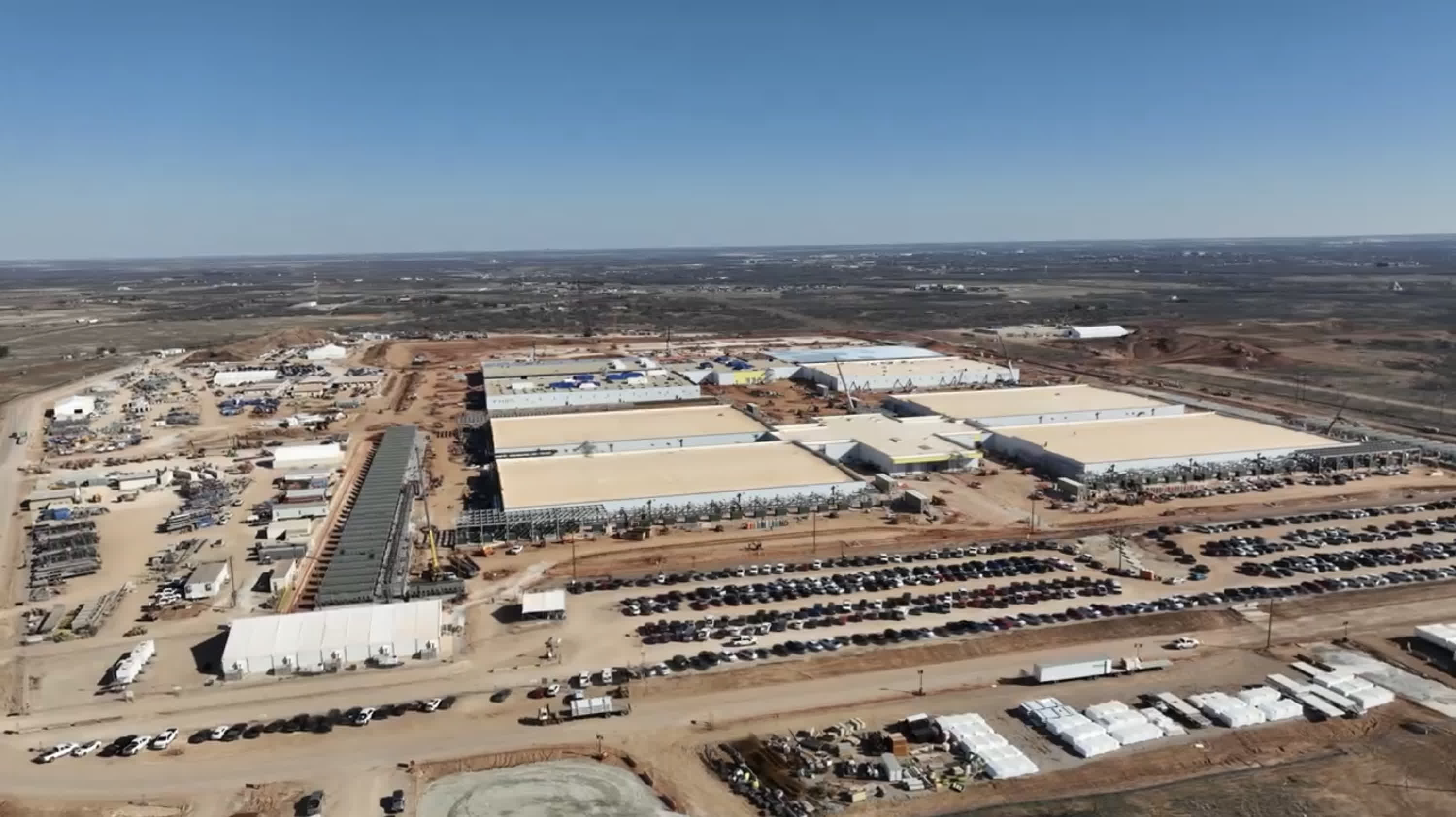
Statistics from the American Farm Bureau Federation (AFBF) show that there are currently about 5,000 data centers built or under construction in the United States. Since data center operation requires large areas of flat land and extremely high energy and cooling water consumption, this highly overlaps with the demand for natural resources for agricultural and animal husbandry production. Farmers and herdsmen in many places have reported that the power consumption of some large data centers is equivalent to that of a medium-sized city, which has led to overloading of power grids in rural areas. Philip Nelson, chairman of the Illinois Farm Bureau, pointed out that some of the best arable land in the United States is being permanently withdrawn from agricultural production due to the construction of data centers. Single projects often occupy thousands of acres of arable land, and there is a risk that once the AI market fluctuates, a large number of idle industrial ruins will not be able to resume farming.
Water resource security is the core demand of the western livestock belt. Michael McCray, a veteran Montana rancher, said local utilities are still acquiring large amounts of ranch land for potential data center development amid frequent droughts in recent years. He emphasized that the continuous water supply required to operate the data center will inevitably weaken the irrigation and livestock water security of the pastures, which may lead to a permanent decline in the state's cattle population. Currently, residents in Montana, Illinois, Michigan and other places have launched rallies and protests and went to statehouses to lobby, calling for legislation to limit or prohibit the blind expansion of data centers on agricultural land. Currently, about 20 state legislatures across the United States are considering introducing relevant restrictions.
In response to questions from the agricultural community, Dan Diorio, vice president of state policy for the Data Center Alliance (DCC), argued that data centers are not major water consumers and that their commonly used hybrid cooling systems rely on air cooling for 90% of the year and only switch to water cooling during high temperature periods. He also said that the fiscal revenue brought by the project has even contributed to the reduction or freezing of electricity rates in some areas. Regarding the issue of farmland loss, he believes that this is a purely private land property transaction.
However, agricultural experts analyze that although high land acquisition payments provide a way for executives to exit for some aging farmers and herdsmen in the United States, the disorderly expansion of data centers is exacerbating the long-term trend of loss of farmland in the United States. The latest agricultural census report from the United States Department of Agriculture (USDA) shows that between 2017 and 2022 alone, the area of cultivated land in the United States has decreased by about the size of Maine.
Jerod Gillig, head of the North American beef business of agricultural giant Cargill, made it clear in an interview that the accelerated loss of production functions of agricultural land is a signal that must be highly vigilant. It is worth noting that the current dependence of traditional agriculture on digital infrastructure in the United States is also increasing year by year. Industry insiders pointed out that how to find a balance between ensuring national food security, protecting limited natural resources and promoting the construction of digital economic infrastructure has become a structural contradiction that needs to be resolved urgently between local governments and industries in the United States.