In the field of semiconductor research and development, Apple has recently been exposed to its important layout in chip architecture. According to the latest reports, Apple plans to skip the release of the M6 Ultra chip and instead focus on the development of the M7 series of chips expected to be launched in 2027, including the M7 Ultra, a high-performance chip designed to serve workstation-level devices.
It is reported that this new chip will achieve a significant performance jump in memory specifications, and may help the Apple ecosystem locally run large AI models with trillions of parameters.
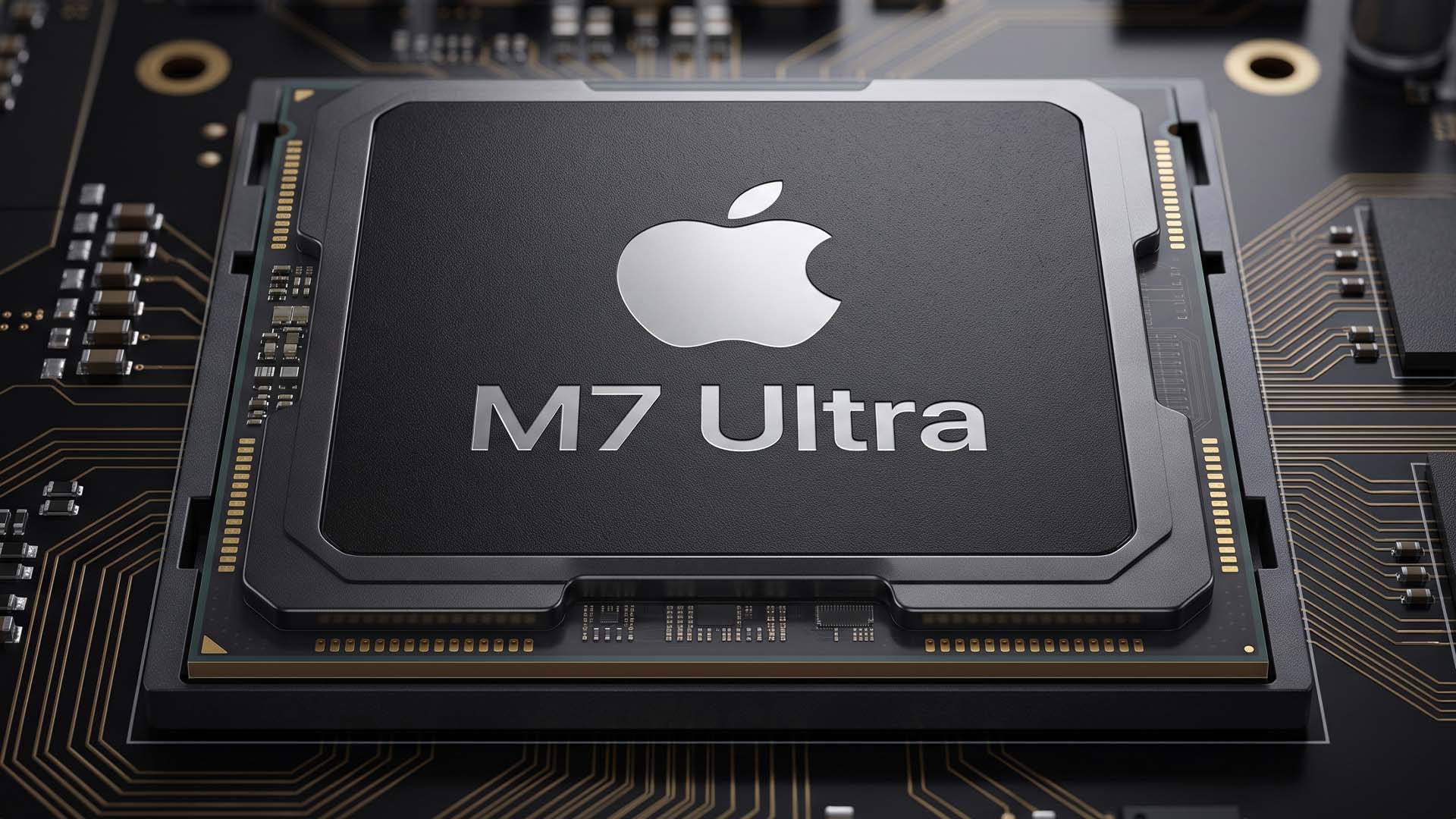
According to relevant predictions, the unified memory capacity of the M7 Ultra chip will reach an astonishing 1.5TB, which is twice the previously expected M5 Ultra chip. In the realization of artificial intelligence processing capabilities, CPU running speed is closely related to memory capacity and bandwidth, and memory is the bottleneck that determines processing performance. Currently, Apple's M3 Ultra chip bandwidth has reached 819GB/s, and analysts expect the M7 Ultra's memory bandwidth to exceed the 1TB/s mark, thus comprehensively improving its ability to handle high-load computing tasks.
Although the hardware performance is promising, the industry also pointed out that the plan faces certain practical challenges. Affected by the global supply shortage of memory chips, the difficulty and cost of obtaining high-performance storage components have increased, which may affect Apple's final decision to configure 1.5TB of memory on the product. Considering that the current starting price of Mac Studio equipped with M3 Ultra chip has reached a high level, the top-level workstation product equipped with M7 Ultra is expected to be priced at approximately US$20,000.
In terms of practical application scenarios, the potential of hardware upgrades has initially emerged. Currently, the M3 Ultra chip equipped with 512GB of memory is able to run DeepSeek's R1 artificial intelligence model with a parameter scale of 671 billion. Based on this technological progress, the industry predicts that as the memory capacity of the M7 Ultra chip doubles, it will be possible to run 1.2 trillion parameter-level models locally on the chip in the future, which will open up a new situation for AI computing power applications in professional fields. In addition, Apple is currently actively testing DRAM suppliers including China Yangtze Memory (CXMT), aiming to alleviate hardware supply pressure and reduce potential cost fluctuations through diversified supply chain layout.