As an unprecedented heat wave sweeps across the UK and continental Europe, high temperatures not only bring challenges to people's daily lives, but also cause many electronic devices to frequently suffer from "heatstroke" and overheating. In order to cool down their hot mobile phones, some British people choose to put them directly into the refrigerator or freezer. However, this approach not only failed to solve the problem, but also caused equipment repair shops everywhere to usher in a peak business.
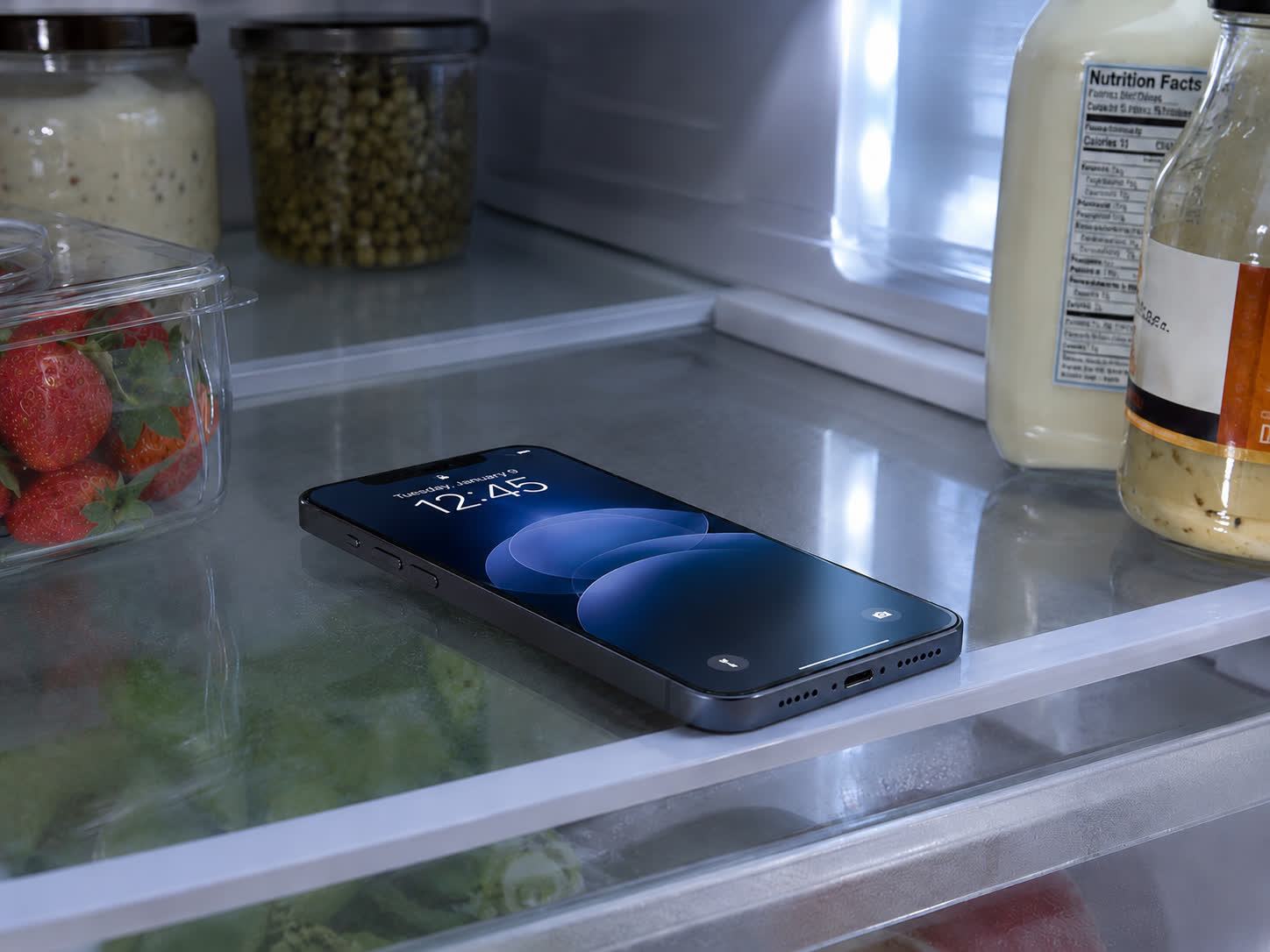
Jamie Farnell, the owner of an electronics repair shop in Wemtown, UK, said in an interview with the media that his shop has recently been filled with equipment damaged due to internal moisture. He noted that this was due to people mistakenly putting their phones and tablets in the refrigerator as temperatures soared. What's even more thrilling is that during last month's extreme heat, an iPad with a swollen battery exploded after being delivered to the store by a customer.
For many users, when a device pops up an overheating warning or becomes visibly hot, putting it in the refrigerator seems like a natural first aid. The practice has become more common, especially as short videos on social media have recently begun to promote it as a "smart and easy" hack.
But in reality, this comes with a high risk of damage, the biggest culprit being condensation. When a warm device enters the refrigerator, the hot, moist air trapped in or around the phone quickly cools it. Once the temperature drops below the dew point, water vapor will condense into water droplets on the surface of the phone, the connector, the speaker opening, and even inside the case. And when the cooled mobile phone is taken out, the risk will be further exacerbated - warm indoor air contacts the cold device and will produce condensation moisture again, just like the wall of a cold drink cup that has just been taken out will be covered with water droplets.
Once moisture is generated inside the equipment, it can easily lead to component corrosion and circuit short circuit. In addition, severe temperature changes can also cause thermal shock, causing physical stress damage to screens, glass panels, waterproof seals, adhesives, and internal precision components. Extreme low temperatures can also directly cause irreversible damage to lithium batteries.
Fannell noted that this practice is reminiscent of another popular tech myth: burying a water-logged phone in dry rice to absorb the water. It turns out that rice cannot effectively suck out the liquid inside the sealed space. Instead, the dust and starch on the surface of the rice can easily enter the device interface and speakers, causing more failures.
Although putting the phone in the refrigerator does physically lower the temperature, it brings a very high probability of damage. Regarding the problem of device overheating, mainstream manufacturers such as Apple and Samsung have given clear advice: Never put your phone in the refrigerator or freezer. The correct method is to stop using it, place it in a cool, dark environment, and wait for it to cool down naturally.