The U.S. Marine Corps recently selected Allen Control Systems' Bullfrog M240 robotic weapon station to integrate it into the "Light Naval Air Defense Integrated System" (L-MADIS). The initial prototype contract is worth $6.2 million. Although the platform is nominally focused on anti-UAVs, its actual performance and demonstration images have raised concerns about the boundaries of artificial intelligence application in the military field.
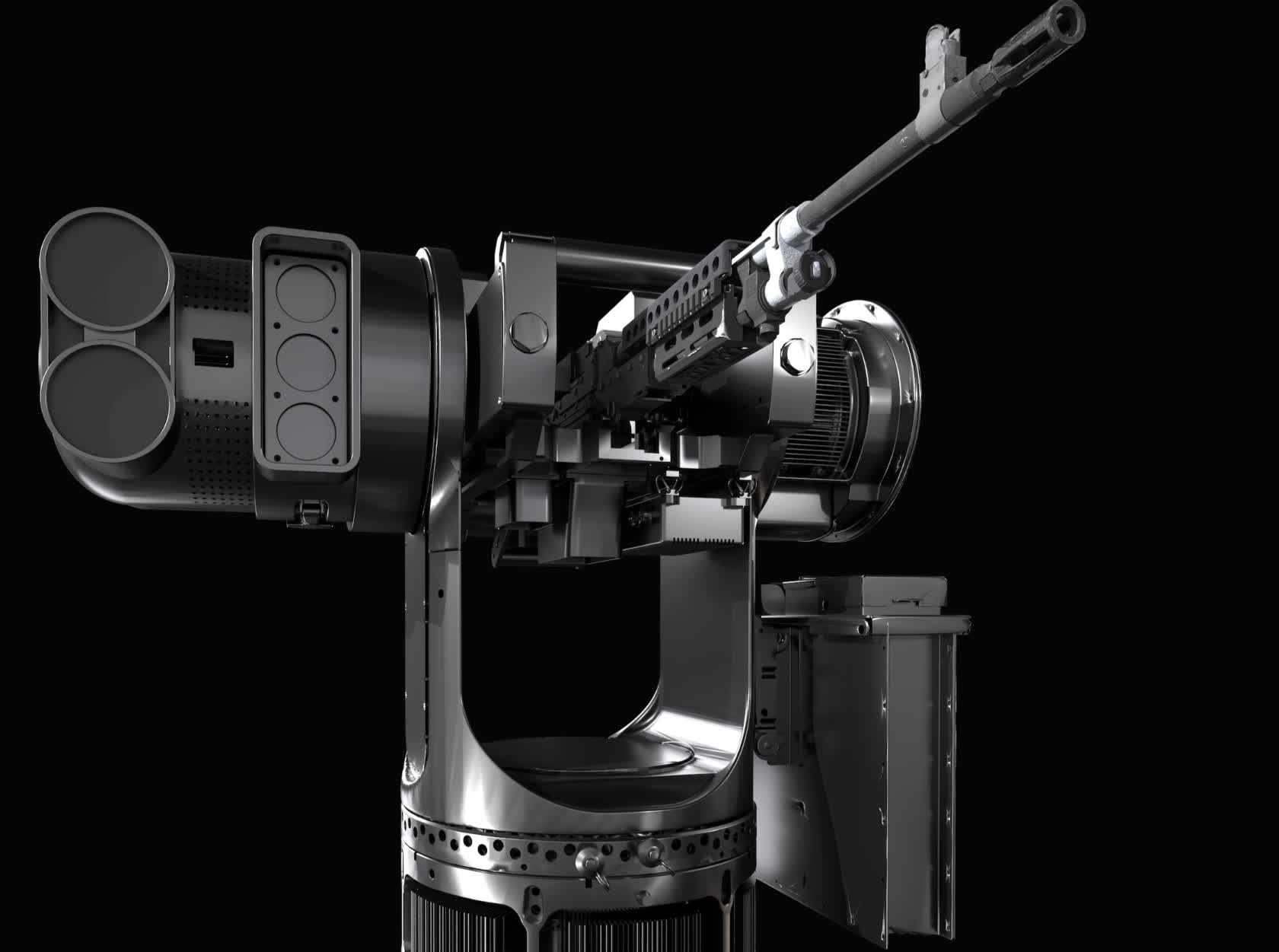
The Bullfrog system combines artificial intelligence, computer vision and precision robotics and is equipped with an M240 7.62mm machine gun. The platform, which weighs approximately 300 pounds, is capable of autonomously detecting, identifying, tracking and locking onto targets, then presenting them to an operator for approval to fire. While the developers stress that the final firing order must come from a human, nearly every other link in the "kill chain" is handled solely by the software, meaning human oversight is compressed into a single decision made under pressure based on the judgment of the AI.
In a demonstration video released by Allen Control Systems, the weapon system is able to switch seamlessly from air targets to ground targets, and there does not appear to be a restriction at the software level that prevents it from identifying humans as targets. This version of the M240 machine gun has a rate of fire of up to 850 rounds per minute, an effective range of 800 meters, and can deal with the first to third types of drones.
The Marine Corps is interested in the system primarily because it can be installed directly on existing military platforms, thereby solving the cost imbalance of using missiles worth hundreds of thousands of dollars to destroy cheap drones. The company claims that the cost per kill using the system can be as low as $10. Previously, the U.S. Army and Navy had begun deploying the Bullfrog system, and its other variants also support the M2 heavy machine gun, M230 chain gun and M134 mini machine gun. The Marine Corps plans to install it on a mobile anti-drone platform based on two Polaris MRZR all-terrain vehicles.
Pentagon policy requires that autonomous and semi-autonomous weapons must allow commanders and operators to exercise appropriate human judgment over force. While the Bullfrog system meets this criterion because a human authorizes every shot, with AI responsible for selecting, tracking, and recommending targets, that final button click loses substance. Although the machine is not yet fully capable of making the decision to take another person's life on its own, it once again shows that military artificial intelligence is getting closer to the tipping point where machines can autonomously make life-and-death decisions.