During the recent Asia-Pacific Economic Cooperation (APEC) Digital Week held in Chengdu, China, 21 APEC member economies, including China and the United States, jointly issued the "Chengdu Statement" on artificial intelligence. The statement clearly states that all parties will support the development and application of open source artificial intelligence on the basis of adhering to security, data protection and intellectual property rights, and particularly emphasizes that supported models and projects must have "strong security guarantees" throughout the entire development and deployment process.
The signing of this statement marks a key step in the Asia-Pacific region's artificial intelligence governance and technology route selection. Unlike some European and American technology giants that rely on closed payment models, open source models such as DeepSeek and GLM 5.2 launched by Chinese companies can be downloaded and used for free by global users, promoting the rapid rise of the open source ecosystem in the region. Expert analysis pointed out that the clear consensus reached by APEC members on open source ecology and computing infrastructure shows that the Asia-Pacific region is gradually transitioning to an open source system and is trying to effectively integrate it with national-level energy, telecommunications and digital infrastructure.
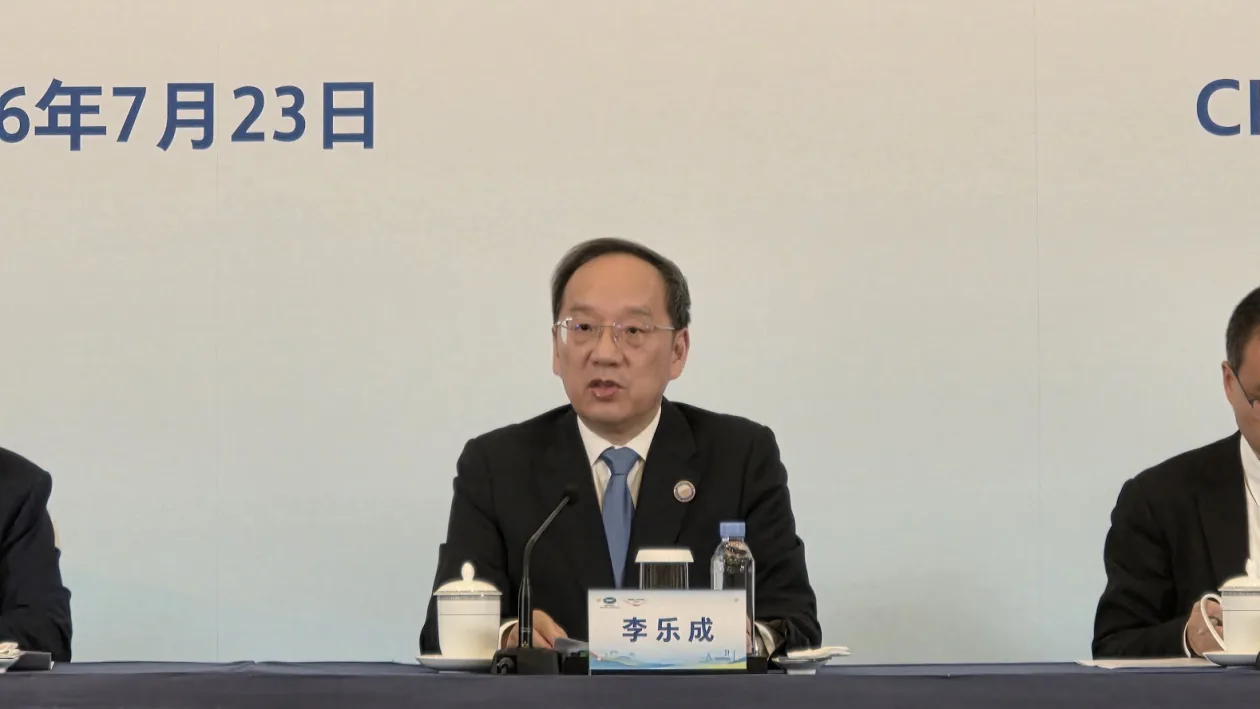
As the chairman of this leadership meeting, Li Lecheng, Minister of Industry and Information Technology of China, said that the "Chengdu Statement" is the first time that open source artificial intelligence cooperation has been included in the consensus of all parties at the ministerial level. He pointed out that all parties participating in the meeting were deeply aware of the potential risks brought by artificial intelligence, and unanimously encouraged the government, private sector and academia to conduct cross-disciplinary dialogue and strengthen information sharing on topics such as cybersecurity, supply chain resilience and preventing online fraud.
Wei Sun, chief analyst of the research institution Counterpoint Research, commented that it is of great significance to promote the recognition of "credible open source artificial intelligence" by 21 economies, including China and the United States. The "strong security assurances" mentioned in the statement reserve policy space for economies that attach great importance to security considerations to continue to support the development of open source models while requiring rigorous testing, transparency, data protection and deployment control. This shows that the focus of the global discussion on artificial intelligence is shifting - no longer limited to the debate between "open source and closed", but to "who can build a deployment ecosystem that is both open and worthy of the trust of governments and enterprises."
In addition to the topic of artificial intelligence, Janet De Silva, chair of the Digital and Innovation Working Group of the APEC Business Advisory Council, also called on ministers to prepare for the arrival of the quantum computing era during the meeting. She emphasized that all parties urgently need to build a credible encryption technology system to ensure the security of the entire financial system, thereby turning the potential risks brought by quantum computing into important opportunities to enhance regional competitiveness.