A kind of discarded plastic bottles, plastic bags and car parts that could only be thrown into landfills or incinerated can now be directly converted into clean hydrogen energy.In modern society, the disposal of waste plastics has always been a thorny problem. Since the existing recycling system usually requires precise sorting of different types of plastics, which is time-consuming, laborious and costly, only 9% of the world's waste plastics are recycled. The high sorting cost has become the core bottleneck restricting plastic recycling.
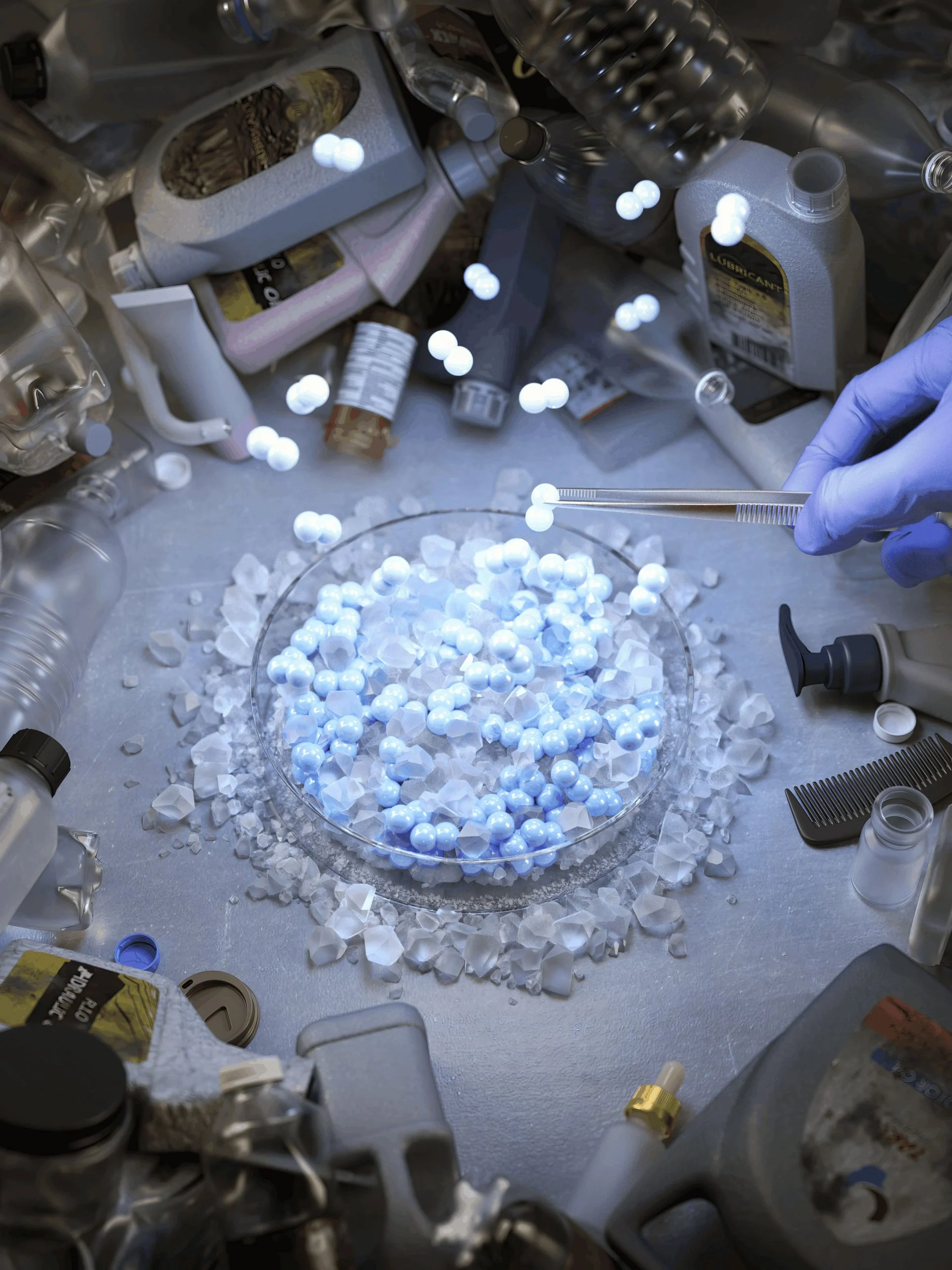
A joint research team from the Samueli School of Engineering at the University of California, Los Angeles, and Ewha Womans University in South Korea recently published a breakthrough study in the authoritative academic journal "Proceedings of the National Academy of Sciences." They demonstrated a new chemical process that can directly convert the three most common mixed waste plastics, polyvinyl alcohol (PET), polyethylene (PE) and polypropylene (PP), into high-purity hydrogen fuel with a purity of more than 90% without pre-sorting.
The core of this technology lies in the alkaline heat treatment (ATT) process. The researchers produced hydrogen gas by heating sodium hydroxide to react with organic matter. Compared with traditional steam gasification technology, this method not only significantly reduces the operating temperature by 300 to 400 degrees Celsius, but also cleverly avoids carbon emission issues. The researchers introduced a thermal oxidation pretreatment step, which briefly heated the plastic in the air to break the stable carbon-hydrogen bonds, allowing the subsequent alkali solution to successfully attack and decompose the plastic structure.
It is worth mentioning that during the entire reaction process, the carbon produced by the reaction will be captured by sodium hydroxide in time and converted into solid sodium carbonate, which can eventually be further converted into calcium carbonate to achieve permanent carbon sequestration. Analysis shows that more than 75% of the carbon in raw plastics is stably retained in carbonates or liquid organic residues, less than 13% enters the gaseous state, and almost no carbon is emitted directly into the atmosphere as carbon dioxide.
Previous low photocatalytic or electrochemical hydrogen transfer technologies are usually only suitable for PET plastics containing oxygen elements, and cannot effectively handle PE and PP plastics that account for a very high proportion, while high gasification technologies will produce a large amount of greenhouse gases. This research result is the first to simultaneously solve the three major problems of "no sorting", "low energy consumption" and "carbon sequestration and emission reduction" in a single reactor. Although this technology still needs further optimization of performance and evaluation of economic feasibility before large-scale commercial application, it provides a new path with both creativity and expansion potential to solve global plastic pollution and promote a clean hydrogen economy.