According to a new long-term follow-up study published in the World Journal of Pediatrics, children's early exposure to screens not only affects their later academic performance, but their "age stage of exposure" also plays a key role. The researchers found that infancy (age 1) and the stage about entering school (age 6) may be two sensitive windows for the impact of screen use on children's future learning ability and working memory.
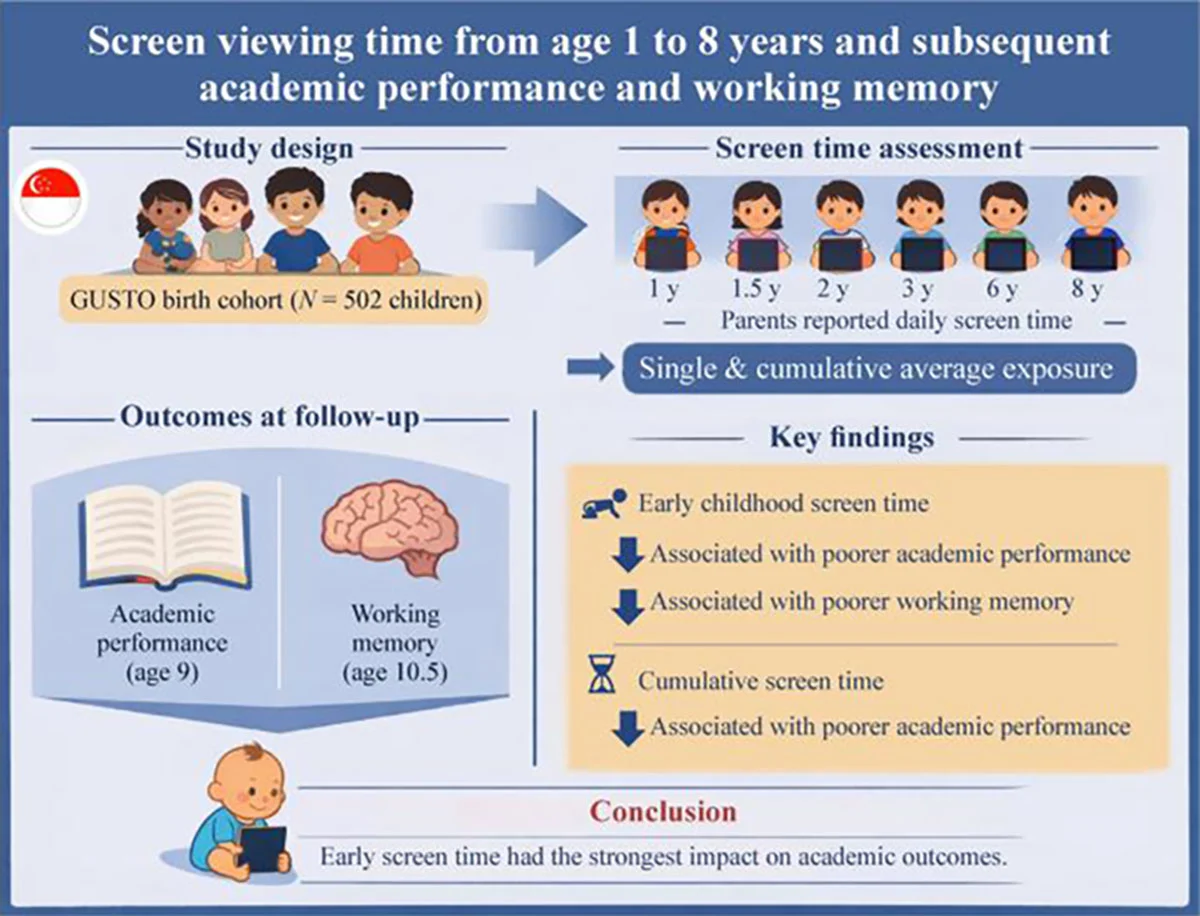
The study, conducted jointly by France's National Institute of Health and Medical Research (Inserm) and the National University of Singapore, followed 502 children in Singapore's Growth in Health Outcomes (GUSTO) birth cohort over time. The researchers recorded parent-reported screen time at six different ages, from ages 1 to 8, and then assessed academic achievement at age 9 and working memory ability at age 10.5.
The analysis showed that children who spent more screen time in early childhood performed less well overall on tests of academic performance and working memory later in life. Notably, the negative association between screen use and cognitive development was uneven across age groups—the strongest effects were observed at 1 year of age, suggesting that early infancy may be an extremely vulnerable and sensitive period for brain development, when screen time can easily substitute for real interactions that are critical for brain development.
Surprisingly, while children's screen use at ages 2 and 3 was not significantly associated with later cognitive abilities, the association reappeared at age 6, when children begin formal schooling. This suggests that the impact of screen use is not limited to infancy and early childhood, but that screen time also deserves attention at the critical transition point into school age.
The team noted that while an extra hour of screen time may not show drastic changes in every child, at a group level the small difference is enough to put more children at risk for poorer academic performance. Therefore, the researchers recommend that interventions targeting children's screen use should start as early as in infancy and be consolidated as they approach school age. They also call for future research to further explore the specific impact of factors such as the quality of screen content, type of device used, and parental accompaniment on children's development.