As Generation Z faces the challenge of artificial intelligence upending traditional career ladders, more and more Korean teenagers are skipping college and enrolling in semiconductor vocational schools, putting them on a career path to six-figure annual salaries before they even reach adulthood. These students no longer use their final years of high school to prepare for college entrance exams. In addition to studying subjects such as calculus and chemistry, they also delve into skills such as circuit design, clean room specifications, and pollution control—the technical foundation needed to enter the country’s hundreds of billions of dollars in chip industry.
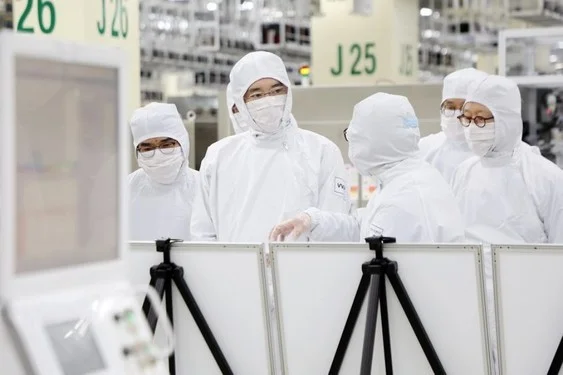
At Chungbuk Semiconductor High School, located southeast of Seoul, 96.4% of students have been hired when they graduate.
No Jun-sik, a 17-year-old senior high school student who has received an offer from Samsung, said: "When I was in junior high school, I persuaded some of my classmates to study here with me. But many of them ended up choosing to go to ordinary high schools to prepare for college." He added: "Many of them regret it now."
Like Noh Jun-sik, about a quarter of students directly work for Samsung, South Korea's largest company, after graduation. According to reports, the average salary of Samsung Electronics employees last year was 158 million won (approximately $107,300).
According to Samsung's latest union labor agreement, if profit targets are met, semiconductor department employees (including production line operators) can receive up to $400,000 in salary next year.
Artificial intelligence has made it more difficult for college graduates to find jobs, but it has created many job opportunities with six-figure annual salaries in the semiconductor manufacturing field.
More practical occupations such as semiconductor manufacturing are increasingly attractive. At the same time, the wave of artificial intelligence has prompted young people around the world to rethink whether a traditional four-year college degree is still the safest way to a stable, high-paying job.
In the second quarter of 2026, the number of unemployed people with a college degree or above in South Korea exceeded 480,000, a five-year high. The unemployment rate among young people aged 15 to 29 has climbed slightly to 7.2%; due to the influence of artificial intelligence, recruitment competition for entry-level positions is expected to continue to intensify.
This phenomenon is not unique to South Korea. In the United States, the unemployment rate for workers with a bachelor’s degree or above reached 2.7%. This value has not been seen since 2015 except during the epidemic period. Young people in the United States are also facing employment difficulties, and teenagers are facing the toughest summer job market in 80 years.
At the same time, artificial intelligence has created a large demand for talents to build related infrastructure. Billions of dollars of capital are pouring into chip factories and data centers in Texas, California, Arizona, New York, Ohio and other places. The market is in urgent need of electricians, technicians, construction workers and high-end manufacturing professionals.
McKinsey research data shows that by 2030, the U.S. semiconductor industry is expected to face a skilled talent gap of approximately 157,000 people.
For many job seekers, this type of high-paying position has become an alternative to the traditional path to university. One in five semiconductor workers does not have a college degree, and the average annual salary in the industry in 2020 was about $170,000, according to the Semiconductor Industry Association.
In addition to the semiconductor field, companies are also investing a lot of money in cultivating technical talents.
The talent boom in the semiconductor industry is just one part of a broader trend in the United States’ efforts to rebuild its skilled workforce.
Earlier this month, JPMorgan Chase CEO Jamie Dimon pointed out that the shipbuilding industry and other large industrial projects are in urgent need of a large number of skilled workers.
"In the next five to 10 years, we need 300,000 electricians, welders and other workers to work on ship construction," Dimon said in an interview at the Philadelphia Navy Yard.
JPMorgan Chase simultaneously announced that it will invest US$24 million through loans and charitable donations to support a new submarine manufacturing and assembly plant. The plant is expected to create 450 long-term jobs and expand vocational skills training.
Meta, owned by Mark Zuckerberg, is also involved and recently launched a $115 million training program, the American Workforce Academy. This project is targeted at training data center technicians. After completing the five-week training, trainees are guaranteed to work at any of Meta's campuses.
Earlier this year, American home furnishing retail giant Lowe’s announced that it would invest US$250 million to help train 250,000 skilled technicians in fields such as plumbing, carpentry and electricians over the next ten years.
“In a world where artificial intelligence is accelerating, executive and analytical occupations will increasingly be dominated,” Lowe’s CEO Marvin Ellison said at the time. “We believe initiatives in skilled occupations will become even more important in the near future.”