
Abstract:
OpenAI published a blog post on Tuesday stating that its self-developed artificial intelligence chip "Jalapeño" (pepper) is superior to other current artificial intelligence systems in terms of task completion efficiency and response speed. At a briefing meeting with media reporters, OpenAI Vice President of Hardware Richard Ho said that Jalapeño achieves "both", with lower latency and higher throughput, while previous artificial intelligence systems usually need to make a trade-off between these two indicators.
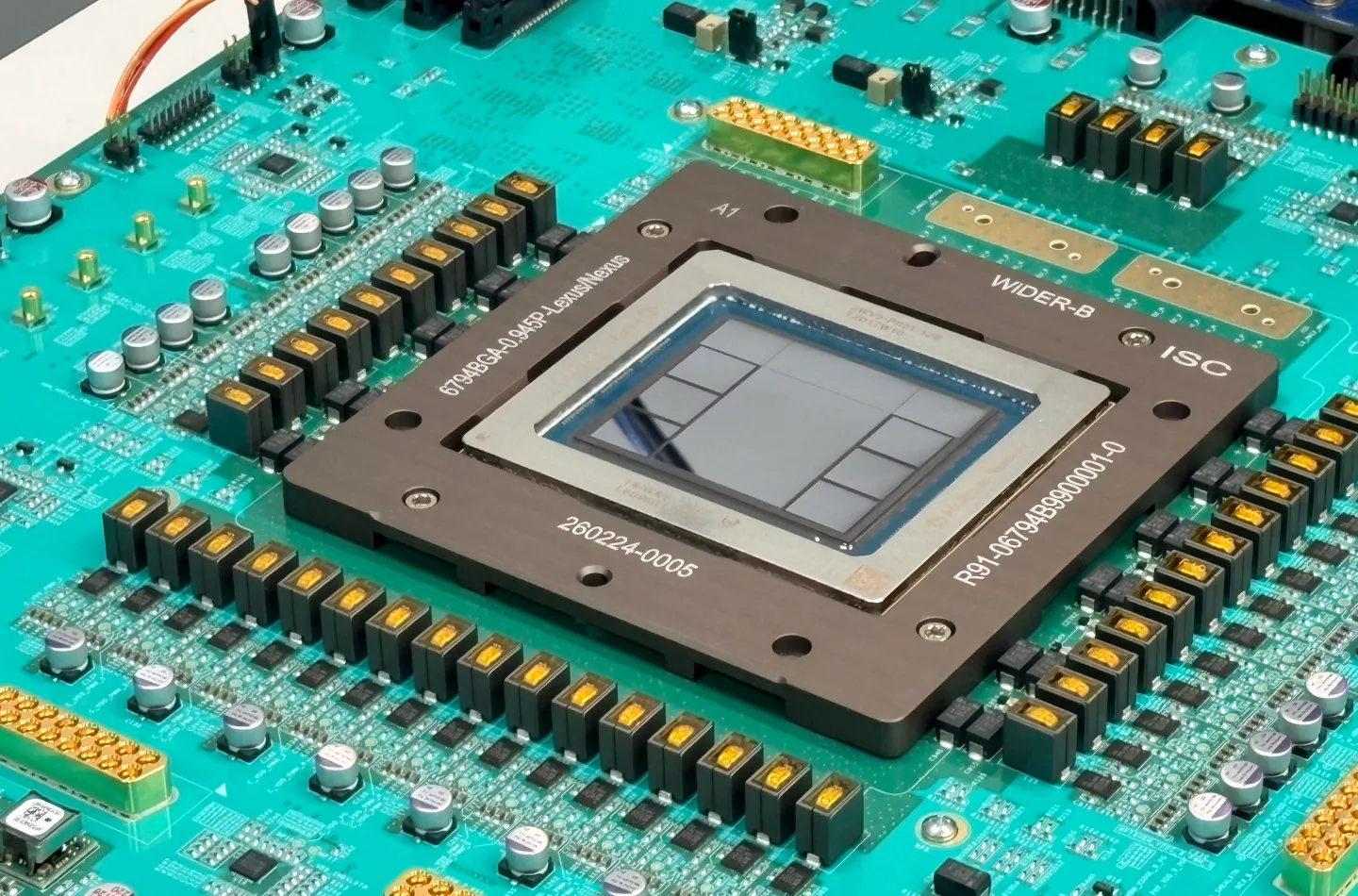
This chip was first announced in June this year. It is an application-specific integrated circuit (ASIC) jointly developed by OpenAI and Broadcom. It is mainly designed for artificial intelligence inference tasks, that is, running a trained model to perform tasks or deploy agents.
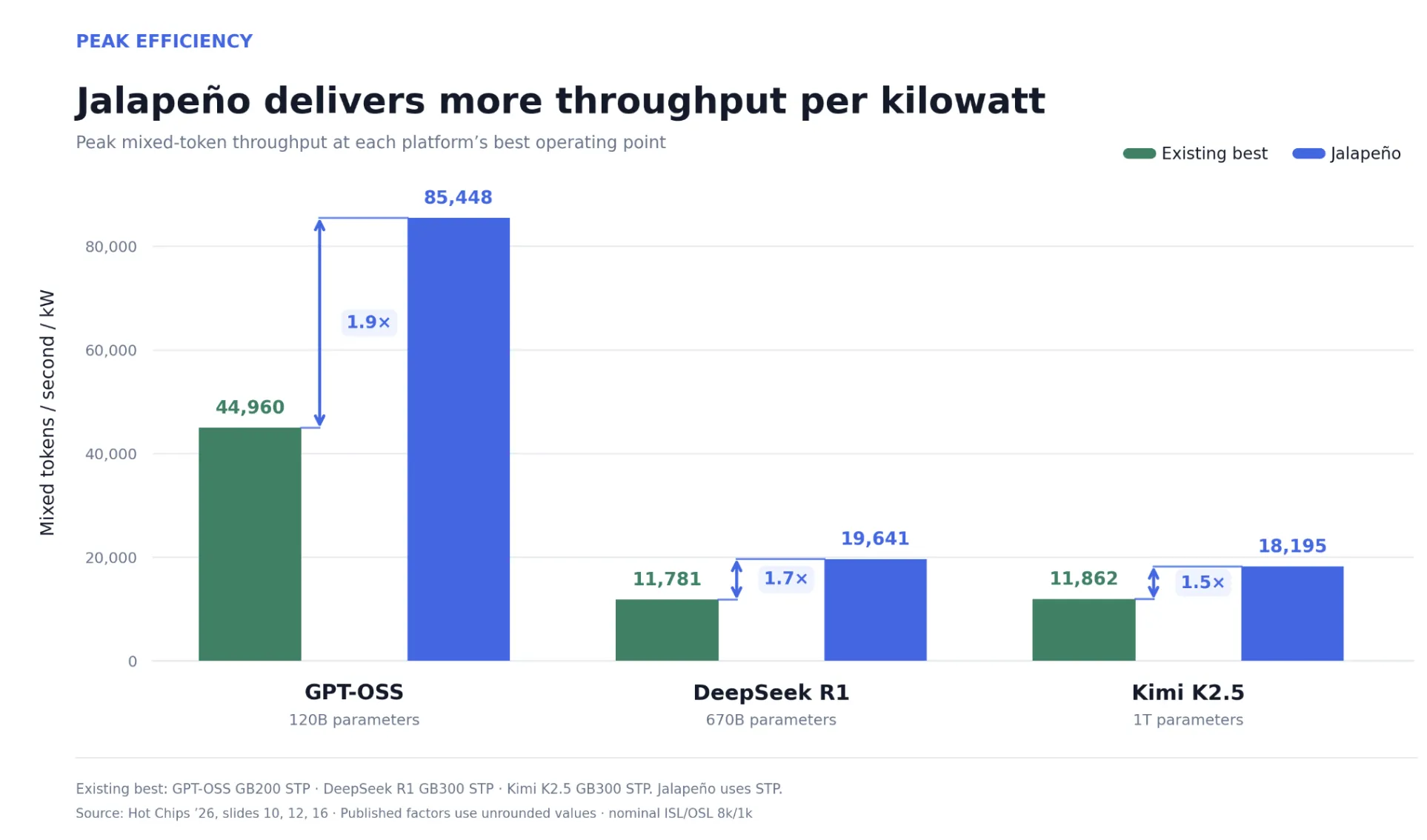
In terms of performance testing, OpenAI uses a benchmark testing platform called InferenceX, which can be used to evaluate the ability of artificial intelligence systems to handle reasoning tasks. The test compared the Jalapeño to the best-performing Nvidia GB200 and GB300 superchips at the time. The results show that on the three models of GPT-OSS 120B, DeepSeek R1 and Kimi K2.5 1T, Jalapeño can complete 1.5 to 1.9 times more artificial intelligence work per watt than the comparison system, and the end-to-end delay is reduced by 1.7 to 3.6 times. Ho said this means the chip can bring users "faster responses, more responsive intelligence, and a more reliable access experience as demand grows."
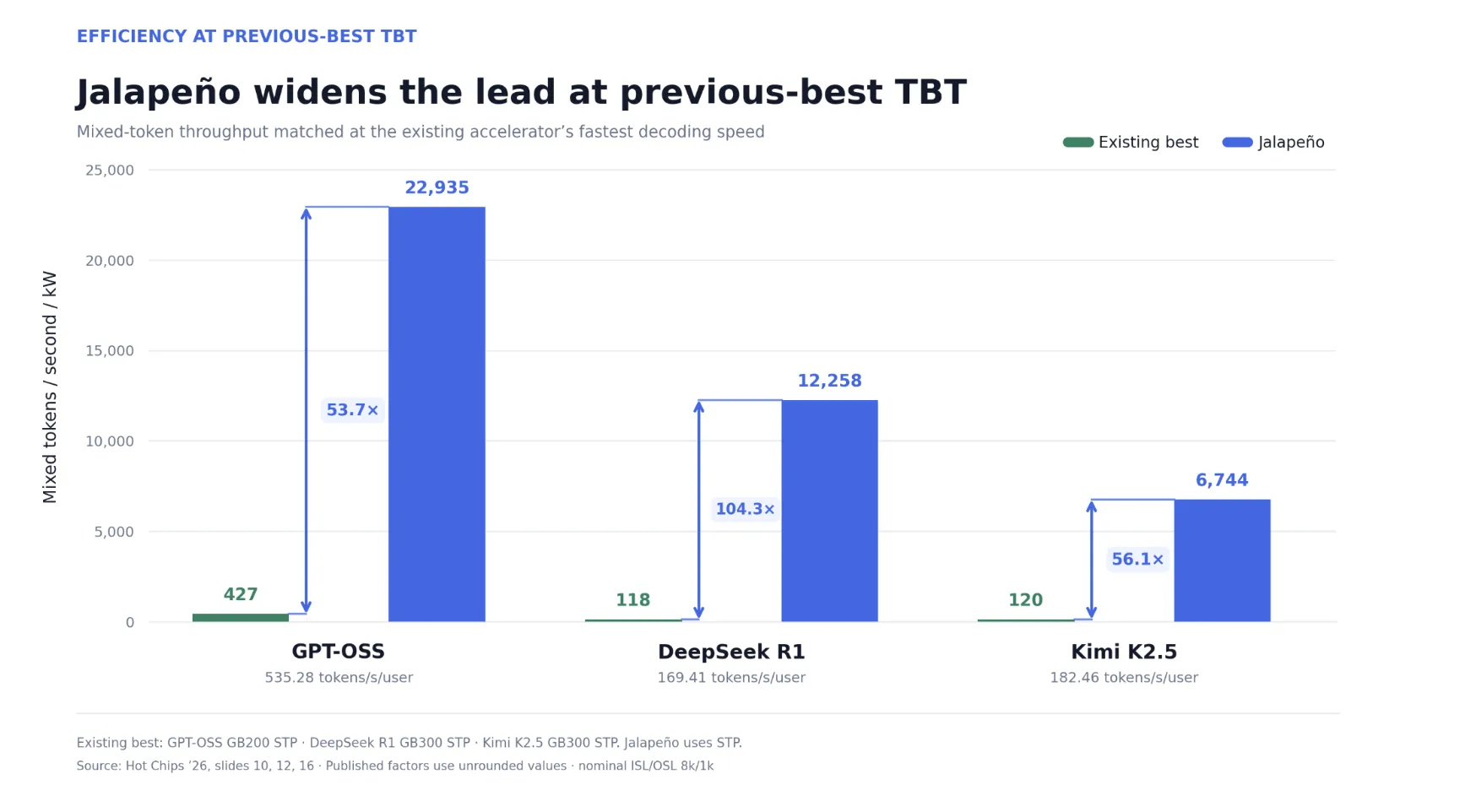
OpenAI plans to deploy Jalapeño in "small batches" before the end of this year and gradually expand production capacity in 2027, but the company did not disclose the specific number of deployments next year. Despite the performance improvements, Ho emphasized that OpenAI does not intend to replace its existing overall chip lineup with Jalapeño, and said that the company's overall computing power strategy still includes "quality partners" such as Nvidia. It is reported that OpenAI will continue to develop the second and third generation products of the chip.
Comments