Many countries in Southeast Asia continue to experience floods and landslides caused by heavy rainfall. The death toll has exceeded 620, and hundreds of people are still missing. Indonesia, Thailand, Sri Lanka and Malaysia have entered a large-scale emergency rescue stage.
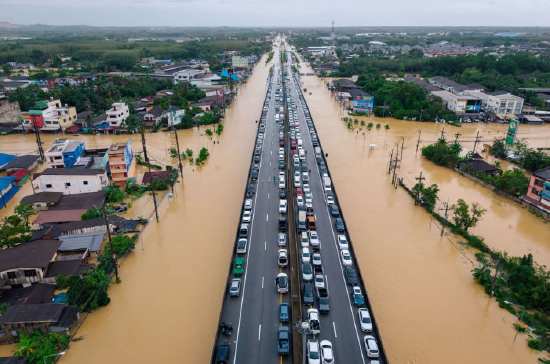
The Indonesian Disaster Management Authority said that 303 people have been killed and 279 missing across the country, mainly concentrated in three provinces on Sumatra. About 80,000 people were forced to evacuate, and roads and communications were interrupted in some of the hardest-hit areas. Rescue teams are still trying to open up routes cut off by floods. The death toll in Thailand has risen to 162, with the southern province of Songkhla the worst hit. Sri Lanka confirmed 153 deaths and 191 missing after Cyclone Ditwa passed through, while Malaysia reported two fatalities.
The disaster was caused by the rare tropical cyclone "Seniyar" that formed in the Strait of Malacca. This was the second cyclone in the sea area since 2001. It combined with the local monsoon rains, causing devastating floods that had not been seen in the area for many years. The single-day rainfall in Hat Yai, Thailand reached 335 millimeters, the highest local record in 300 years.
The disaster situation in Thailand is equally severe, with hospitals in many places reaching their limits. Some hospitals have run out of morgue space and have to temporarily store bodies in refrigerated trucks. The government has set up temporary shelter centers that can accommodate more than 40,000 people, and Prime Minister Anutin said that compensation of up to two million baht (about $62,000) will be provided to the families of the victims.
In Sri Lanka, about one-third of the country suffered from water and power outages, and 78,000 people were moved to nearly 800 emergency shelters. Meteorological experts pointed out that this rare storm and abnormally concentrated heavy rainfall are closely related to the changes in storm paths and water vapor distribution caused by climate change, which have significantly enhanced the overall destructive power of the disaster.