There is still a clear gap between China and the United States in the number of satellites in low-Earth orbit. Currently, there are only about 1,300 to 1,900 satellites in orbit, while there are nearly 11,000 satellites in orbit bearing the US logo, most of which are operated by SpaceX. However, China has adopted a very aggressive filing strategy when it comes to laying out its orbit and spectrum resources for the future: According to data from the International Telecommunications Union (ITU), China has registered more than 200,000 satellites for low-orbit communication constellations. Some estimates even push this number to about 244,000, which is about 128 times its current number in orbit and much higher than the United States' filing scale of about 38,000 satellites.
Analysis from market observers pointed out that there is a huge contrast between "paper planning" and "realistic deployment" of China's low-orbit communication satellites. Among the total number of LEO communication satellites currently registered by China in the ITU, "CTC-1" and "CTC-2" alone total about 193,000. The relevant reporting entities were only established one day before submitting materials to the ITU. This is regarded by the outside world as a typical "occupy the pit first, build later" occupation operation to preemptively lock in frequency bands and orbital resources.
In sharp contrast to this "expansion" of filings, China's current launch infrastructure and launch frequency are still limited. For example, the Hainan Commercial Space Launch Site currently has only two launch stations in operation. Each station has a designed launch capacity of about 16 times per year. There is a big gap between the overall launch rhythm and scale and the goal of turning paper plans into real constellations in the next ten years. Against this background, China’s “spectrum occupation” is viewed by some observers as an early lock-in of international orbit and spectrum resources under existing loose rules.
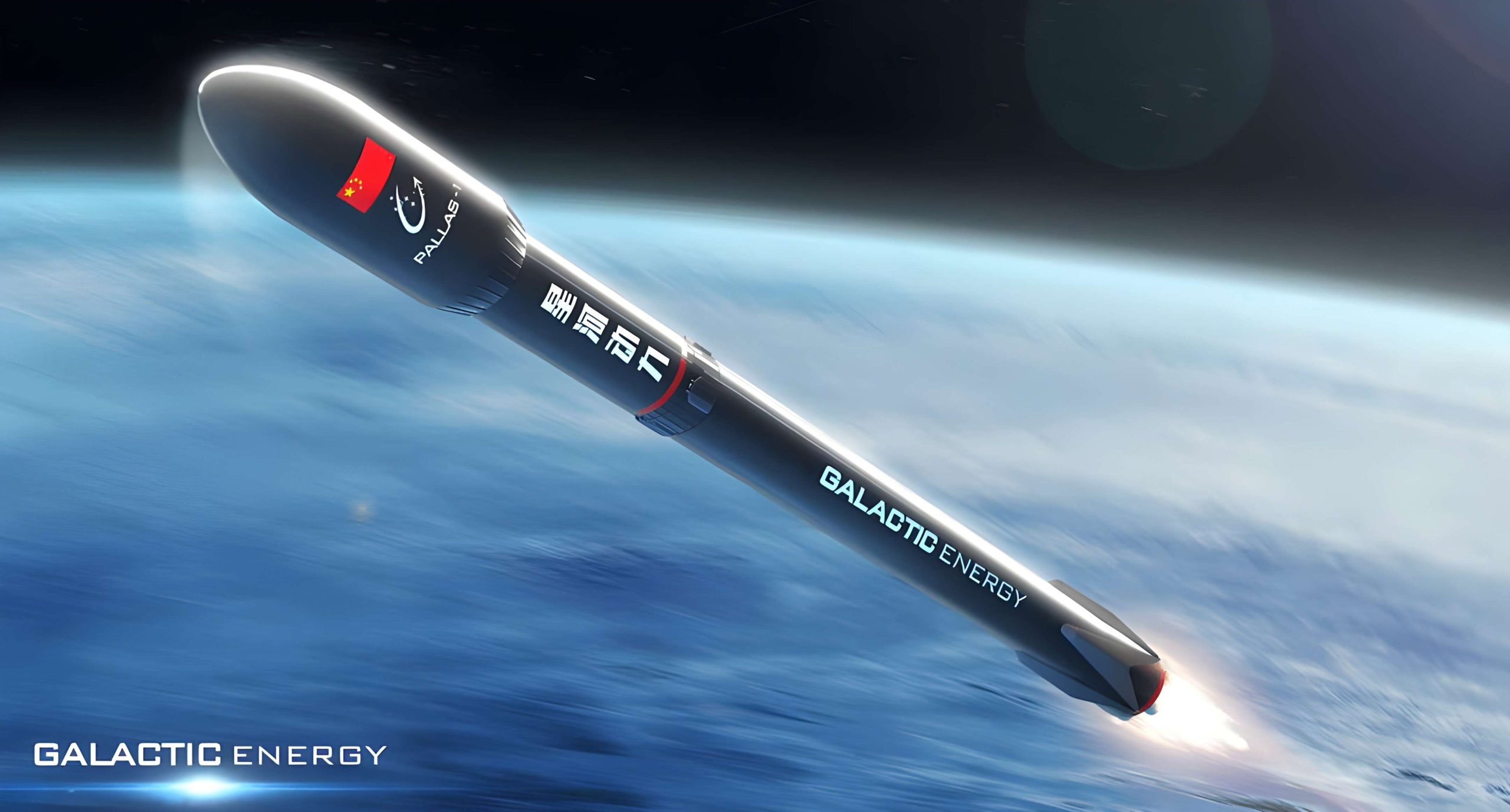
At the same time, China's domestic commercial aerospace forces are also accelerating to catch up, trying to provide realistic support for this huge plan. Spacesail, known as the "Chinese version of SpaceX", is accelerating the deployment of its "Dry Sail" low-orbit satellite constellation. It has launched about 200 satellites and is gradually building its own communications and remote sensing network. However, compared with the scale of hundreds of thousands of registrations, this launch progress is still only the starting point of the "Long March".
At the regulatory level, the ITU's current rigid requirements for constellation deployment are still relatively loose, which also provides room for operation of "spectrum occupancy". According to current regulations, after completing the application for orbit and spectrum resources, each party only needs to complete 10% of the deployment within 9 years, 50% within 12 years, and complete the entire planned quantity within 14 years to retain the allocation. Under this framework, it has become a realistic choice for some countries and institutions to carry out advanced filing on a very large scale and then advance it in stages according to their own industrial capabilities and financial conditions.
Compared with China's "paper constellation", SpaceX relies on high-frequency and reusable launches to continue to consolidate its dominance in low-Earth orbit on a real deployment scale. Public data statistics show that the Starlink constellation currently operated by SpaceX has 10,653 effective satellites in orbit, making it an absolute "heavyweight" among the global orbiting satellite groups. In terms of transportation capacity, a "Falcon 9" in reusable mode can transport approximately 17.4 tons of payload to low-Earth orbit, providing a solid foundation for the rapid laying of the Starlink constellation.
As the next-generation heavy-lift launch vehicle "Starship" gradually moves toward regular launches, SpaceX's constellation deployment capabilities are expected to reach a higher level. According to SpaceX, a "Starship" launch can send up to about 60 Starlink V3 satellites, while a "Falcon 9" mission can only deploy up to 27 V2 satellites. The former's network capacity increase in a single mission is equivalent to the total of 23 "Falcon 9" launches. Bolstered by this jump in capacity, SpaceX has contributed more than 80% of the world's incremental orbital mass since 2023, and plans to increase the number of satellites in orbit to approximately 42,000 by 2030.
While consolidating its advantages in communication constellations, SpaceX has also begun to target the emerging track of "space computing power." The company recently announced the first satellite platform "AI1" designed specifically for artificial intelligence computing. A single satellite can support a peak computing load of up to approximately 150 kilowatts. It is equipped with a liquid heat dissipation device, a meteoroid protective structure, a centralized computing cabin and a deployable solar array. It is designed to provide high-energy-efficiency computing nodes for orbit-side AI inference or training. These AI1 satellites will be mass-produced by SpaceX's "Gigasat" super satellite factory in Texas, marking the company's key step in the direction of "space data centers" in addition to the space Internet.
Against this background, China and the United States present completely different pictures in the field of low-Earth orbit: On one side, SpaceX continues to increase the capacity of on-orbit satellites and networks through high-density launches, reusable rockets, and large-scale manufacturing; on the other side, through ultra-large-scale filings, China attempts to prioritize future orbit and spectrum resources within the scope of regulations. Many analysts believe that if China can rapidly expand its launch site layout and commercial rocket industry chain in the next 14 years, it is expected to complete the deployment of the established proportion within the time limit specified by the ITU, thereby transforming the current "paper advantage" into real on-orbit capabilities.
However, judging from the current limited launch capabilities and the astronomical number of registered satellites, sending more than 240,000 satellites into low-Earth orbit within 14 years is an unprecedented challenge in terms of funding, manufacturing, launch organization, and space traffic management. Comparing China's grand constellation planning with the high-frequency launch rhythm that SpaceX has established, many people in the industry still have reservations about whether China can digest the existing filings as scheduled. It is foreseeable that the global competition surrounding low-Earth orbit and radio spectrum will continue to heat up in the next decade or so, and how to strike a balance between encouraging innovation, ensuring fair competition, and preventing "space congestion" will also become a long-term issue faced by international institutions such as the ITU.