
Abstract:
It’s crazy. In just two days, 4 new models appeared! On the front foot, Lao Ma's xAI has just finished issuing Grok 4.7. Immediately afterwards, OpenAI suddenly dumped GPT-6 Sol and Luna, and the price was cut in half. On the same day, Anthropic also put the Claude Opus 5.5 on the table, which is 40% cheaper than the previous generation. On September 22, an animated picture went viral on X, with nearly a million views.
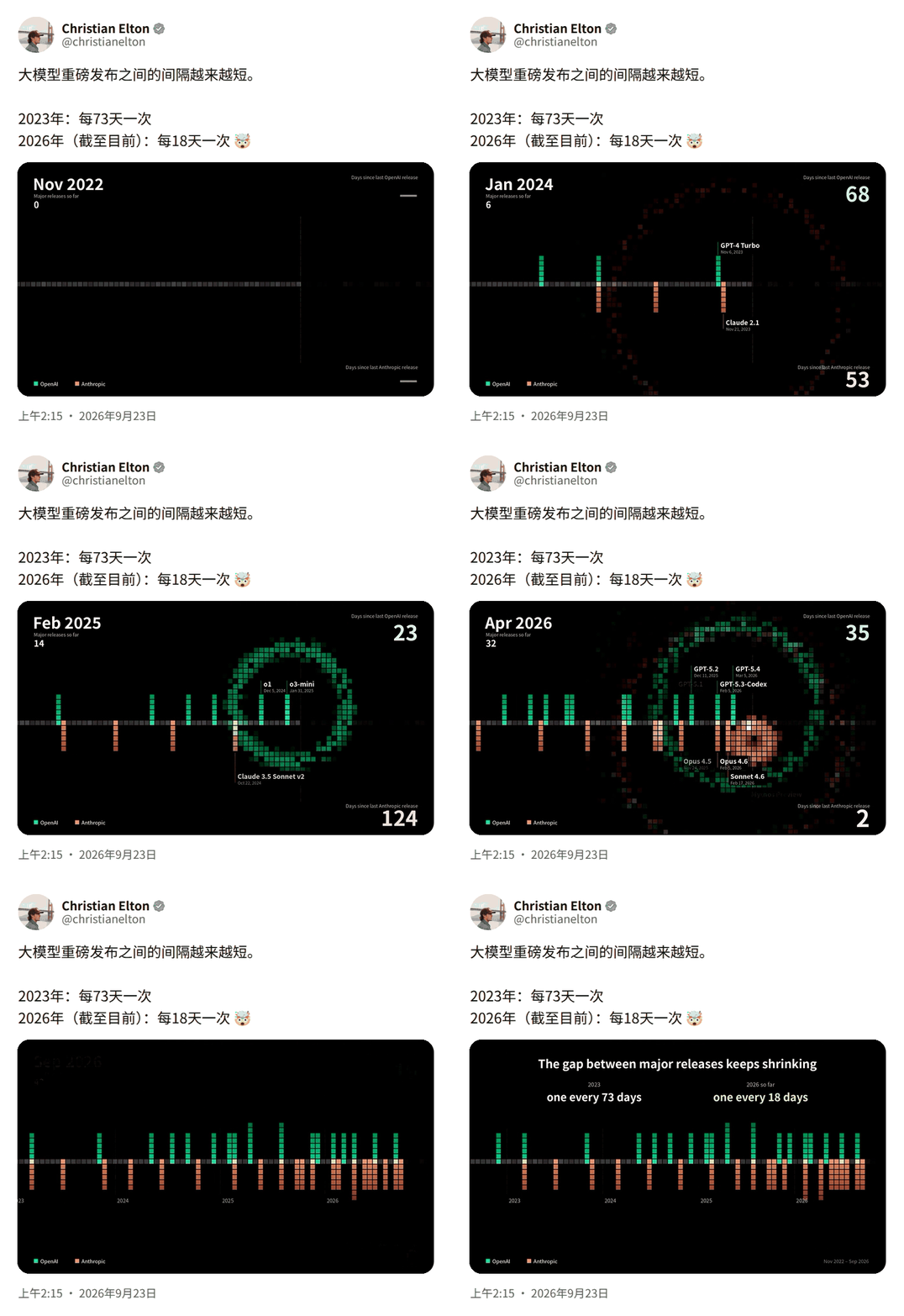
In 2023, large models will be updated every 73 days, and in 2026, they will be updated every 18 days.
Since ChatGPT was launched, OpenAI and Anthropic have bombarded 42 blockbuster models (44 including GPT-6 Sol and Luna released that day).
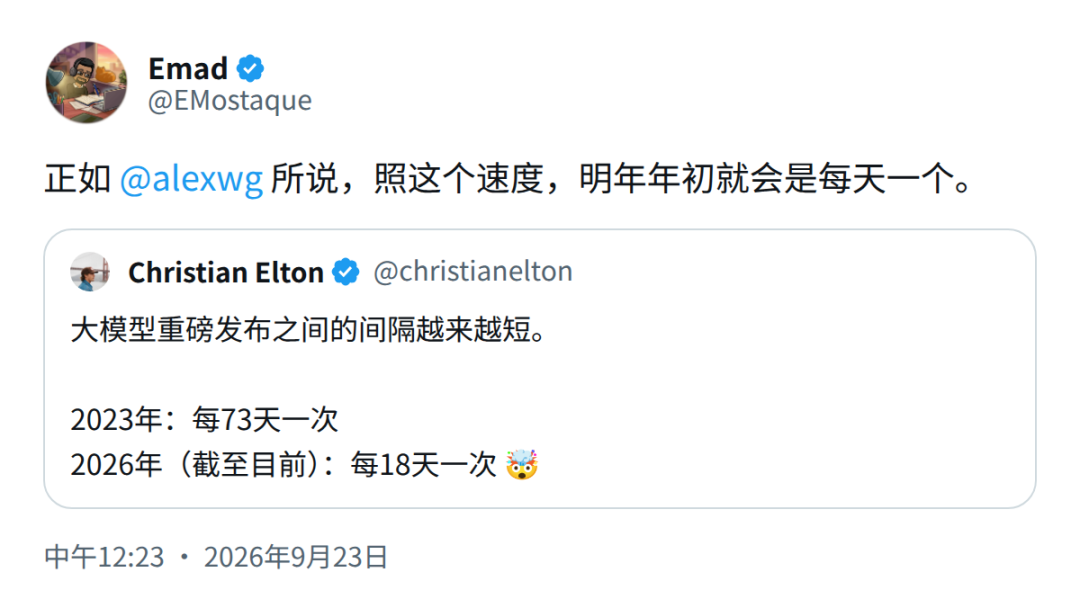
A few hours later, Stability AI founder Emad Mostaque retweeted the picture and added a prophecy.
"As Alex said, at this rate, there will be one a day at the beginning of next year."
Two giants, roll out "half-monthly update"
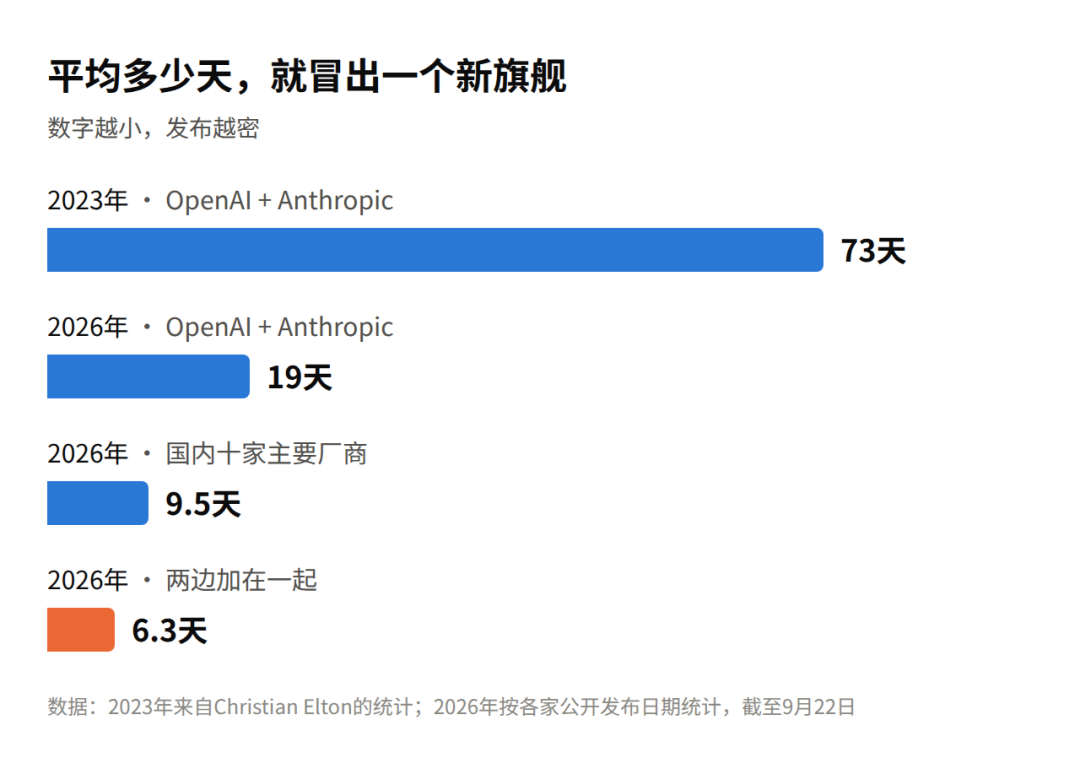
In fact, the number of "update every 18 days" is quite conservative, because it only counts OpenAI and Anthropic.
From the beginning of this year to September 22, Anthropic released 8 flagship models, and OpenAI released 6. The 14 models were spread over 265 days, with an average of 19 days per model.
During the same period of time, the ten major domestic large model manufacturers released at least 28 more flagship models, an average of more than one every 9 days.
There were times when they launched together. In the week before the Spring Festival, four companies launched new flagships one after another; from April 20th to 24th, four more companies took turns in the five days.
Taking both sides together, a new flagship emerges in an average of more than 6 days, which is not far from the "one a day" mentioned by Emad.
Anthropic's speed increase is visible to the naked eye.
In the first half of the year, it took an average of 46 days to release a model, and in the second half of the year, it took 26 days. Opus 4.8 is May 28th, Opus 5 is July 24th, and Opus 5.5 is September 22nd.
OpenAI takes the route of "holding back the ultimate move and then taking it away".
GPT-6 Astra just blew up the entire network on September 3, and only 19 days later, Sol and Luna followed suit.
There will be DevDay conference next week. Altman lamented that this is the first time in his memory that OpenAI shouted "there are too many things to release" when preparing for a press conference.

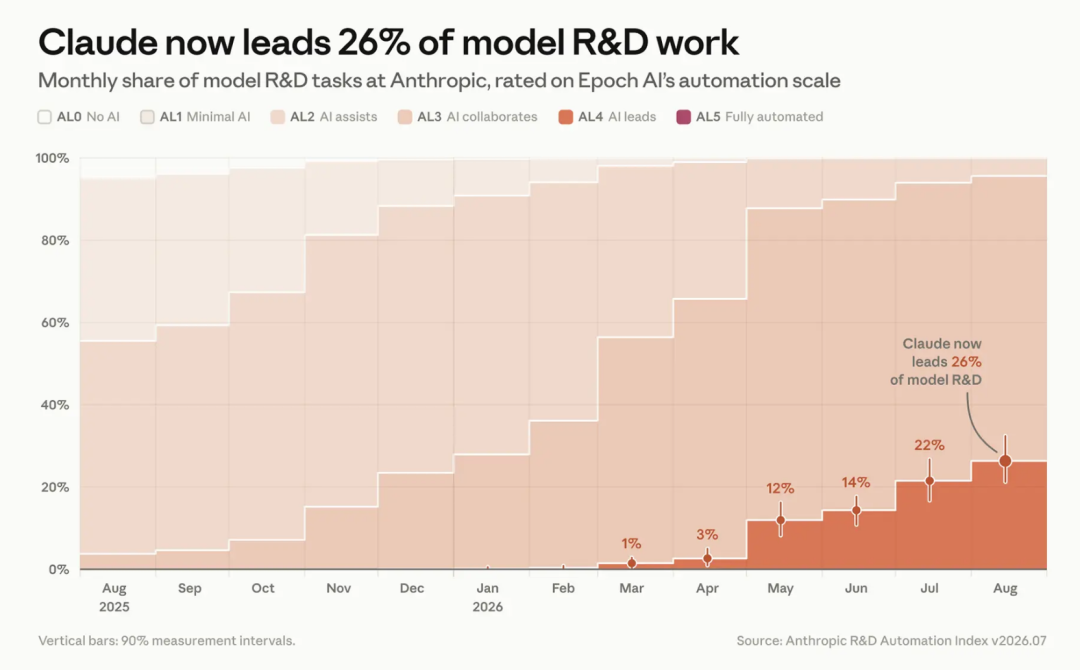
Why is publishing becoming more and more dense? Anthropic gave the answer in a report. AI is already helping to create the next generation of AI.
In February this year, Claude could independently lead less than 1% of the AI R&D work. After that, it improved almost every month, reaching 12% in May, 22% in July, and 26% in August.
At OpenAI, as of mid-August, the number of working days invested by AI agents has been 3.1 times that of human researchers (based on 8 hours per day).
At Anthropic, a quarter of the work of making models has been handed over to Claude himself. The next models will just come one after another.
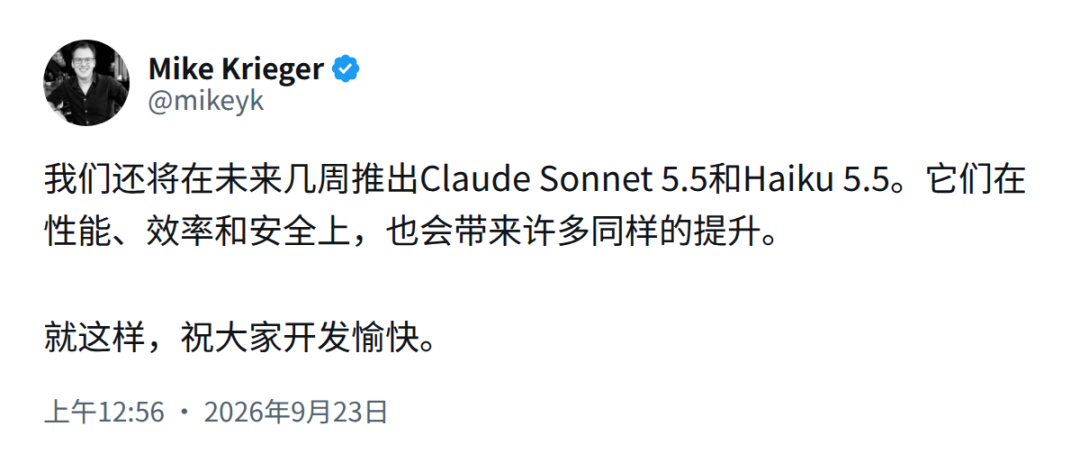
The queue has already reached the door. Anthropic's Mike Krieger has revealed that Sonnet 5.5 and Haiku 5.5 will be arriving in the next few weeks.
Google's Gemini 4 started "the most ambitious pre-training to date" as early as July, and the outside world is generally betting that it will be unveiled around the end of the year. At least two domestic companies have officially announced their next-generation flagships, with only one release date missing.
The hard-earned "metaphysics"
It will be scrapped immediately after two months
The faster the large model runs, the more embarrassing it becomes for the people writing code downstream.
You stayed up a few all-nighters at the end of July and just moved the application to Opus 5. Every parameter has been adjusted as smoothly as silk. Two months later, Opus 5.5 came out, and you happily changed the interface - click, and some requests directly reported errors.
Looking through the recent official prompt word guides of these two companies, you will find that they are conveying the same fact. Many of the ancestral prompts you wrote for the previous generation model have become waste paper.
The first thing is to do subtraction.
OpenAI clearly states in the Astra guide that the process instructions that were too detailed in the past will now be a hindrance. Words such as "read the document thoroughly before changing the code" and "remember to run tests" can all be deleted.
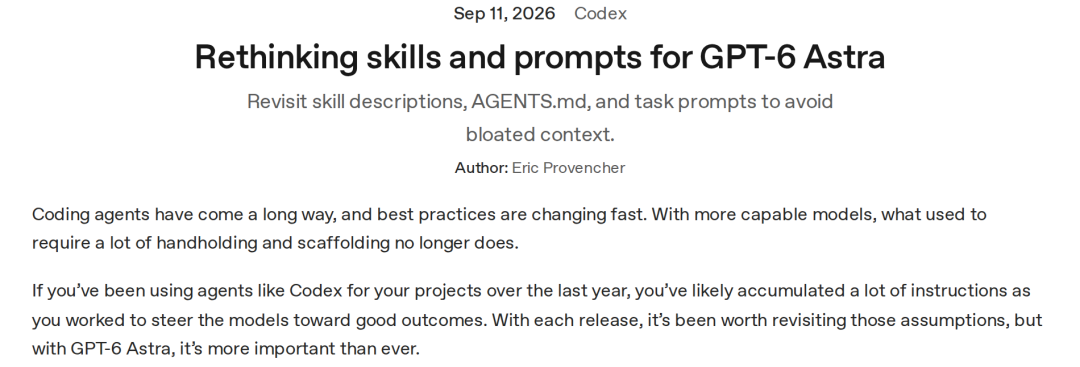
Anthropic's guide also means this.
In the past, the prompt words often had to add the sentence "Check it after it is done", but Opus 5 can already check it by itself. If this sentence is not deleted, it will over-check.
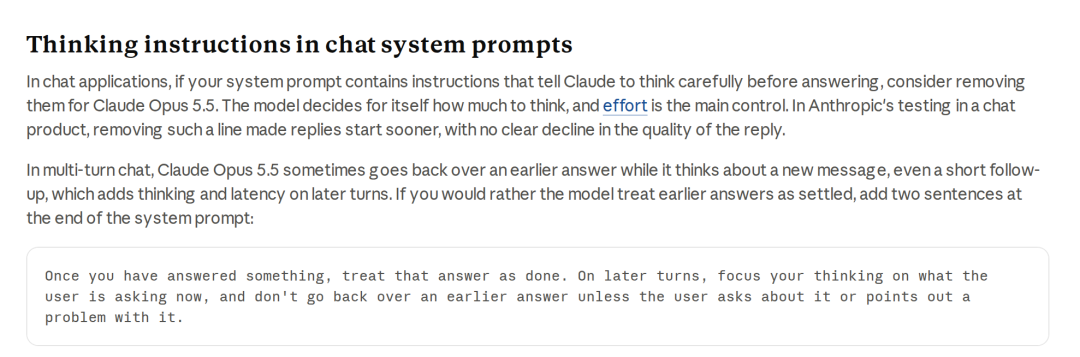
In Opus 5.5, it is recommended to delete the PUA phrase "think carefully before answering" in the chat scene. After deleting it, the reply is faster and the quality has not dropped significantly.
After deleting the old ones, you have to add new ones, because every generation has a new temper.
Opus 5.5 always likes to go back and think about questions that have already been answered during multiple rounds of dialogue, which is a waste of computing power. The official patch has been given, "What has been answered is past."
Parameters and default values are also changing quietly.
On Opus 5.5, turning off the thinking mode directly reports an error 400; without writing the effort parameter, the default gear is reduced from high to medium, and the cost and effect are shuffled accordingly.
In this regard, the official suggestion is to re-run the effort test and do not directly transfer the old settings from Opus 5.
A set of prompt words plus a set of parameters, each generation has to peel off layers of skin. If the adjustment has not been made, the bill may vary greatly.
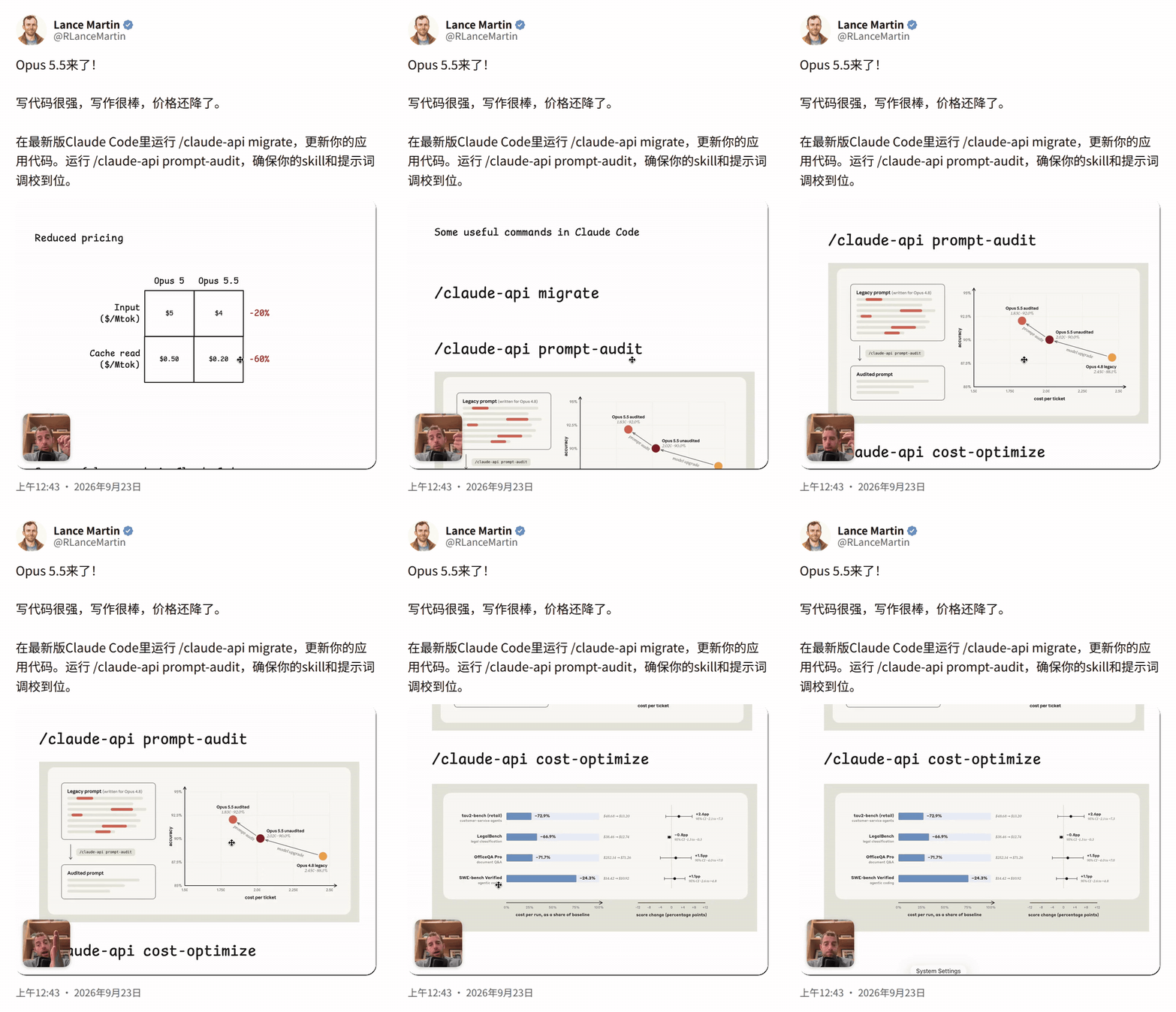
Anthropic's Lance Martin demonstrated in the video that an old prompt written for Opus 4.8 cost 2.45 cents per work order, and it cost 2.02 cents to directly replace it with Opus 5.5. After washing it again with the official tools, the accuracy rate increased to 92.0%, and the cost was reduced to 1.83 cents.
In addition to these, the lifespan of the model itself is also shortened.
OpenAI has issued 9 deprecation announcements this year, involving more than 40 models and functions.
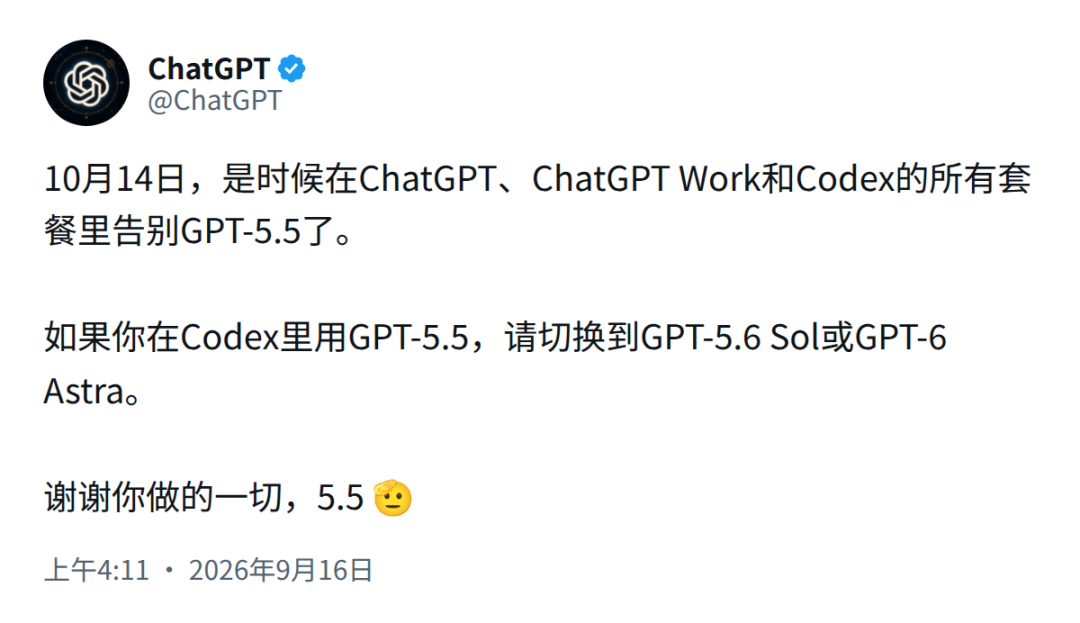
Among them, GPT-5.5, which was just released on April 23, will be removed from ChatGPT and Codex on October 14, and has survived for less than half a year.
Even OpenAI’s own Evals evaluation platform will close at the end of November.
Brush the list? A new set of test questions was hammered through in half a year
It doesn’t matter if people can’t keep up, now even the “examination papers” are not enough.
In March this year, ARC-AGI-3, which claims to specialize in AI and test IQ without memorizing questions, was launched. Gemini 3.1 Pro, which ranked first at the time, only got 0.37%, while humans got 100%.
On September 3, GPT-6 Astra entered the examination room, scoring 62.7% in the standard test, and directly reached 99.9% when using a specific framework. In 96% of the levels, it took fewer steps than a human.
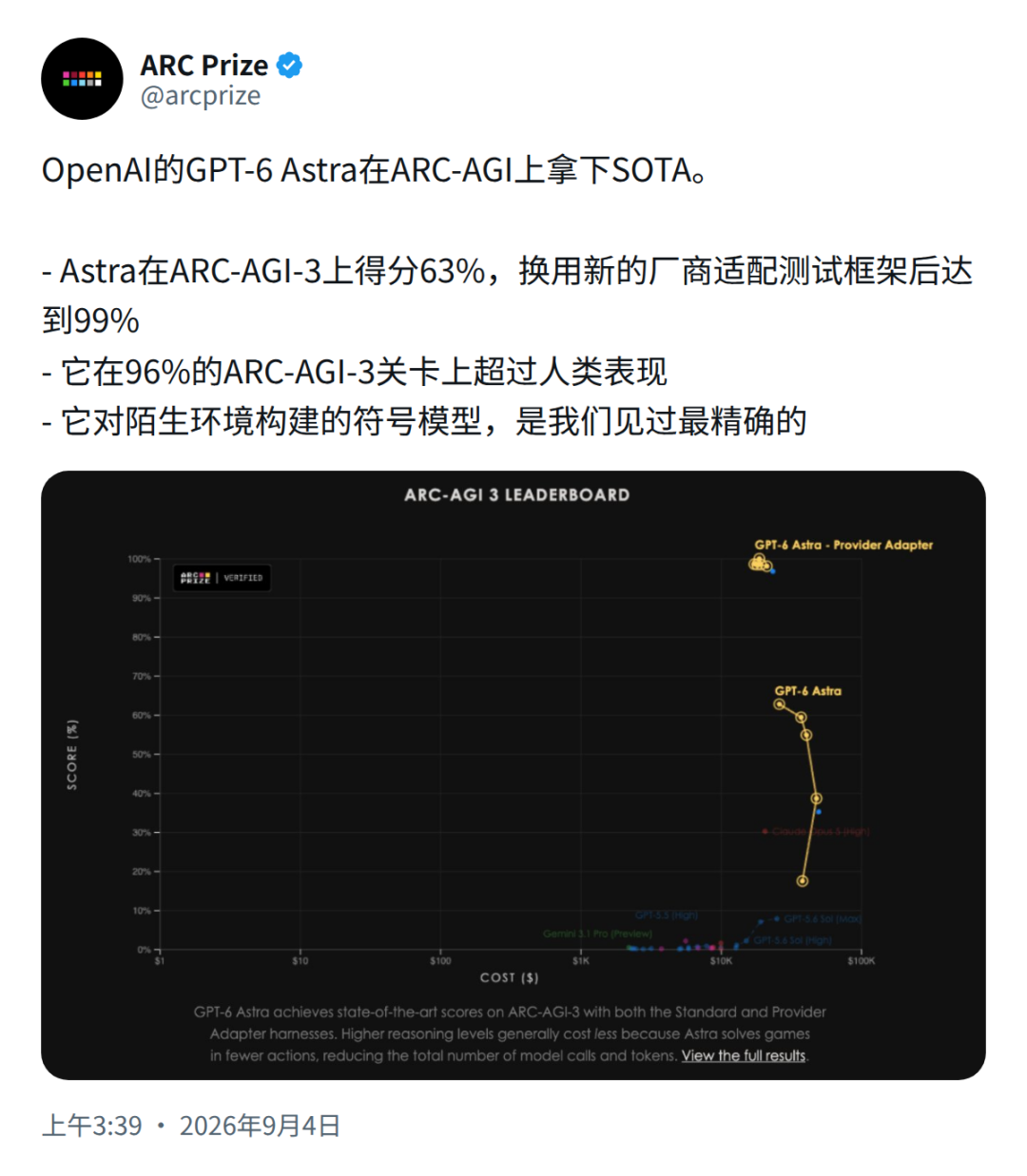
A new set of test questions was broken down in half a year, and ARC officials have begun to think about how to produce the next generation of evaluations.
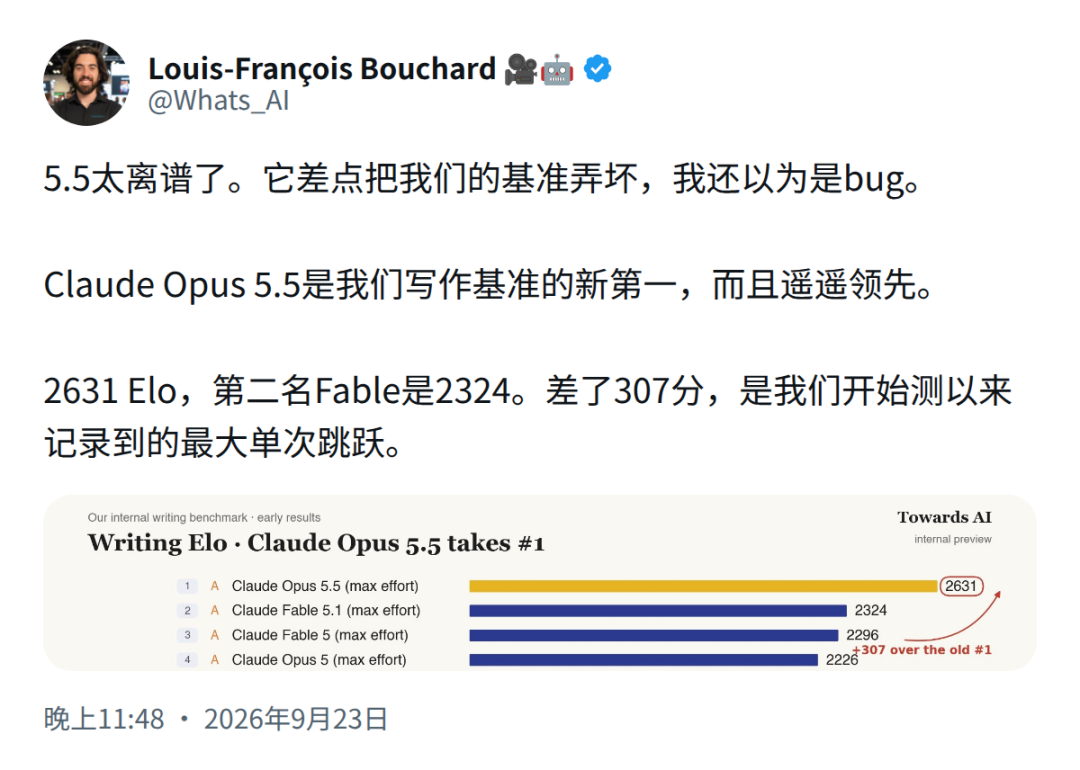
On the coding list (Next.js), Sol, Opus 5.5 and Fable 5.1 all scored 97%, tied for first place; on the writing list, Opus 5.5 Fault leads the second place by 307 points.
This score is the largest single jump in the history of the list. The blogger said it was outrageous after reading it, and almost thought there was a bug in his own benchmark!
Every time a new model comes, developers have to start the testing process all over again like Sisyphus.
According to the current pace, if next year it really reaches the point of "one update a day", the prompt words and Agent links you have adjusted today may not last more than a week.
For the first time, the speed of model replacement has completely exceeded the speed of humans adapting to it.
The slowest runners today are actually those using AI.
Comments