
Abstract:
A recently published patent application by Activision shows that the company is researching a technology that uses player voice chat to train in-game non-player characters (NPCs). The patent, titled "Method and system for generating gameplay audio using machine learning," was published on November 12 and was first discovered by Patentlyze. The core idea is to allow NPCs to react more closely to real players to game events such as kills and deaths as teammates or enemies.
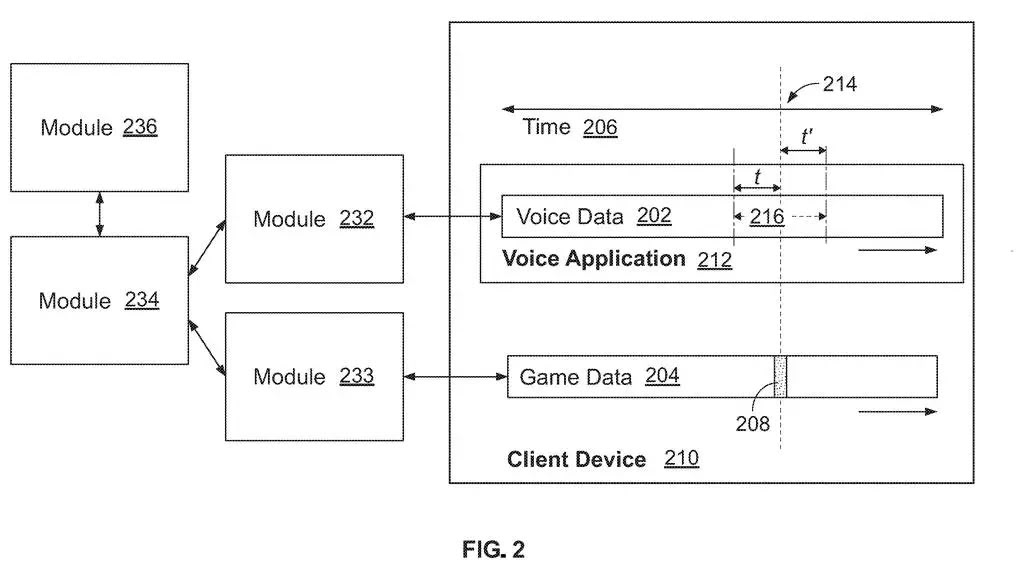
According to the patent description, the system will record players' real-time reactions to specific game events in voice chat, such as voice expressions when successfully killing an opponent, being killed, encountering a key situation, or achieving victory. These audios are then timestamp matched to the specific game events that triggered them and used to train the neural network. After training is completed, the model can output "anthropomorphic" reactions to NPCs, making them behave more like real teammates or opponents in the game.
The patent document also mentions that voice applications such as Discord and TeamSpeak may become one of the sources of voice data. This means that the system is not necessarily limited to the in-game voice channel, but may also involve players’ communication on third-party platforms. However, the patent does not specify which game this technology will be applied to; considering that Activision owns the "Call of Duty" series, it is generally believed that this series is the most likely application scenario.
This idea raises obvious privacy and content security concerns. Voice chat between players during intense matches is often emotionally charged and may contain insults, discriminatory remarks, profanity, or other inappropriate content. If these data are directly used to train AI, it is possible for NPCs to learn and reproduce aggressive expressions. In fact, some previous attempts to introduce AI into voice interaction were quickly stopped because the AI was induced to say offensive content.
Activision appears to be aware of the risks involved. The patent application includes a module for filtering abusive or offensive content and describes a player profile system that can be personalized for different players. However, the report pointed out that the security mechanism of the AI model has been bypassed by users many times in the past, so these measures may not be enough to completely prevent problematic content from appearing.
More importantly, the patent document does not explain how players will be explicitly informed that their voice chats will be recorded, nor how players will consent to these content being used to train AI models. This means that even if the technology itself can be implemented, it still needs to face multiple issues such as user informed consent, data collection scope, privacy protection, and content review before actual deployment.
The report also pointed out that this patent application is a continuation application of an earlier Activision patent dating back to December 2022. As with most patents, it doesn't mean the feature will make it into an official product. Sony has previously applied for a patent that allows NPCs to adapt to player styles based on player reaction time, retry behavior, etc., but the patent application itself does not prove that the relevant technology has been implemented.
Still, the filing reflects rising interest from major game companies in AI-driven NPCs. If the technology matures and privacy and content security issues are properly handled, future game teammates or enemies may no longer just act according to fixed scripts, but may respond more naturally and complexly based on the player's voice, emotion, and game behavior. But before that, how to prevent AI from learning things it shouldn’t learn from player voices will be a core problem that Activision and the entire industry must solve.
Comments