
Abstract:
Sony recently officially brought AI super-resolution technology to the regular version of PlayStation 5. Following the PS5 Pro equipped with PSSR, the ordinary PS5 can now also use machine learning technology to improve game graphics. Sony named this new technology Quick Spectral Super Resolution, or QSSR. The first games to support QSSR include "Marvel's Wolverine" and "Ghost of Mount Yotei", and players can get this new graphics option through free updates.
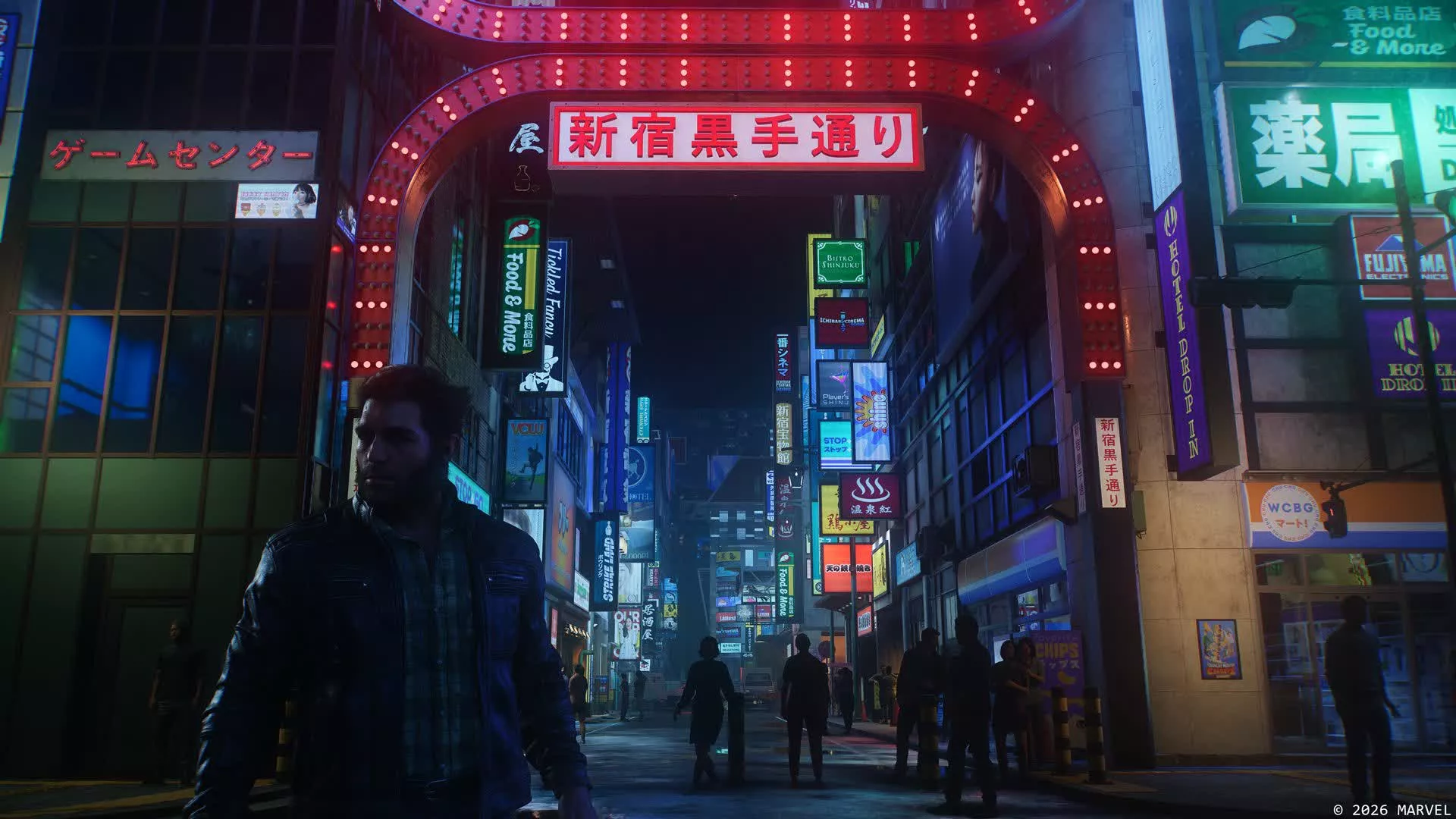
QSSR is not a direct transplant of PSSR on PS5 Pro to the ordinary PS5 intact, but a lightweight version designed by Sony for ordinary PS5 hardware. Sony calls it a "new AI ultra-performance level" and the technology comes from the Project Amethyst project in partnership with AMD.
Compared with PS5 Pro, the biggest hardware limitation of ordinary PS5 is the lack of hardware dedicated to machine learning calculations. PS5 Pro has specialized AI computing capabilities that can more efficiently perform the neural network operations required by PSSR, while the ordinary PS5 can only use the general computing resources of the original GPU to complete similar tasks.
Therefore, QSSR adopts a more streamlined neural network architecture, and also conducts a lot of manual optimization for the PS5 GPU. Sony said that these two improvements allow the originally computationally intensive AI super score to run on the regular PS5 and achieve a new balance between picture quality and performance.
Digital Foundry conducted early testing of QSSR, and the results showed that this technology can indeed significantly improve the picture quality of the regular PS5. Especially in "Marvel's Wolverine", QSSR is able to reconstruct clearer and more stable images from a lower internal rendering resolution than traditional solutions.
Take "Marvel Wolverine" as an example. The ordinary PS5 could previously use an internal rendering resolution of approximately 1080p, and then upgrade it to a higher output resolution through traditional algorithms. After adopting QSSR, the internal rendering resolution in the test can be further reduced to about 936p, and then reconstructed to 1440p using AI. Although the number of internal rendering pixels is reduced, the final picture can be clearer than the original traditional upscaling solution.
The greatest value of QSSR lies here. It does not allow the ordinary PS5 to suddenly have PS5 Pro-level GPU performance, but uses machine learning reconstruction technology to reallocate some of the computing resources that were originally wasted on high-resolution native rendering to the game itself.
Under the same output resolution, if a lower internal rendering resolution can be used to obtain similar or even better picture quality, then developers can use the saved GPU resources to improve shadow quality, lighting effects, physics calculations, particle number or other graphics effects.
However, the computational cost of QSSR is not low. Digital Foundry testing found that in "Marvel Wolverine", when upgrading from a lower resolution to 1440p, QSSR will increase the frame time by a certain amount compared to the game's original upscaling solution. In performance mode with an unlocked frame rate, this equates to a theoretical performance loss of about 9 frames.
The problem is, QSSR works from a lower internal rendering resolution. Therefore, if developers use QSSR to lower the base rendering resolution, the overall performance loss can be offset, and they can even end up with significantly better graphics at the same frame rate.
Compared with PSSR on PS5 Pro, the biggest difference between QSSR is still the target resolution and computing efficiency. PS5 Pro has specialized machine learning hardware, so it can perform AI reconstruction with greater efficiency. In games like "Marvel's Wolverine," the PS5 Pro can upscale internal graphics at about 1200p to 4K, while the QSSR on the regular PS5 is better at upscaling about 936p to 1440p.
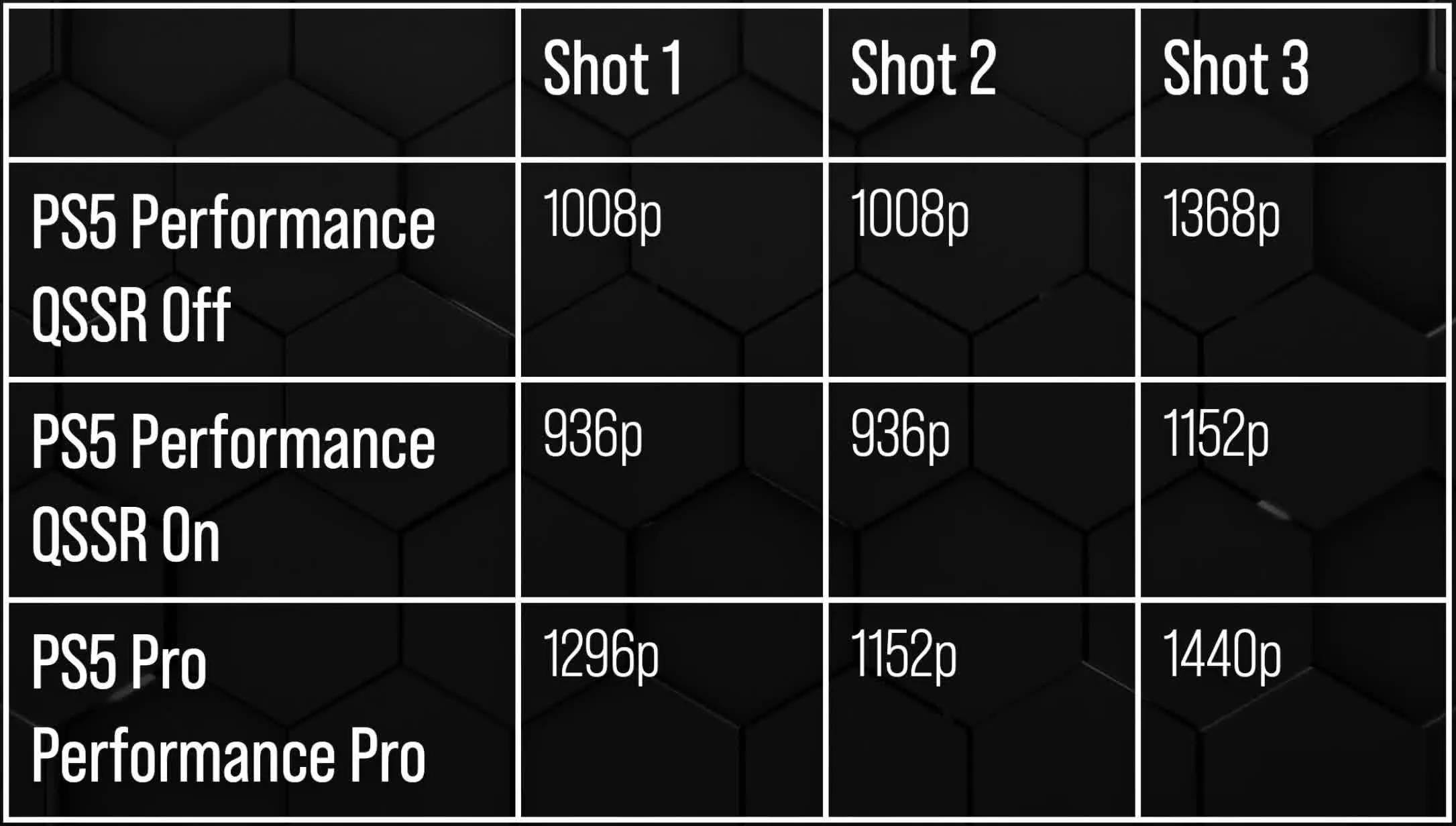
Therefore, QSSR cannot allow the ordinary PS5 to truly reach the picture level of PS5 Pro. Sony also made it clear that PSSR is still the flagship solution on PS5 Pro, while QSSR is another technology designed for ordinary PS5 hardware conditions.
However, the most important significance of QSSR is not a one-to-one comparison with PSSR, but that the ordinary PS5 finally has true AI image reconstruction capabilities.
Previously, the ordinary PS5 mainly relied on TAA, FSR and the time-based upscaling technology designed by game developers themselves. Although these solutions can provide good pictures after optimization, they are prone to problems such as flickering, smearing, loss of detail, and unstable pictures at low internal rendering resolutions.
QSSR can use neural networks to analyze pixel information in continuous images and recover more details from the temporal and spatial dimensions, thus reducing the common visual defects of these traditional upconversion algorithms.
Digital Foundry particularly noted QSSR's improvements to vegetation, distant objects, small textures, and complex geometries. In "Marvel's Wolverine", some details that were originally prone to flickering and ghosting were made more stable after QSSR processing, and the overall picture was sharper.
"Ghost of Mount Yotei" has also added QSSR, but the actual improvement is not as obvious as "Marvel Wolverine". This is mainly because the original picture quality of the game on the ordinary PS5 is already quite good, so the traditional upscaling solution leaves relatively limited room for improvement.
Sony has now provided QSSR as a development tool to PlayStation developers, instead of being limited to its own first-party studios. This means that third-party games can also use QSSR in the future.
Daniel Craig, chief engineer of Sony's graphics research and development, said that QSSR can basically be used as a "direct replacement" solution for games that already support PSSR. The development team does not need to redesign the entire rendering system, and only needs to make relatively limited adjustments to allow the same set of games to use different super-score solutions for PS5 and PS5 Pro at the same time.
However, this does not mean that all games that already support PSSR will automatically get QSSR. The game still needs to be updated to add support. Sony's selection of "Marvel Wolverine" and "Ghost of Mount Yotei" as the first batch of products this time also shows that QSSR requires developers to adjust them for specific games.
This design is actually very important because the performance difference between the regular PS5 and PS5 Pro means that the two platforms cannot simply use the exact same rendering parameters. PS5 Pro can choose a higher internal rendering resolution and then use PSSR to upgrade to 4K; ordinary PS5 needs to more carefully control the internal rendering resolution and final output target.
For developers, this means that the same game may have more flexible graphics modes in the future. The ordinary PS5 can use a lower internal rendering resolution with QSSR, while the PS5 Pro uses a higher internal rendering resolution with PSSR. Both can obtain relatively stable high-quality pictures.
From a technology development perspective, QSSR also has another noteworthy significance, that is, it proves that dedicated AI hardware is not the only way to run high-quality super-resolution algorithms. The ordinary PS5 does not have a dedicated machine learning computing unit like the PS5 Pro, but through a more lightweight neural network, FP16 calculation and GPU optimization, it can still achieve practical AI image reconstruction.
Of course, this approach requires greater compromises between image quality, resolution, and computational cost. The PS5 Pro has more powerful dedicated AI computing power and is therefore able to undertake more complex neural networks and higher output resolutions, while the regular PS5’s QSSR must be more “frugal”.
This also makes QSSR have a certain connection with FSR 4 promoted by AMD in recent years. FSR 4 also uses machine learning methods for super-resolution reconstruction and uses INT8 calculations to reduce running costs. QSSR comes from Project Amethyst jointly developed by Sony and AMD, and there is an obvious technical connection behind the two.
Currently, AMD has plans to extend some of its AI super-resolution technologies to more older Radeon GPUs, and QSSR proves that similar ideas can be further optimized on fixed hardware platforms such as game consoles.
For players who already own an ordinary PS5, this means that they do not need to purchase a PS5 Pro, and may also obtain part of the experience that originally belonged to the new generation of image reconstruction technology through software updates. Although the picture will not reach the full level of PS5 Pro, in games that support QSSR, players can get more stable details, less flicker, and clearer vistas.
More importantly, the regular PS5 has now entered the second half of its life cycle, and Sony is still willing to upgrade this console that has been on the market for many years with new graphics technology. This approach allows developers to continue to tap into more performance potential from existing hardware without changing the host hardware.
Of course, the ultimate impact QSSR can have still depends on the support of third-party developers. If only a small number of first-party games use it, its significance to the entire PS5 ecosystem will be limited; if more and more developers are willing to integrate QSSR into games, especially those that currently still rely on older FSR or TAA upscaling solutions, then the picture quality of the ordinary PS5 may continue to improve in the next few years.
What is currently confirmed is that Sony has opened QSSR to all PlayStation developers, and "Marvel Wolverine" and "The Soul of Mount Yotei" have become the first games to actually demonstrate this technology. PS5 Pro still maintains its performance advantage with its stronger GPU and dedicated AI hardware, but the ordinary PS5 has finally crossed an important threshold: it can officially use Sony's new generation AI image reconstruction technology without upgrading the host hardware.
Comments