
Abstract:
By disassembling and testing a number of top racing running shoes, a mechanical engineering student at Stanford University revealed why "super running shoes" can help athletes improve their performance. Research shows that the performance of special foam materials for soles in terms of cushioning, rebound and stability may be more critical than carbon fiber plates.
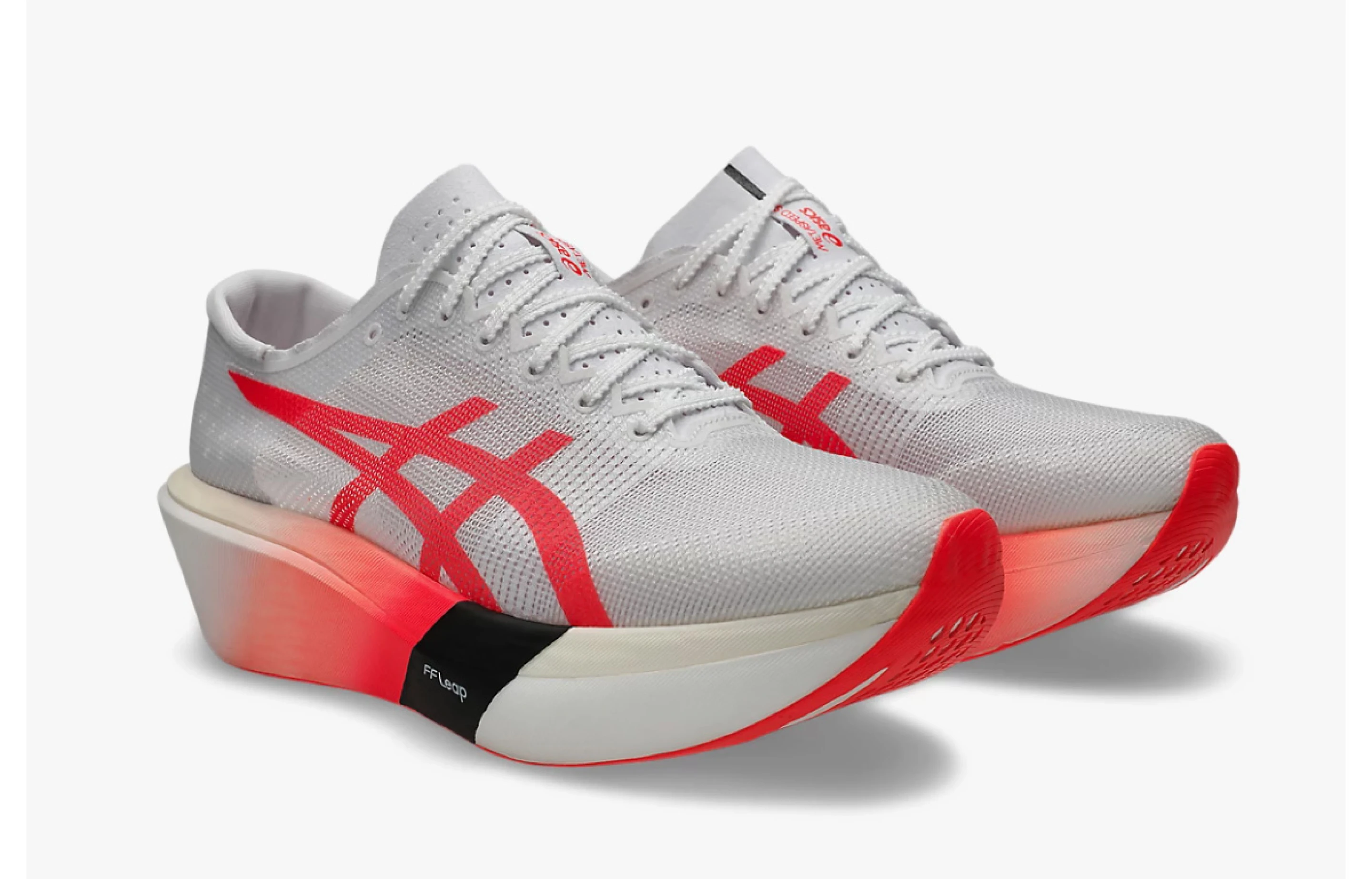
The research was led by Jeremy McCulloch, a mechanical engineering student at Stanford University and a veteran cross country runner. He and his team disassembled multiple pairs of ASICS Metaspeed running shoes and conducted systematic mechanical tests on the two proprietary foam materials in the soles. These "super running shoes" are known for their extremely light weight, thick foam midsoles and built-in carbon fiber plates. Since their introduction in 2016, they have been widely used in track races and long-distance endurance running. They can improve running economy by multiple percentage points and recover energy in every step.
Researchers pointed out that although carbon fiber plates are often regarded as the core technology of racing running shoes, sole foam is an important factor in determining the "fastness" of shoes. To quantify the foam's performance, the team cut the foam from the carbon fiber sheets and placed them in a materials testing machine, where they were tested in tension, compression and torsion to evaluate its ability to withstand tension, pressure and shear forces.
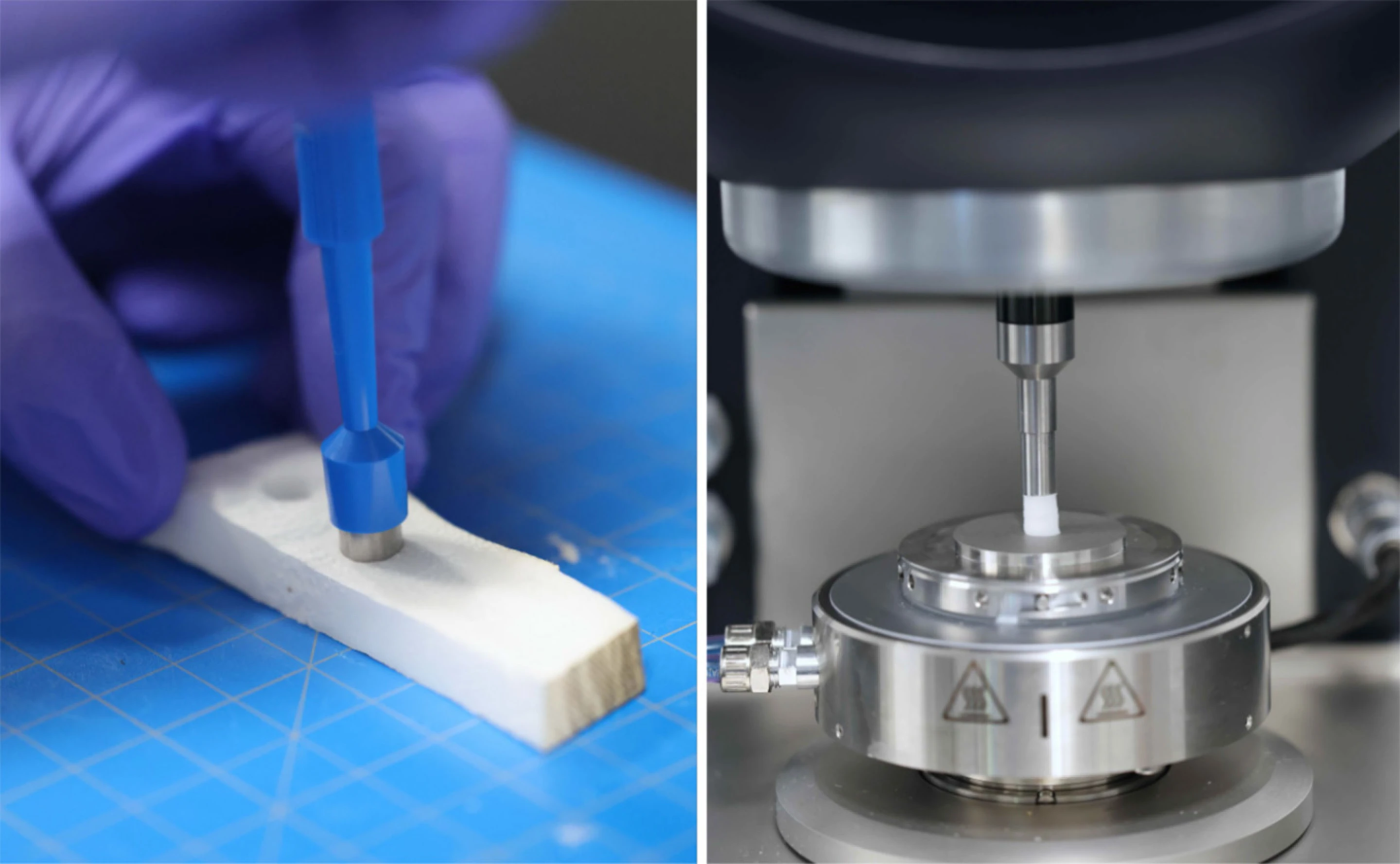
Test results showed that both foams were more than twice as stiff when stretched as they were when compressed. This means that they can effectively absorb the impact of landing while maintaining sufficient structural toughness when under tension. When subjected to vertical compression, the effective Poisson's ratio of these materials is close to zero, i.e. the foam barely expands sideways when compressed downward. In addition, the two foams can return 83% to 94% of the input energy with very low energy loss, helping to propel the runner forward.
However, there are significant differences in performance between the two foams. FF Turbo Plus foam is 42% stiffer than FF Leap in tension and nearly twice as stiff in lateral torsion, or shear. The lower shear stiffness of FF Leap is good for straight-line marathon running, but may cause stability problems on sharp turns or rough roads; the higher shear stiffness of FF Turbo Plus can provide better lateral support and cornering stability, so it is more suitable for cross-country running.
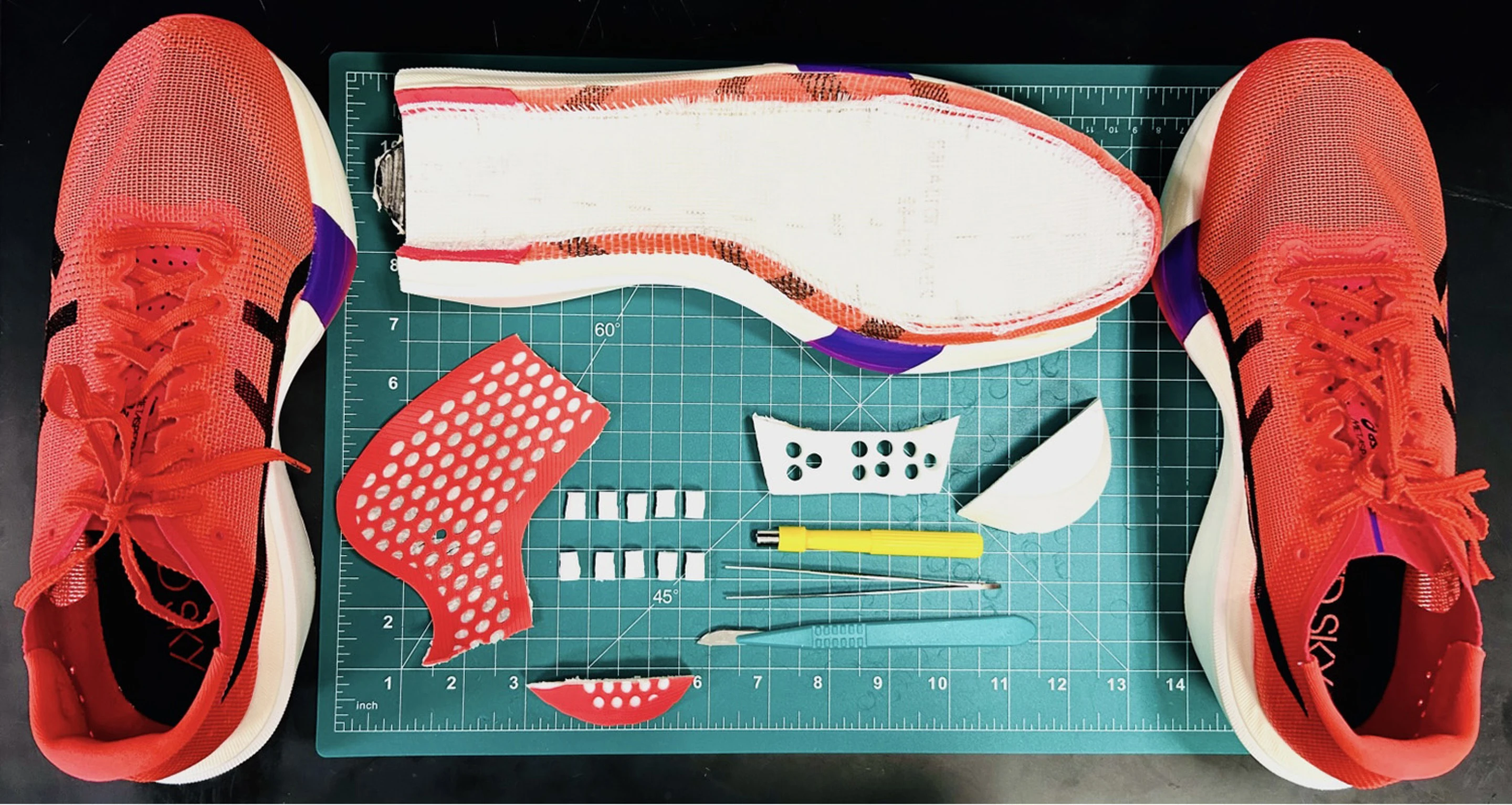
This also explains why ASICS designs different shoes for different running styles. The Metaspeed Sky, for stride runners, places FF Turbo Plus foam on top of the carbon fiber plate and FF Leap foam underneath; the Metaspeed Edge, for stride runners, reverses the positions of the two foams.
In addition to the experimental results, the research team also established a computational model to describe the behavior of the foam under different stress conditions. They combined a neural network of material physics information, laboratory test data, and a machine learning method called sparse regression to arrive at a concise mathematical formula containing only three terms that can accurately predict the response of foam under various loading conditions.
The researchers say these models can be used to accurately simulate a runner's gait, helping researchers understand how the runner's body interacts with running shoes. In the future, such tools may be used to optimize running shoe design, improve performance, and reduce the risk of injury. The research paper has been published in the journal Engineering with Computers.
The next step for McCulloch's team is to model the entire running shoe and combine it with a virtual runner. The work promises to answer more complex questions, such as which shoes are best for specific athletes, and what actually makes a good fit.
Comments