
Abstract:
Does the sun have a companion star that has not yet been discovered? The "Nemesis" hypothesis proposed by Richard Muller, a physicist at the University of California, Berkeley, believes that a low-mass red dwarf star may enter the Oort cloud about every 26 million years, disturbing the orbits of comets in it, thereby triggering comet showers and may be related to mass extinction events in Earth's history. While the theory remains controversial, Mueller insists there is currently no conclusive evidence to rule it out.
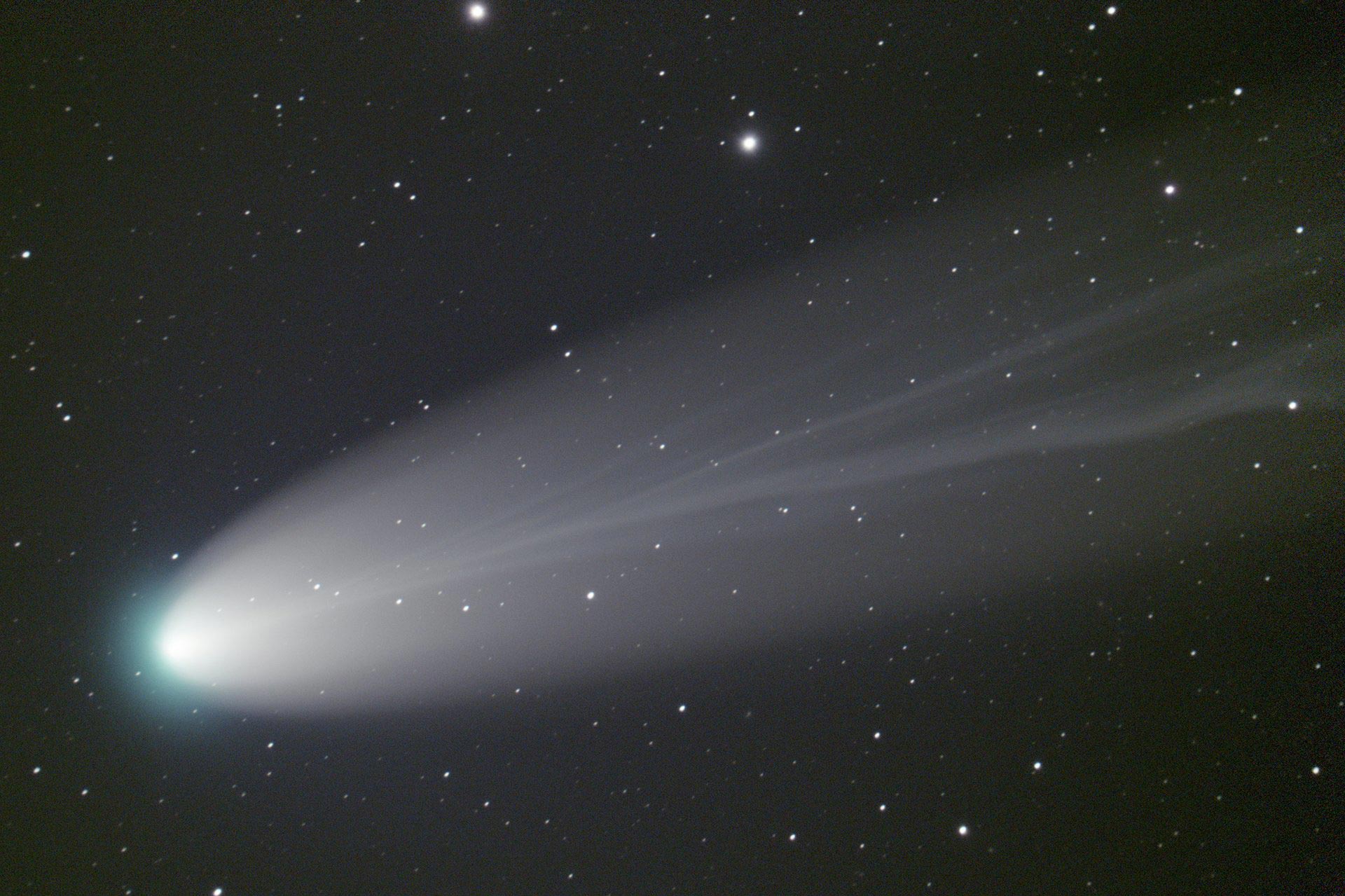
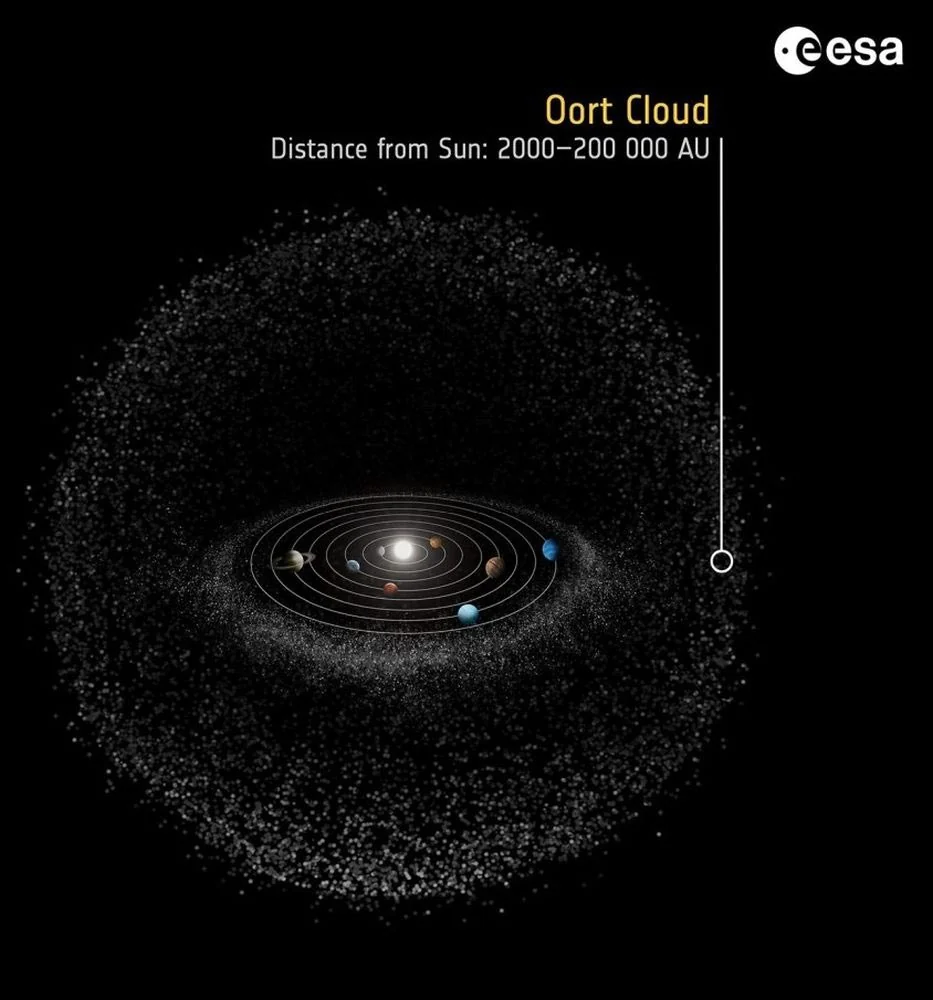
Scientists have long believed that comets with large orbital inclinations and extremely long periods, some of which have the ability to impact the Earth and cause mass extinction, originated from the hypothetical Oort cloud. The Oort Cloud is considered to be a large, roughly spherical library of icy objects that may contain trillions of objects and can reach as far as about 1.6 light-years from the sun.
Mueller proposed that in addition to the gravitational disturbance caused by the Oort cloud caused by stars that occasionally pass by the solar system, there may also be a low-mass red dwarf star, the "Nemesis Star". It may orbit a common center of mass with the Sun and periodically enter certain regions of the Oort cloud along a slightly elongated orbit.
According to this hypothesis, when Nemesis passes through the denser region of the Oort cloud, its gravity will disrupt the paths of billions of comets, pushing some of them into the inner solar system. Mueller said this type of comet shower could last for about a million years, and the period when the number of comets is greatest is when Nemesis passes through the densest region of the Oort cloud.
Mueller emphasized that Nemesis is not a so-called "Planet X" and is different from unrelated stars that occasionally pass near the solar system and may disturb the Oort cloud. Unlike unpredictable stellar flyby events, the Nemesis hypothesis proposes a mechanism that recurs periodically. He believes this may explain Earth's recurring pattern of impact events over about 250 million years.
Mueller cited a 1982 study published in Science magazine. The study was conducted by paleontologists David Raup and Jack Sepkoski, who compiled extensive records of marine extinctions. Müller believes these records show a significant cycle of extinction events occurring approximately every 26 million years.
One of the peaks occurred about 66 million years ago, during the extinction event at the junction of the Cretaceous and Paleogene periods. This event led to the extinction of the dinosaurs and is often referred to as the K-T extinction event. Mueller said the key issue at the time was to find an explanation. "Perhaps there is a companion star that will approach the Oort cloud every 26 million years and trigger a comet to hit the Earth."
Mueller still supports this view, but he is not optimistic about whether Nemesis can be directly observed. He believes that although many people hold contrary views, there is currently no clear evidence to refute this hypothesis.
The Oort cloud itself remains an unsolved mystery. It is a roughly spherical gathering area of comets and small icy objects that has not been directly observed so far. It is believed to be the material left over from the formation of the solar system about 4.5 billion years ago. Sean Raymond, an astrophysicist and director of the Bordeaux Astrophysics Laboratory in France, said that the original material that makes up the Oort cloud may come from three sources: planetesimals from the solar planet-forming disk, planetesimals from systems around other stars in the solar birth cluster, and interstellar objects captured during stellar rendezvous or scattered by Jupiter.
So, why has Nemesis not been directly discovered yet? Many astronomers believe that if it were an ordinary red dwarf star, it would have been observed long ago. Muller's explanation is that Nemesis moves around a common center of mass with the sun and therefore does not have enough proper motion, or lateral movement, in the direction of our line of sight to be detected.
However, Mueller pointed out that the object must be large enough to effectively disturb the Oort cloud. That means it's probably at least 5% the mass of the Sun.
The current mainstream view is that the celestial body that hit the Yucatan Peninsula about 66 million years ago and caused the K-T extinction event was probably a large asteroid. Muller believes that the evidence that it is an asteroid rather than a comet is actually weak. He recalled that Berkeley Professor of Earth and Planetary Sciences Walter Alvarez called it an asteroid in his original paper on the K-T boundary, but when Mueller asked whether it might be a comet, Alvarez responded: "Of course, we can't distinguish between the two."
The near-term hope for a deeper understanding of this vast comet library comes from the newly operational Rubin Observatory. Astronomers hope that the observatory will be able to discover more long-period comets from the Oort cloud, providing more data to test related theories.
Looking at a longer time scale, Muller believes that the next comet shower that may cause serious damage to the earth will have to wait at least 12 to 15 million years.
But if Nemesis really exists, it is likely to be located near the ecliptic plane, which is roughly in the same plane as most celestial bodies in the outer solar system. This means that, from the perspective of an Earth observer, it will be in the same area of the sky as a large number of outer solar system objects. At the same time, as a faint star with a brightness of only magnitude 8 or possibly 9, it cannot be seen with the naked eye and is more easily obscured by numerous background stars.
Müller said that Nemesis is likely to be "lost" in a field of view that includes many other stars.
Comments