
Abstract:
According to Reuters, as the construction of AI data centers in the United States faces increasing community opposition, power supply and regulatory pressure, technology companies and data center developers are setting their sights on new regions. Argentine Patagonia, located in southern South America, is becoming one of the new candidates.
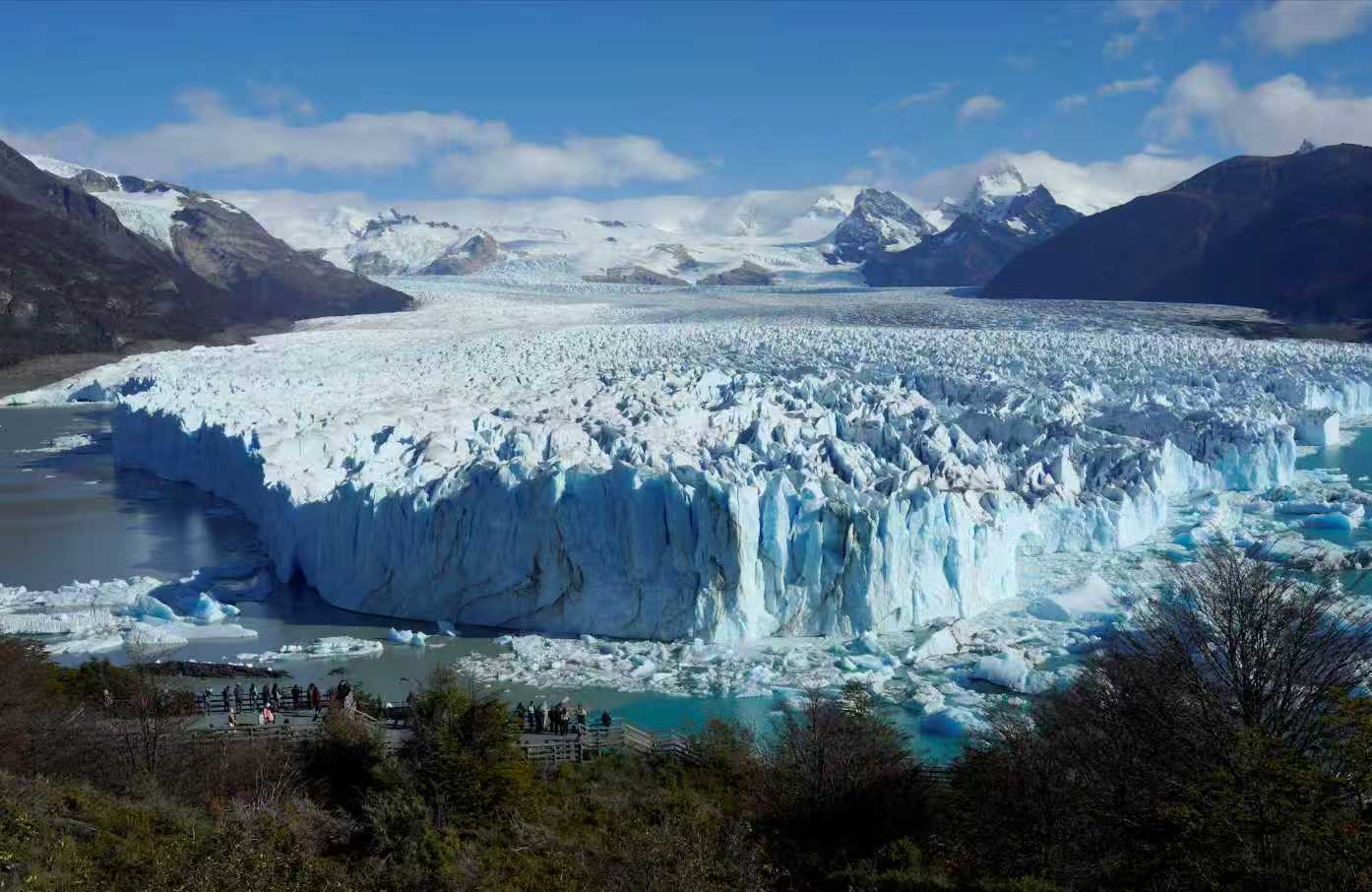
The reasons for attracting data center developers here are straightforward: a cold climate, renewable energy and shale gas resources, vast land and a relatively sparse population. Unlike some parts of the United States, Argentina has yet to see a significant wave of public opposition to large data centers. Reuters pointed out that an important reason is that Argentina currently only has a small number of data centers, mainly concentrated in Buenos Aires, and local residents have not yet truly felt the impact of ultra-large data centers.
This contrast is becoming important
In the past year, resistance to the expansion of U.S. AI data centers has increased significantly. In July this year, 142 protests against the construction of data centers were held in 42 states in the United States. A June Reuters/Ipsos survey showed that only 14% of U.S. respondents supported the construction of data centers in their own communities to serve technology companies' AI projects. Residents' concerns mainly focus on rising electricity prices, water use, noise, and land and environmental impacts.
Resistance has begun to enter project financing and supervision from the community level. Reuters reported in August that in the first quarter of this year, at least 75 data center projects in the United States with a total value of approximately US$130 billion faced local opposition. Financial institutions such as Bank of America stated that when evaluating data center project financing, in addition to the credit and approval status of the project itself, the level of community support has also become a factor that needs to be considered.
Electricity is a more direct limitation
According to Reuters statistics on utility company and power grid data, the demand for power access from large-scale power projects in parts of the Midwest, Mid-Atlantic and South of the United States has exceeded 700GW, the vast majority of which comes from data centers. This number is more than 10 times the total power consumption of existing data centers in the United States estimated by the industry. However, it should be noted that this 700GW does not equal the actual and confirmed data center demand for construction. There are duplicate applications and projects that lack funds or actual development capabilities.
Texas has therefore become the first major data center market in the United States to suspend the grid connection of large-scale power projects such as new data centers and conduct a comprehensive review of related projects. Since 2023, the demand for grid access from large power projects such as Texas data centers has increased from about 48GW to more than 474GW. Texas regulators hope to determine how much of the demand can actually be realized by reviewing information such as ultimate owners, funding sources, water use and self-generated power generation plans.
Just as the United States begins to "squeeze water" for the power needs of data centers, another global power-seeking operation is underway.
Reuters reported on September 7 that Pampa Energia, a large Argentine power company, is studying the construction of a large data center in the Neuquén province of Patagonia. The project is planned to be close to the company's Loma de la Lata thermal power plant, with a potential power capacity of up to 500MW, and energy can come from the nearby Vaca Muerta shale gas field. Vaca Muerta is one of the largest shale oil and gas resource areas in the world.
It should be noted here that Pampa Energia’s 500MW project is still in the research and investor search stage and is not a project that has been confirmed for construction.
Pampa Energia’s power business commercial director Ruben Turienzo told Reuters that the company began studying this option after receiving inquiries about potential data center projects at the beginning of this year. The company is currently providing energy quotes to potential customers and hopes to reach a preliminary agreement by the end of 2026. Potential investors hope to first build a 20MW to 40MW pilot project before considering scaling up. Just to build the corresponding power infrastructure for the final 500MW scale is expected to cost close to US$900 million.
And Pampa Energia is not the only developer eyeing Patagonia.
FlexDomes, an American green data center company, is also looking for investors in Neuquén. According to plans disclosed to Reuters by its representatives, the first phase of the project has an IT load of 120MW and an estimated investment of US$1.4 billion. It also plans to use Vaca Muerta's energy. The project is still looking for investors.
In Chubut Province further south, Polish energy company Green Capital disclosed an even bigger plan in July this year: the first phase of the data center is planned to reach 300MW, with an expected investment of US$3 billion, and the long-term plan may even be expanded to 3,000MW. The company is currently leasing about 1,298 square kilometers of land south of Trelew, where it plans to build wind and solar facilities and hopes the data center will not rely on Argentina's national grid. It should be noted that this project has not yet secured financing, and the company plans to apply for Argentina’s investment incentive policy in 2027.
OpenAI focused on this place earlier
In October 2025, OpenAI signed a letter of intent with Sur Energy, an Argentine energy infrastructure company, to explore the construction of the "Stargate Argentina" large-scale AI data center in Argentina. According to the plan announced at the time, the potential investment in the project is up to US$25 billion, the scale is up to 500MW, and it is planned to use clean energy.
However, this project cannot be understood as having officially started.
OpenAI officials clearly used the term "exploring large-scale data center projects" at the time. Sur Energy was responsible for energy and infrastructure development and took the lead in forming a consortium. OpenAI expressed its welcome to become the offtaker of the project's computing power in the future. In other words, what the two parties signed was a letter of intent, not a final construction contract.
In August this year, Sur Energy co-founder Emiliano Kargieman told Bloomberg Línea that the company was looking for a project site with Neuquen Province and whether to sign a final contract and launch the project as the next step, "the ball is now in OpenAI's court." A Reuters report on September 7 quoted this statement again.
What really attracts Patagonia to AI data centers is not just “more electricity”.
Ruben Etcheverry, head of the Neuquen Provincial Development Commission, told Reuters that the local climate is cold, which can reduce data center cooling costs, and it also has hydropower and Vaca Muerta natural gas resources. For AI data centers that often require hundreds of megawatts of power, this means that the local area has two important conditions: stable energy and a low-temperature environment.
More importantly, Patagonia is less densely populated than what is happening in the United States, and there is currently no large-scale data center opposition movement. Reuters cited this disparity as one of the important reasons why technology companies are starting to pay attention to Argentina.
However, “no one objects” does not mean that Patagonia’s data center can be launched quickly.
The first is infrastructure. Although the local area has natural gas, hydropower, wind energy and other energy resources, it still requires huge investment to actually send the energy to a 500MW data center. At the same time, Patagonia’s digital communications infrastructure is relatively weak. Argentina’s communications authority said in July this year that it plans to build a second optical fiber submarine cable landing station to improve Patagonia’s conditions for hosting data centers.
The second is political and financing risks. Multiple industry insiders interviewed by Reuters said that some investors are still observing Argentina's 2027 presidential election and further investment incentive policies planned by the Milais government.
There are also potential social risks in the local area. Reuters specifically noted that the rural area of Neuquén, where the Pampa Energia project research data center is located, is home to indigenous Mapuche families who have had conflicts with energy companies in the past. Therefore, the fact that there is currently no US-style wave of opposition to data centers does not mean that disputes over land, energy or community interests will not arise after large-scale projects are implemented in the future.
“Everyone is looking for power, and that’s why international developers are starting to look at Argentina.” Hadassa Lutz, co-founder of U.S. data center consulting firm Cloud2Ground, told Reuters.
But she went on to remind that just having electricity is not enough.
This may be exactly what is happening in this round of global AI data center expansion.
GPUs are still important, but when tens of thousands or even hundreds of thousands of AI chips need to run simultaneously, the resources technology companies compete for have further expanded from chips to electricity, land, grid access, fiber optic connections, and acceptance by local communities.
The United States has not stopped building AI data centers. OpenAI disclosed in April this year that the scale of its planned Stargate AI infrastructure in the United States has exceeded the originally proposed 10GW target, and said it will continue to look for more U.S. project locations.
But on the other hand, when the power grid in some parts of the United States becomes increasingly congested, residents begin to worry about electricity prices and water resources, regulators raise the threshold for data center access, and financial institutions begin to incorporate community opposition into project risk assessments, areas that were not on the core map of global technology infrastructure in the past are suddenly gaining new value.
Patagonia is just one example.
For the increasingly power-hungry AI industry, the next round of infrastructure competition may not be about "who can buy more GPUs", but who can find enough, cheap enough, and actually build data center power.
Comments