
Abstract:
Driven by the artificial intelligence boom, global data center construction is facing unprecedented expansion needs. However, problems such as insufficient power supply, shortage of construction workers, and long project approval cycles are becoming key bottlenecks restricting the development of the AI industry. Faced with this situation, the American AI infrastructure company Crusoe proposed a solution that is different from the traditional "super large campus": building a modular data center that can be mass-produced and transported and deployed.
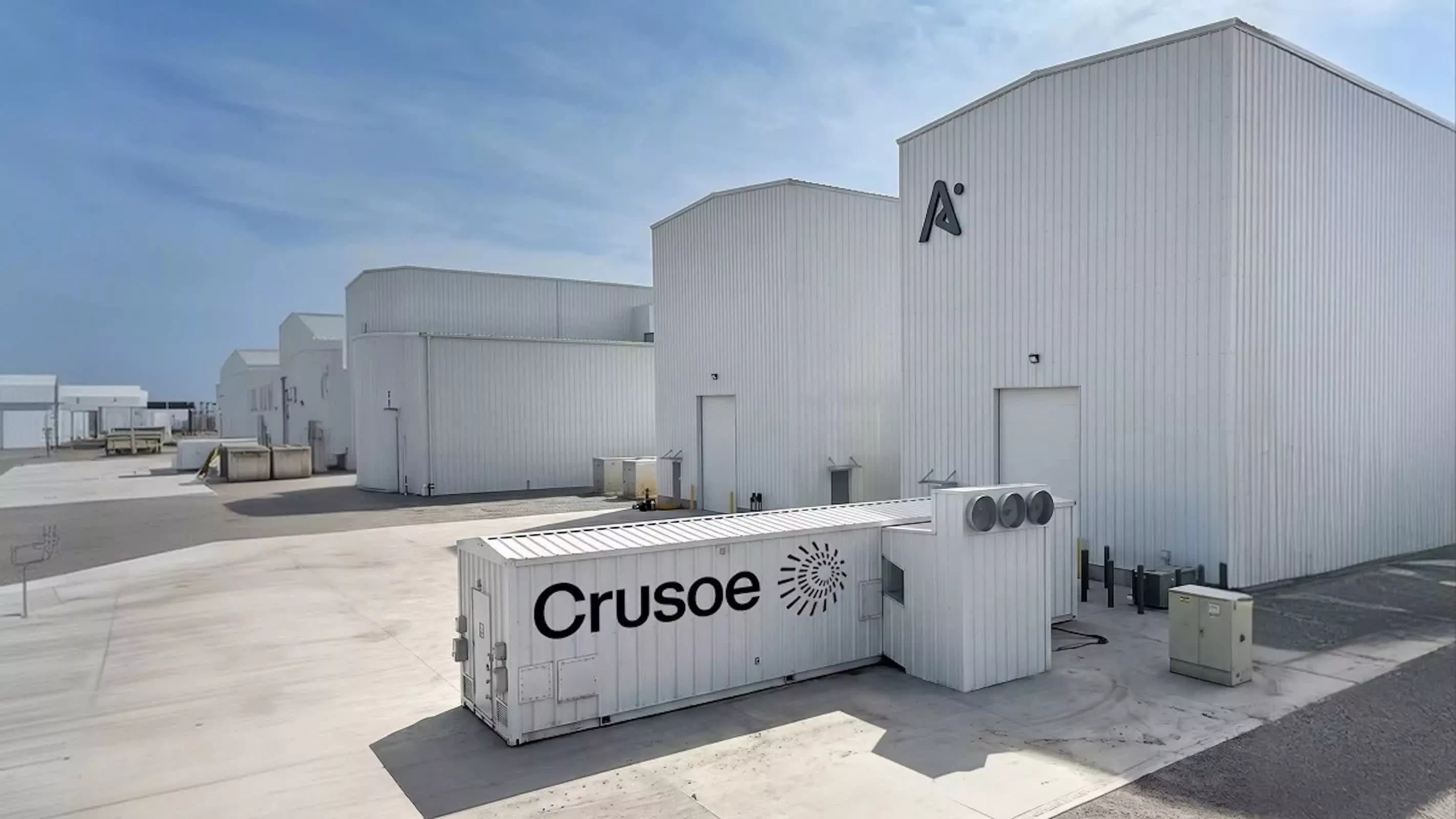
Crusoe recently announced the completion of US$3.9 billion in financing, bringing the company’s valuation to approximately US$30.9 billion. The company said that in addition to continuing to support large-scale AI data center projects, the new funds will also be used to promote a modular AI data center product called "Spark".
Crusoe has previously attracted attention for its participation in the construction of a large-scale AI data center park in Abilene, Texas, USA. The campus is operated by Oracle and provides computing resources to OpenAI. However, the company now believes that the future development of AI infrastructure should not rely solely on ultra-large centralized data centers.
According to Crusoe's vision, Spark is a factory-prefabricated data center unit. These facilities can be assembled at manufacturing bases in advance and then transported by truck to areas with available power resources for rapid deployment, thereby significantly shortening the construction cycle.
Chase Rockmiller, the company’s founder and CEO, said that training the most advanced large models does require large-scale clusters of hundreds of thousands of AI chips, but more and more AI inference tasks do not necessarily require such huge infrastructure.
He believes that many inference workloads do not require a very large campus like Abilene. For this type of application, it is more efficient to use small data centers with distributed deployment, and concentrating all tasks on giant campuses will even cause a waste of resources to some extent.
This view also reflects that the AI infrastructure market is forming a new division of labor model. Ultra-large campuses are still an indispensable core facility for training advanced models, because the training process requires massive GPUs, high-speed networks, and huge power supply capabilities. After the model is trained, a large number of user-oriented inference services can be deployed in smaller computing nodes.
Compared with traditional data center projects, which often take years to plan, approve and construct, the biggest advantage of modular facilities is speed. Crusoe plans to produce Spark modules in advance, and when it finds that there are available power resources in a certain area, it will directly transport the facilities there and put them into use quickly.
Currently, one of the biggest challenges facing U.S. data center developers is access to power resources. Although many areas have available electricity, the human resources, land development and supporting engineering required to build large data centers are often difficult to follow in a timely manner.
Crusoe hopes to solve this problem through the manufacturing model. The company is currently building a production base near Denver and plans to eventually produce a Spark facility equivalent to 1 gigawatt of computing power per year.
Beyond power issues, the modular approach is expected to ease community resistance to large-scale data center projects. In recent years, there have been objections to the construction of large-scale data centers in many regions of the United States. The disputes mainly focus on land occupation, noise, landscape impact, and power grid burden. Compared to sprawling super campuses, smaller, more flexible data centers are expected to reduce these conflicts.
Industry insiders believe that as artificial intelligence applications gradually shift from model training to large-scale commercial deployment, the demand for inference computing is growing rapidly. In the future, AI infrastructure may no longer rely entirely on a few super computing centers, but will form a new pattern in which large training centers and a large number of distributed inference nodes coexist.
In the context of global computing power competition continuing to heat up, Crusoe’s bet on modular data centers is actually looking for a faster and more flexible expansion path for the AI industry. For the entire industry, the real factor limiting the development of artificial intelligence may no longer be the algorithm itself, but electricity, land and infrastructure construction capabilities. And whoever can solve these real-world problems more efficiently may have an advantage in the next stage of the AI competition.
Comments