
Abstract:
The construction boom of artificial intelligence data centers is having an increasingly extensive impact on the global electronics industry supply chain. Previously, the market has experienced tight supply and rising prices of products such as DRAM memory, NAND flash memory, SSD and GPU, and now even seemingly ordinary printed circuit boards (PCBs) are beginning to experience serious shortages. As PCB manufacturers shift more production capacity to higher-margin AI server orders, traditional PCs, laptops and consumer electronics are facing new supply pressures.
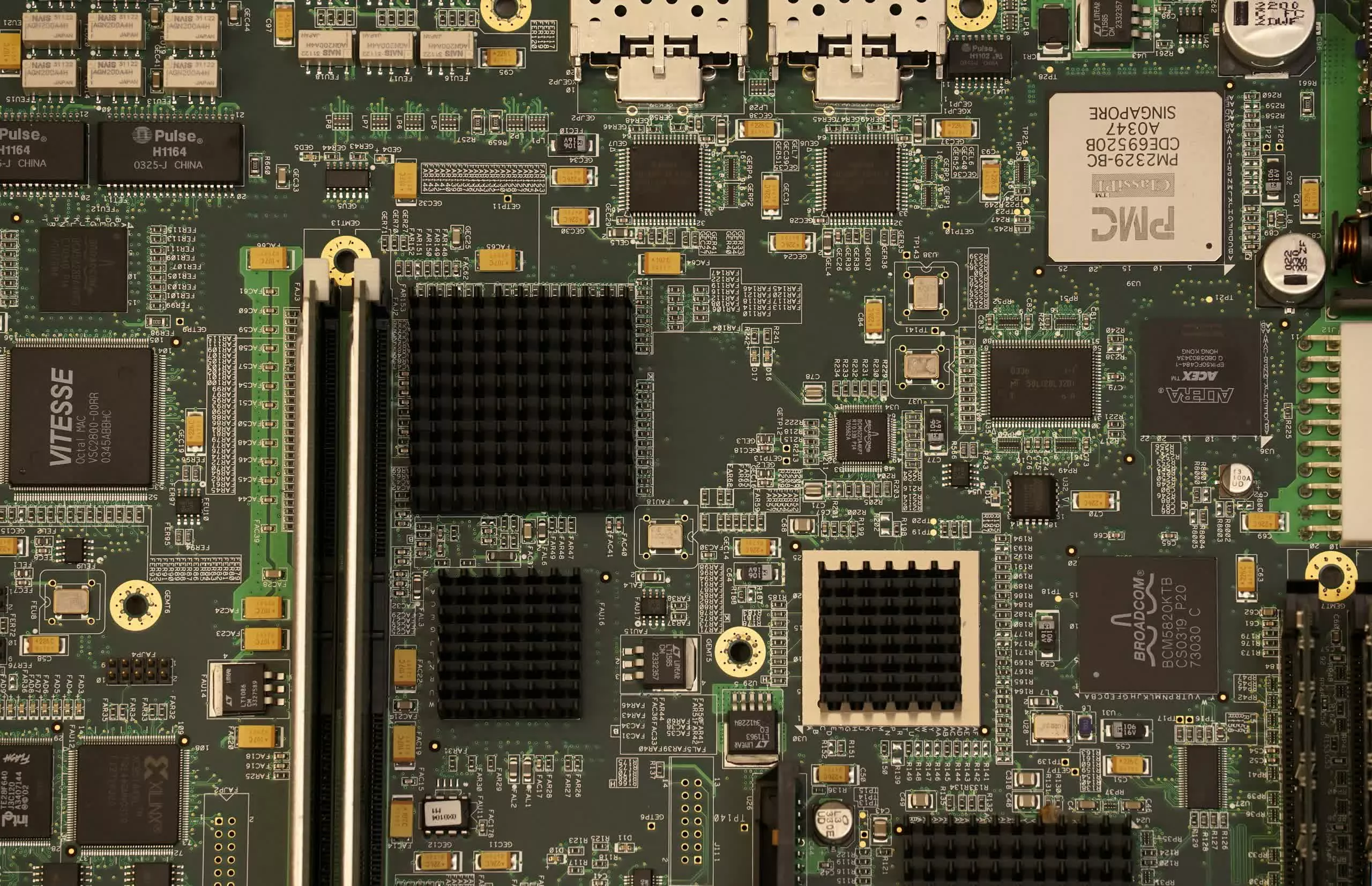
According to a report by Nikkei Asia, PC manufacturers such as HP and Dell have begun to worry about whether they can obtain sufficient supply of circuit boards in the future when formulating their 2027 product plans. An executive at a U.S. PC manufacturer said that even though global PC shipments are expected to continue to decline next year, the company is still struggling to obtain PCBs to meet production needs.
This situation is quite unusual. According to traditional market rules, a decline in PC demand usually means that the pressure on component supply will also be reduced, but the current situation is exactly the opposite. AI server construction is absorbing a large amount of global PCB manufacturing resources, making it impossible for consumer electronics manufacturers to ensure adequate production support even in the face of weak market demand.
The core of the problem is that the circuit boards used by AI servers are very different from ordinary PC motherboards.
Ordinary desktop motherboards usually adopt a relatively conventional multi-layer PCB structure, while high-end AI servers need to carry a large number of GPUs, CPUs, memories and high-speed interconnect devices, which puts forward higher requirements for the signal integrity, heat dissipation capacity and electrical performance of the circuit board. These circuit boards often adopt dozens of layers of structure and use low-loss copper-clad laminates and special glass fiber materials to ensure signal stability during high-speed data transmission.
Because manufacturing is more difficult and the unit price is more substantial, PCB manufacturers are naturally more willing to allocate production lines to AI server customers. For manufacturers, the equipment time and material resources required to produce a high-end AI server circuit board may be equivalent to multiple ordinary consumer-grade circuit boards, and AI infrastructure customers usually have stronger purchasing power and willingness to pay.
As a result, part of the production capacity originally used to produce desktop motherboards, laptop motherboards and graphics card PCBs is gradually being transferred to the field of AI servers.
A more serious problem comes from the most basic raw material of PCB - copper clad laminate (CCL).
Copper clad laminate is the core basic material for manufacturing printed circuit boards, usually made of fiberglass cloth, resin and copper foil. Subsequently, manufacturers process circuit lines on its surface and form a complete PCB structure through multi-layer stacking.
A Taiwanese PC manufacturer told Nikkei Asia that the price of copper clad laminates has now reached at least 12 times that of July. The increase reflects the rapidly deteriorating supply constraints of upstream materials. However, this is market feedback provided by a single company and does not mean that all specifications of copper clad laminates have increased by the same amount.
At the same time, orders from one of the world's major copper-clad laminate suppliers have been scheduled until 2030. Even if the company plans to triple its current production capacity by 2028, the existing order backlog is still huge.
This means that the question is no longer limited to whether PCB manufacturers are willing to expand production, but whether upstream material suppliers can provide sufficient raw materials in a timely manner.
PCB manufacturers are also currently extending delivery times. One supplier said that the delivery time for a considerable part of its products has doubled; another company revealed that if a new order is submitted now, it is not expected to be delivered until the second half of 2028.
The lead time for some orders has therefore reached 30 months. For PC manufacturers who need to plan product development and production cycles in advance, this situation will seriously affect product supply arrangements in 2027 and even 2028.
Expanding production capacity is not an easy task. In addition to the need to purchase equipment, build factories and ensure the supply of raw materials, the PCB industry also faces a serious shortage of professional and technical personnel.
As manufacturers expand investment, PCB engineers and production technicians with rich experience become the target of competition. According to reports, salaries for technical positions related to the PCB industry have increased by 20% to 30%. This further increases the cost for companies to expand production, and also means that even if the factory is built, it may not be able to reach the expected production capacity immediately.
This tight PCB supply has begun to affect other industries.
Japanese company Canon said this week that some of its production activities have been restricted since August this year due to the shortage of circuit boards and related parts driven by the AI industry. Due to the impact on medical equipment production, Canon expects to lose approximately 90 billion yen in sales of its medical equipment business this year.
This shows that the impact of AI infrastructure construction on the traditional electronics industry is no longer limited to PCs and graphics cards. Medical equipment, industrial electronics, and other products that rely on complex circuit boards may also be affected.
At the same time, the PCB shortage is creating a superimposed effect on the previous memory crisis.
Since 2026, the prices of DRAM and NAND flash memory have continued to rise, and PC manufacturers have had to re-evaluate product configurations and pricing strategies. Market research firm Gartner has even predicted that PCs priced below $500 may gradually disappear by 2028, as the rising cost of memory and other key components will make it increasingly difficult to maintain the production of low-priced computers.
The graphics card market is not immune. Taking the Nvidia GeForce RTX 5080 as an example, the price in some retail channels in the United States is close to US$2,000, which is much higher than its original official suggested retail price.
Now, PCB has also joined the ranks of rising prices and tight supply, which means that the cost pressure faced by the PC industry is further expanding.
It is worth noting that although PCB does not account for a prominent proportion in the overall material cost of a computer, it is an irreplaceable basic component. Whether it is a motherboard, graphics card or laptop, it must rely on the circuit board to complete the connections between chips, memory, power supply modules and other components. Once the PCB supply is insufficient, even if the manufacturer has obtained the CPU, GPU and memory, it will not be able to complete the production of the whole machine.
Nvidia has begun to lock in advanced packaging and chip substrate production capacity in advance by establishing cooperative relationships with professional substrate manufacturers. Japan's Ibiden, South Korea's Samsung Electro-Mechanics and Taiwan's Xinxing Electronics have all entered relevant cooperation systems. Among them, Xinxing Electronics plans to expand related production capacity to 2.5 times the current level in the next three years.
However, although chip packaging substrates and ordinary PCBs are technically related, they cannot completely replace each other. The growing demand for advanced substrates for AI chips is also further increasing resource competition in the entire circuit board industry chain.
For the PC market in 2027, the current situation is particularly worthy of vigilance. Even if consumer demand continues to be weak, PC manufacturers may not be able to obtain lower procurement costs as a result. On the contrary, the strong demand for high-end PCBs from AI server customers may continue to squeeze the production resources of traditional consumer electronics products.
In the future, motherboards, graphics cards and laptops may all be affected by rising PCB costs and extended delivery cycles. Although no PC manufacturers have yet announced specific retail price adjustments, with memory, SSD and GPU prices already generally rising, the PCB supply crisis will undoubtedly further weaken the room for price reductions in consumer electronics products.
From an industrial perspective, this crisis has revealed the other side of the expansion of AI infrastructure: AI is not only competing for the most advanced GPUs, HBM, and advanced process wafers, but is also consuming a large amount of basic electronic manufacturing resources that have not been paid special attention by the market before.
When global capital and manufacturing capabilities continue to tilt towards AI data centers, the traditional PC industry, even if it has mature product design and sales channels, may not be able to complete production as planned because of an ordinary circuit board.
Comments