
Abstract:
AMD CEO Su Zifeng recently visited South Korea again and held talks with senior executives of Samsung Electronics and SK Hynix. Against the background of the continued rapid expansion of artificial intelligence infrastructure and the increasingly tight supply of HBM high-bandwidth memory, AMD is working hard to acquire more key memory resources and is also considering further expanding its cooperation with Samsung in the field of wafer foundry.
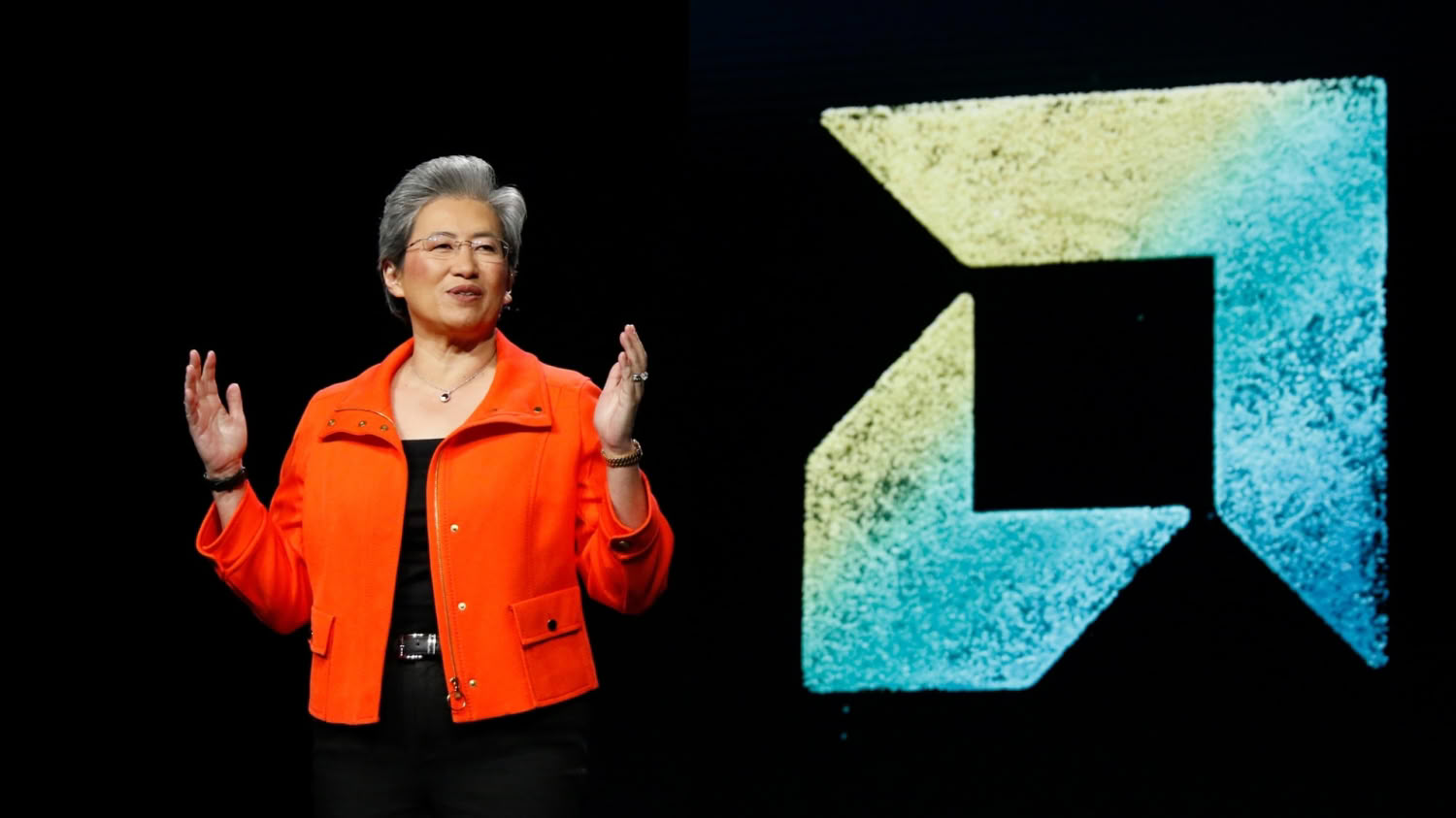
On October 7, Su Zifeng said during the AMD Gamer Day event in Seoul that the Korean semiconductor industry is very important to AMD. She revealed that AMD is continuing to explore cooperation opportunities with Samsung Electronics and SK Hynix in memory and wafer foundry business, and emphasized that the Korean supply chain is an important part of AMD's long-term goal of achieving data center business.
Su Zifeng also met with senior executives of Samsung Electronics and SK Hynix that day. Among them, she held talks with Jeon Young-hyun, head of Samsung Electronics’ Device Solutions Division and vice chairman. This meeting comes only about seven months after the last high-level meeting between the two parties, showing that the cooperation between AMD and Samsung is clearly heating up.
Currently, one of AMD's most pressing issues that needs to be solved is HBM supply. With the rapid growth in demand for the Instinct series of AI accelerators, each high-end AI GPU needs to be equipped with a large number of HBMs, and global HBM production capacity is still in a tight state. AMD not only needs to fight for more existing production capacity, but also needs to work with suppliers to increase production capacity in the next few years.
Su Zifeng said that the current memory supply is very tight. On the one hand, AMD is working with customers to optimize memory usage in order to use limited memory to support more computing tasks; on the other hand, it is also requiring suppliers to expand production scale as soon as possible. She also previously expressed the hope that memory suppliers can "increase production capacity as quickly as possible."
Samsung has now become an important partner in AMD's AI accelerator memory supply chain. The two parties signed a memorandum of understanding in March this year to further expand the scope of cooperation in the field of AI infrastructure memory, including next-generation HBM4 and advanced DDR5 memory.
According to the previously reached cooperation arrangement, Samsung will become an important supplier of AMD's next-generation Instinct MI455X AI accelerator HBM4, and will also provide advanced DDR5 memory for AMD's next-generation EPYC server processor and Helios rack-mounted AI system.
AMD has previously used HBM3E provided by Samsung on products such as MI350X and MI355X. With the gradual advancement of next-generation products such as MI455X, the importance of HBM4 will further increase. For AMD, whether it can obtain a stable and sufficient HBM supply has become one of the important factors limiting its AI accelerator shipping capabilities.
However, the content discussed between AMD and Samsung this time is not limited to memory. In the agreement signed in March, the two parties have proposed to explore the possibility of wafer foundry cooperation, that is, Samsung's wafer foundry business will manufacture some new generation products for AMD in the future.
According to industry sources, Samsung hopes to further expand cooperation with AMD and strive to obtain more wafer foundry orders from AMD. In other words, Samsung hopes to further develop the current "memory supplier" relationship into a comprehensive partnership covering multiple aspects such as memory, wafer manufacturing and advanced packaging.
This kind of cooperation is of particular significance to Samsung. Samsung's wafer foundry business has faced tremendous competitive pressure from TSMC in recent years. Winning large customers in the advanced process field has always been one of its core tasks. If it can obtain large-scale orders from the world's major CPU, GPU and AI accelerator manufacturers like AMD, it will help improve Samsung's advanced process capacity utilization and improve the operating conditions of its wafer foundry business.
But whether AMD will hand over more advanced chips to Samsung for manufacturing is another complicated question. AMD's current most advanced CPU and GPU products are highly dependent on TSMC's advanced processes. Moving the large-scale manufacturing of a mature product or a new product from the existing supply chain to another foundry requires re-process adaptation, design optimization, verification and mass production ramp-up, and there are also yield and capacity risks.
From AMD's perspective, the biggest attraction of Samsung's foundry is not just the price, but the diversification of the supply chain. As demand for AI chips continues to grow, AMD increasingly needs to avoid over-reliance on a single manufacturer. If Samsung can prove that its advanced process and packaging capabilities are mature enough, AMD may consider letting some future products enter Samsung's manufacturing system.
At the same time, the importance of HBM supply has also changed the bargaining relationship in the traditional chip industry chain. In the past, chip design companies usually had stronger initiative, and memory manufacturers mainly competed for orders from customers. However, as the demand for HBM from AI accelerators has exploded, HBM has transformed from an ordinary supporting component into a key resource that determines the performance and shipping capabilities of AI chips.
Samsung and SK Hynix currently occupy the majority of the global HBM market, and the two companies hold key supply capabilities urgently needed by AI chip manufacturers such as AMD and Nvidia. In this case, HBM manufacturers' bargaining power over chip design companies has significantly improved.
For AMD, this also means that the importance of maintaining long-term cooperative relationships with South Korea's two major memory manufacturers is rapidly increasing. Su Zifeng's trip to South Korea not only met with Samsung, but also had contact with senior executives of SK Hynix, showing that AMD is strengthening two major HBM supply channels at the same time.
AMD has emphasized many times before that it hopes to establish a longer-term memory supply relationship. Su Zifeng said in Seoul that the company pays more attention to cooperation that lasts for three to five years or even longer, rather than maintaining short-term supply relationships that only last one to three years. This means AMD may be locking in the HBM capacity needed for future AI accelerators through long-term agreements.
For Samsung, this just provides an opportunity to expand its foundry business. If Samsung can further deepen its supply relationship with AMD through products such as HBM4 and DDR5, the possibility of future cooperation between the two parties in the field of wafer foundry will also increase.
However, there is currently no news proving that AMD has officially decided to hand over a certain high-end CPU or GPU to Samsung for large-scale OEM production. The current statement used by Su Zifeng is to "continue to explore" cooperation opportunities in memory and wafer foundry. Therefore, the two parties are still some distance away from officially signing large-scale wafer foundry orders.
It is worth noting that Su Zifeng himself is no stranger to Samsung and the wafer manufacturing industry. Before joining AMD, she worked for IBM for a long time and participated in semiconductor manufacturing technology research and development. Around 2005, she held an important position in IBM's semiconductor R&D system and participated in joint R&D work on advanced processes among IBM, Samsung, Chartered Semiconductor and Infineon.
Therefore, if AMD eventually expands its cooperation with Samsung's foundry business, it will not be a completely unfamiliar supply chain attempt. Su Zifeng himself has had deep industrial ties with Samsung and its advanced process research and development system in the past.
From the perspective of the development of the entire AI chip industry, AMD and Samsung are forming a representative industry chain cooperation model: AMD needs Samsung to provide more and more HBM, and Samsung hopes to use this cooperation to further enter AMD's advanced logic chip manufacturing system. The interests of both parties are not exactly the same, but the rapid growth in demand for AI chips is bringing the two companies closer together.
If AMD really hands over some new-generation CPUs, GPUs or AI accelerators to Samsung wafer foundry manufacturing in the future, this will not only mean further diversification of AMD's supply chain, but may also become an important breakthrough for Samsung's advanced process business to compete for large international customers.
While Nvidia continues to dominate the AI accelerator market, AMD is working hard to catch up at multiple levels from computing architecture, software ecosystem to supply chain. Whether it can obtain enough HBM and stable advanced process production capacity will become an important factor in AMD's expansion of its AI chip business in the next stage, and Samsung may become one of the key partners in this strategy.
Comments