
Abstract:
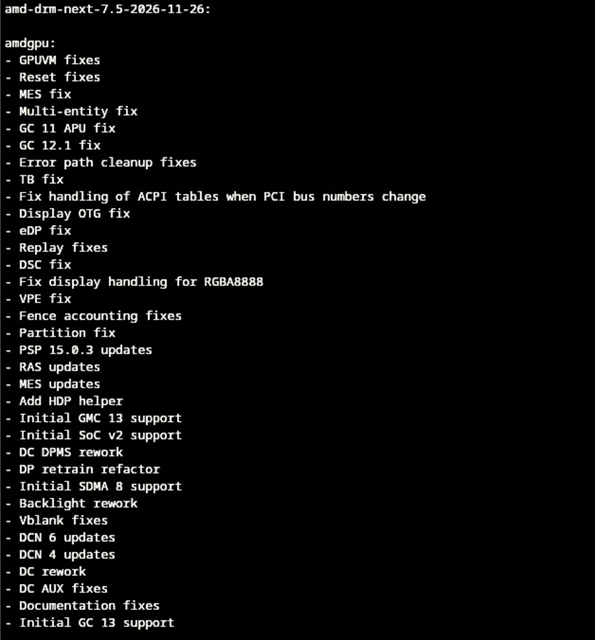
It was recently reported that AMD's next-generation RDNA 5 graphics card is ushering in new development progress. AMD has recently submitted a new round of graphics and computing driver updates, initially adding support for the GFX13 graphics architecture. The relevant code is planned to enter the Linux 7.5 kernel, paving the way for software adaptation of the next-generation Radeon GPU.
The most important change in this update is that GFX13 support has begun to enter the actual driver development stage. Previously, AMD has announced the underlying code related to GFX13, and GFX13 is considered to correspond to the next generation RDNA 5 graphics architecture. This update further promotes the adaptation of the new architecture at the operating system level.
In addition to graphics controllers, AMD has also added GMC 13 support this time, corresponding to the new generation of GPU memory controllers, while promoting SoC v2.0 related support. This means that the software adaptation work of RDNA 5 has involved multiple underlying hardware modules.
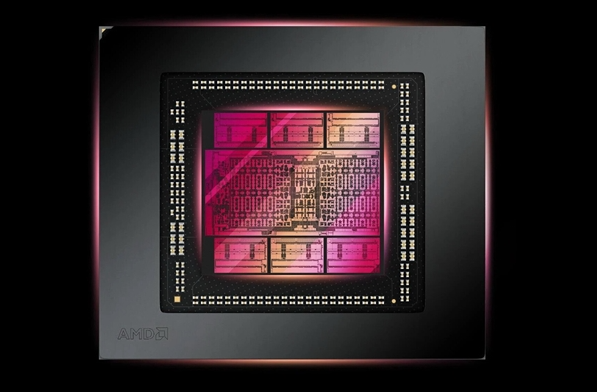
There are also new developments in the display section. AMD is continuing to improve Display Core Next 6, also known as DCN 6 display engine. It is expected that this module will also be used in RDNA 5 graphics cards to provide support for the display output function of next-generation GPUs.
However, these driver patches are still in a very early experimental stage, and the specific hardware specifications, number of computing units, graphics memory configuration and performance of RDNA 5 have not yet been disclosed. This update is mainly to establish the basic support framework. In the future, hardware initialization, function adaptation and driver stability will need to be continuously improved.
According to the current development plan, Linux 7.5 is expected to be officially released in the first quarter of 2027, and the RDNA 5 gaming graphics card is expected to be launched as early as late 2027. However, the specific release time has not yet been officially confirmed by AMD.
Comments