
Abstract:
On November 5, Anthropic announced the latest results of its AI model Claude in the field of biological research. With the assistance of Claude, the company's research team for the first time resolved the three-dimensional structure of Vault (vault particles) constructed in prokaryotic cells, and shortened the protein particle purification process that originally took about 3 days to 90 minutes. Claude also participated in many scientific research links such as protein database search, DNA construction design and cryo-electron microscopy data analysis.
Vault is a large hollow protein complex that was first discovered by scientists in 1986 and is widely found in eukaryotic cells, including the human body. Although scientists have been studying it for about 40 years, its specific biological function has not yet been confirmed.
The Anthropic research team turned its attention to prokaryotes and phages that infect bacteria this time, hoping to explore the formation mechanism of this mysterious protein structure through simpler biological systems.
During the research process, Claude first searched for Vault-related proteins in a database containing approximately 15 billion predicted proteins, and found that they were distributed in 29 bacterial phyla and 4 archaeal phyla, but appeared in less than 1% of species that had completed genome sequencing.
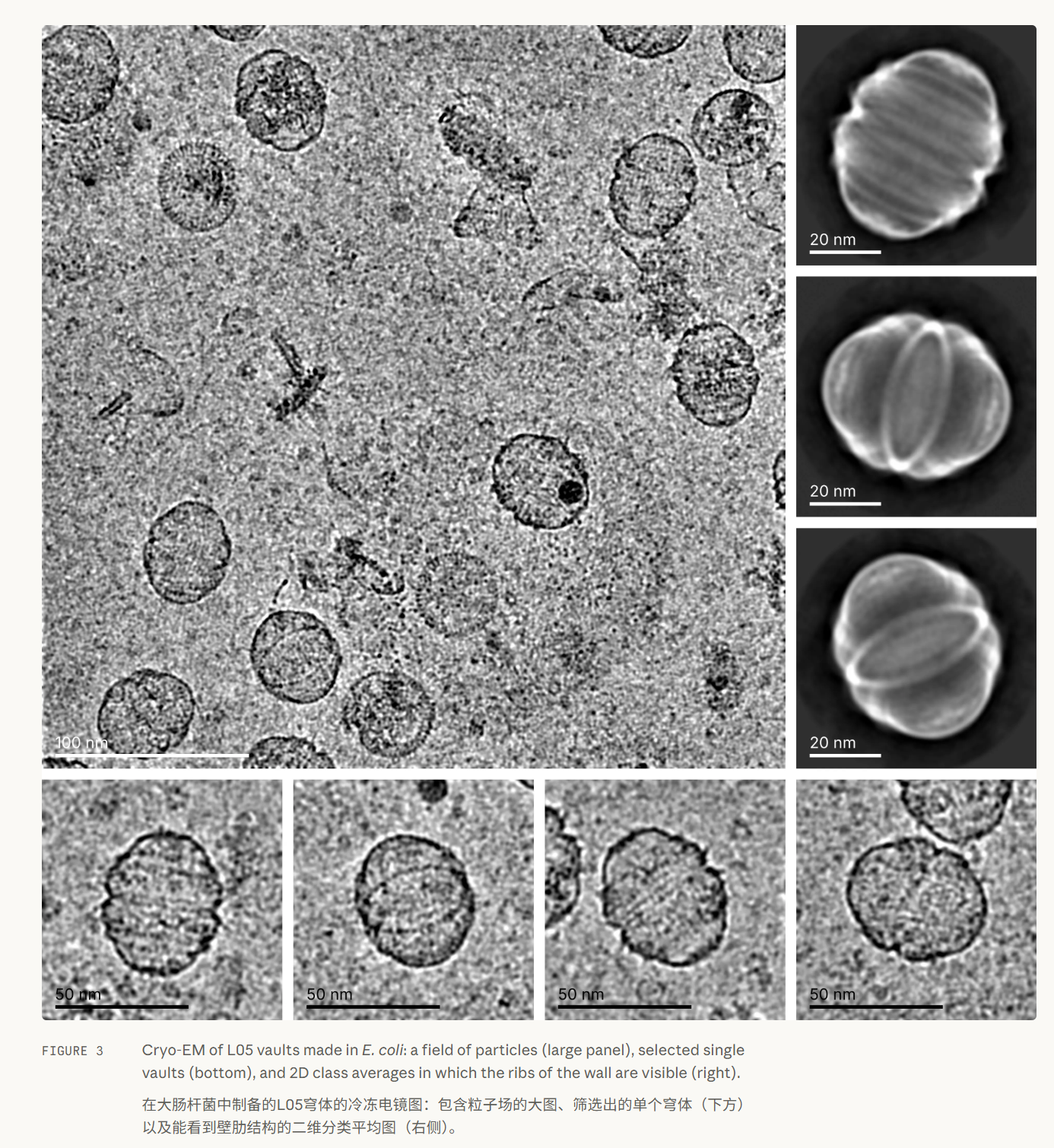
Subsequently, the research team screened 44 candidate proteins and completed DNA construction design and experimental optimization with the assistance of Claude. Ultimately, the researchers found that seven of the proteins were able to form Vault-like particles and confirmed the structures of four particles through cryo-electron microscopy.
The focus of this analysis is on a phage-derived protein called L05. The researchers found that the Vault structure formed by its assembly contains 96 identical protein subunits, while human Vault is usually composed of 78 major structural protein subunits.
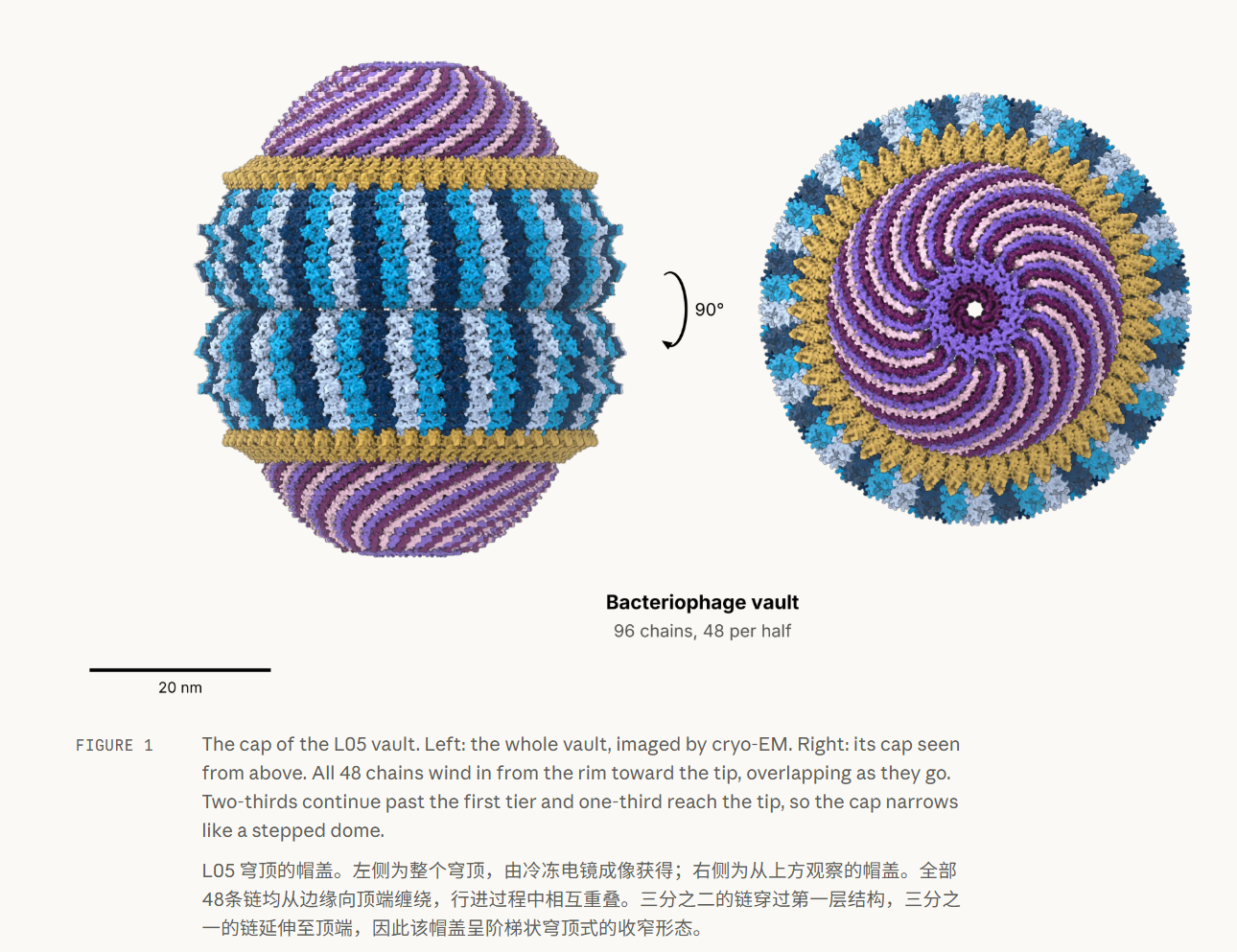
This newly discovered protein structure is about 54 nanometers long and 45 nanometers wide. Although it is shorter than the human Vault, its internal volume increases by about 25% because its shape is closer to a sphere.
What deserves more attention is Claude's improvement in scientific research efficiency.
Traditional Vault particle purification usually takes about 3 days. Claude assisted the researchers in optimizing the experimental plan, using size exclusion chromatography, and proposed loading the contents of the broken cells directly into the chromatographic column, ultimately compressing the time from cell processing to preparation of microscopy samples to about 90 minutes.
In the subsequent structural analysis, Claude called the open source software RELION through the internal multi-agent system and used computing resources to process the cryo-EM data. Under the guidance of human researchers, the team obtained the first complete structural model in just 34 hours, and the final structural map was completed about a week later. Anthropic estimates that the work would typically take weeks under traditional processes.
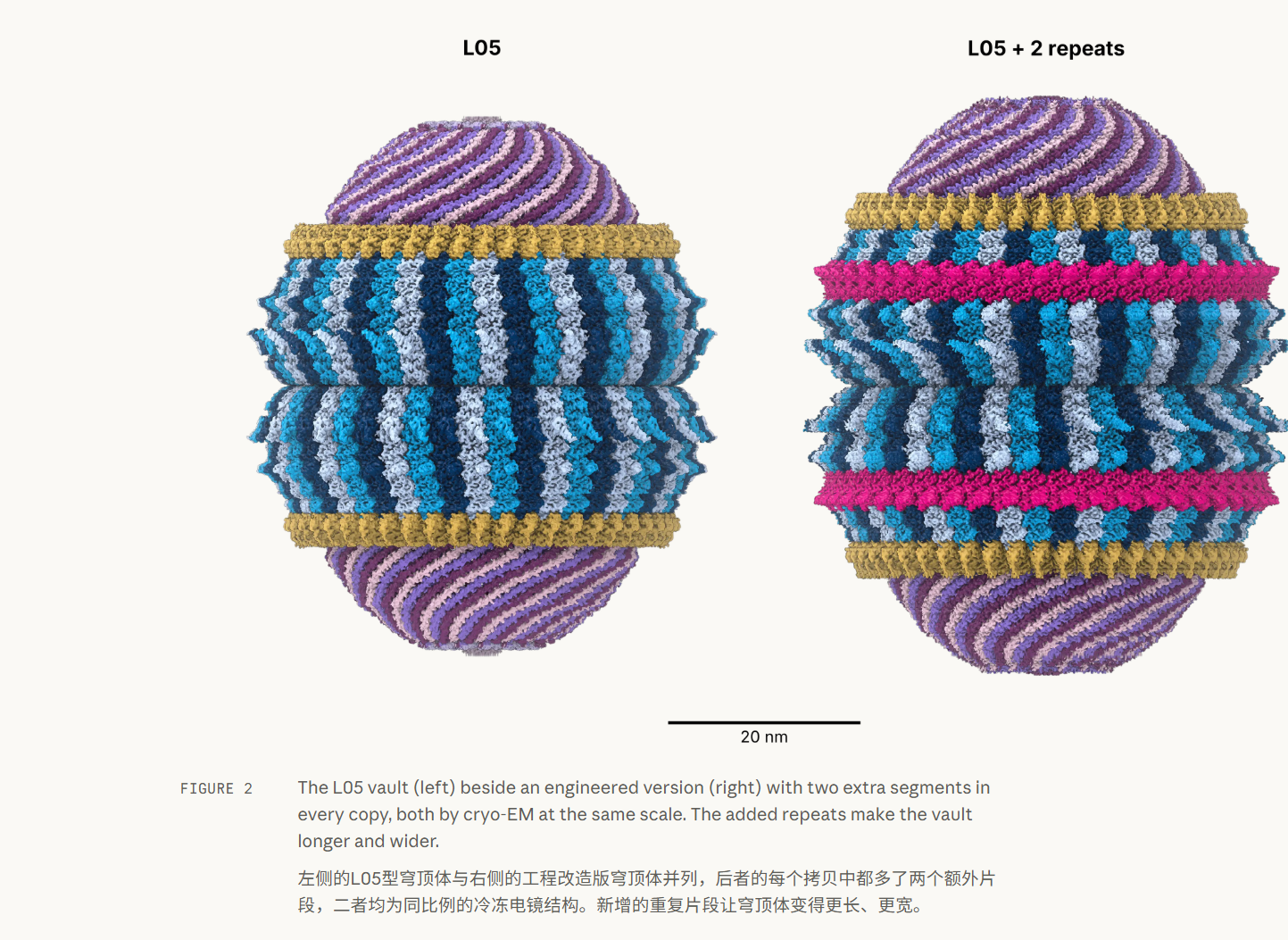
The entire research project lasted less than 4 months. Claude also helped researchers design 15 protein variants, and by duplicating some of the repeated segments in the protein, successfully constructed Vault particles with an internal volume that was further increased by about 20%.
Anthropic believes that this research will not only help understand the assembly mechanism of complex protein structures, but may also provide a research basis for future use of Vault as a nanocarrier for enzyme delivery and other purposes. However, these potential applications have not yet been proven in practice.
The research also exposed the limitations of AI participating in scientific experiments. Anthropic disclosed that Claude once designed a problematic cell culture protocol, which caused a two-week delay in the project. In early cryo-electron microscopy data processing, Claude also skipped standard steps to generate a defective structural map, which was eventually discovered and corrected by researchers.
Anthropic emphasized that Claude did not complete all research independently, but undertook tasks such as database search, experimental design and data processing under the guidance of scientists. Researchers still need to make judgments about experimental protocols and analytical results.
In addition, the research team has only constructed these Vault particles in the E. coli system in the laboratory and has not yet proven that they will form in the corresponding natural bacteria or phages. The true biological function of Vault also remains an unsolved mystery.
Anthropic stated that relevant research results have been submitted to bioRxiv as a preprint, and it plans to further disclose the structural model and experimental data.
Comments