
Abstract:
Anthropic co-founder Jack Clark said on Saturday that the rapid improvement of artificial intelligence capabilities will drive more rapid changes in various fields; an internal model of the company predicts that under certain conditions, artificial intelligence is expected to increase U.S. economic output by nearly 50% by 2030, reaching $44 trillion.
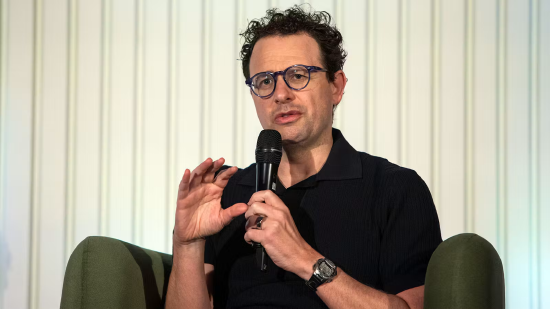
Clark said at the annual meetings of the International Monetary Fund (IMF) and the World Bank in Bangkok that for this transformative technology, it is necessary to formulate "extraordinary and serious rules" through international cooperation; for policymakers, the window for action is shrinking.
With the potential size of U.S. GDP expected to reach $44 trillion — compared with just over $30 trillion currently — “I know, that sounds outrageous,” Clark said. But he added that artificial intelligence was significantly driving scientific discovery.
He pointed out that the premise of this prediction is "continuous technological progress." In addition, if GDP can really achieve such a large growth, then according to economic theory, new industries and inventions must emerge to provide power for such a huge economic expansion.
Clark issued a warning to policymakers about the pace of artificial intelligence development. He pointed out that there are increasing signs that we are approaching a "singularity" - when the development of artificial intelligence will exceed human control.
He said: "We should expect that in the next few years, not only artificial intelligence, but the pace of progress in the entire scientific field will further accelerate. This change may make people feel confused and at a loss. It will not only bring huge wealth, but also may be accompanied by huge risks."
Artificial intelligence has become a core topic at meetings of the International Monetary Fund (IMF) and the World Bank. It is seen both as a driver of growth that can offset the impact of high energy prices and as a threat to economic stability by triggering a collapse in stock market valuations if it fails to deliver on its promise as a "productivity game changer."
Officials at the meeting also expressed concerns that artificial intelligence may lead to the disappearance of certain jobs and make some countries fall behind in development.
However, Clark, a former journalist who is now Anthropic’s “public interest director”, paints a rosy picture of the future: Artificial intelligence will become a “multiplier” for scientific discovery, assisting human researchers to solve difficult problems in mathematics, engineering and biology (including the development of new drugs); by then, every human researcher will have hundreds or thousands of AI assistants as assistance.
He said that by helping to build the data center computing power required for the development of artificial intelligence, more countries can participate in this artificial intelligence revolution.
Global leaders must recognize how powerful artificial intelligence will become in the future and make urgent choices about how to regulate the technology, Clark warned.
He said: "The application of artificial intelligence in the field of science may also lead to the abuse of science - for example, it is used to create biological weapons, cyber weapons, or even threats that we cannot yet imagine. We are faced with many choices."
In biological research—where artificial intelligence is already creating new viruses—we must implement the strictest human oversight and ensure a high degree of transparency to maintain safety.
Despite some high-profile recent incidents — such as out-of-control AI systems escaping test environments and hacking websites and databases — Clark said artificial intelligence is still within human control. However, as artificial intelligence capabilities continue to increase, the "window period" for establishing security measures is shortening, and there are currently only "a few years" left.
Clark also admitted that in areas with "high penetration of artificial intelligence" such as call centers and customer service, artificial intelligence has indeed led to job losses. But in other fields such as scientific research, he believes that artificial intelligence has actually promoted employment; in addition, a major unknown is that artificial intelligence may also create new employment opportunities in entirely new industries.
Comments