
Abstract:
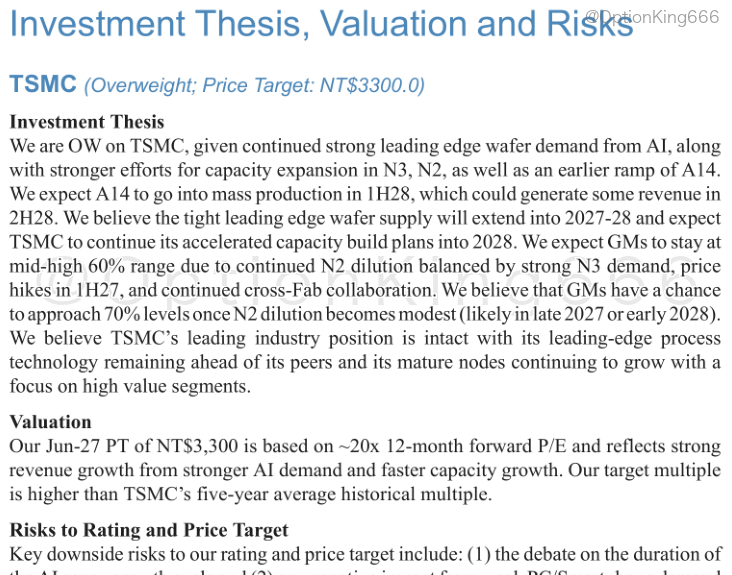
As the artificial intelligence boom continues to drive up demand for advanced chips, Apple is expected to be the first to adopt TSMC's latest 1.4nm process technology in the next few years. Industry analysts believe that TSMC is accelerating its 1.4-nanometer process mass production plan, code-named A14 (Angstrom), with the goal of launching mass production in the first half of 2028, and Apple is expected to be one of the first customers to adopt this process.
According to reports, Apple has always been an important adopter of TSMC's most advanced processes, and its A-series chips are often the first to use new process technologies to maintain a competitive advantage in the mobile chip market. However, this time, the reason for Apple's promotion of upgrading the process is not only the need for performance leadership, but also the fierce competition for advanced semiconductor production capacity in the global artificial intelligence industry.
An analysis report by JPMorgan Chase pointed out that TSMC is considering accelerating the commercialization process of the 1.4nm process in order to start contributing revenue in the second half of 2028. According to current plans, the process is expected to enter the trial production stage in the third quarter of 2027. In order to meet future demand, TSMC will reportedly rely on four factories to jointly undertake the task of building 1.4nm production capacity.
Previously, the market generally expected TSMC to start producing 1.4nm wafers in the second half of 2028. However, as the demand for AI chips continues to exceed supply in 2026 and 2027, TSMC is facing greater pressure and needs to expand advanced process production capacity in advance to meet customer order needs. Although Apple is no longer TSMC's most profitable single customer, its order size still accounts for an important part of TSMC's revenue, so it still has a decisive influence.
Analysts believe that if TSMC can achieve mass production of 1.4nm in 2028, Apple is likely to launch the A22 Pro chip based on this process in the same year or later, becoming the first consumer electronics manufacturer in the industry to enter the 1.4nm era.
For Apple, the AI wave brings both opportunities and challenges. On the one hand, competition for advanced process capacity forces Apple to transition to new nodes faster than originally planned. According to previous news, Apple may switch to the 1.4nm process after only two generations of 2nm products. On the other hand, if competitors cannot afford the same level of process costs, Apple is expected to further expand its technological lead.
Currently it is estimated that the manufacturing cost of each 1.4nm wafer is as high as $45,000. For mobile chip manufacturers such as Qualcomm and MediaTek, this price may be unaffordable. The two companies are already facing weak demand for smartphones, and higher manufacturing costs may further compress profit margins, so they may choose to stay on the 2nm process for longer rather than quickly follow the 1.4nm process.
Even if these manufacturers decide to continue to catch up with Apple, the huge wafer costs will mean that chip prices will rise significantly, ultimately pushing up the prices of flagship mobile phones. In the context that consumer demand has not yet fully recovered, more expensive end products may further inhibit market purchasing intentions.
The analysis points out that the explosion in demand for advanced chips driven by the AI industry is reshaping the entire semiconductor industry. For technology giants like Apple, this trend not only creates opportunities to be the first to adopt next-generation processes and expand their lead, but also brings potential risks in terms of supply chain and production capacity competition. Overall, the AI boom is becoming both an opportunity and a challenge for Apple and the entire chip industry.
Comments