
Abstract:
AMD CEO Lisa Su said in Taiwan on October 6 that the company plans to significantly increase chip supply in 2027 to cope with the continued strong demand brought about by artificial intelligence. She revealed that AMD has continued to increase chip supply in 2026, and will further significantly expand production capacity and shipment scale next year.
Su Zifeng said in an interview with the media in Taipei that day: "We have been able to increase supply in 2026 and will significantly increase supply in 2027." One of the main purposes of her visit to Taiwan is to coordinate with local supply chain partners to ensure that AMD can further increase the production capacity of CPUs and GPUs.
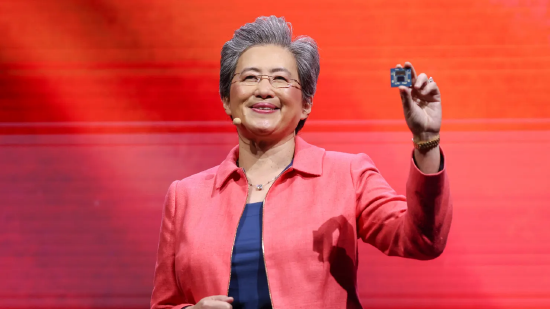
AMD is currently in the stage of rapid expansion of its AI chip business, and the company has become one of Nvidia's most important competitors in the AI graphics processor market. As the construction of AI data centers continues to advance, demand for AMD's Instinct series of GPUs and EPYC server processors has grown rapidly, and the company's market value has recently exceeded US$1 trillion for the first time.
During Su Zifeng’s visit to Taiwan, she has already met with supply chain companies such as Hon Hai, and plans to further communicate with TSMC. She wants to ensure that the supply chain, including advanced wafer manufacturing, packaging and other key links, can keep up with AMD's growth rate in the coming years.
For AMD, one of the biggest challenges is not lack of market demand, but how to convert existing demand into sufficient actual shipments. Su Zifeng said that the current demand for AI is still very strong, and the company needs to obtain more advanced wafer production capacity.
She particularly emphasized that AMD expects to maintain very high demand levels in the next few years, so the company has begun to further lengthen the supply chain planning cycle. AMD is currently planning its production capacity based on demand in the next three to five years, rather than just expanding production for the next year.
“Demand will be very, very high in the next few years. We can see this high demand, so we need more advanced wafer production capacity.” Su Zifeng said.
This means that TSMC will become a key partner for AMD to expand its AI chip supply in the future. AMD's current advanced CPUs and GPUs mainly rely on TSMC manufacturing, and the advanced processes used in AI chips require a large amount of high-end wafer manufacturing resources.
Recently, there have been rumors in the market that TSMC is evaluating the possibility of expanding investment in Texas, the United States. When asked whether TSMC had discussed related investments with AMD, Su Zifeng did not directly confirm the specific situation, but once again emphasized that AMD does need more advanced wafer production capacity.
In addition to wafer manufacturing, memory has also become a problem that AMD must solve to expand the supply of AI chips.
Su Zifeng said that AMD is working closely with memory chip manufacturers to ensure sufficient memory supply. She also plans to go to South Korea that day to have further exchanges with major local memory manufacturers.
South Korea has two major memory giants, Samsung Electronics and SK Hynix, and the demand for high-bandwidth memory for AI servers is growing rapidly. AMD's AI accelerator also requires a large amount of HBM, so even if the wafer production capacity of the GPU itself is increased, final shipments may still be limited if HBM supply cannot be expanded simultaneously.
This also shows that the current bottleneck faced by the AI chip industry has expanded from pure GPU design capabilities to the entire supply chain. The supply of advanced wafers, advanced packaging, HBM and other key components must be increased simultaneously to truly realize large-scale shipments of AI accelerators.
AMD's recent business growth has reflected this demand. As the Instinct series of AI GPUs and EPYC server processors continue to enter data centers, AMD is gradually expanding its share of the AI computing market.
At the same time, AMD is also promoting a new generation of Helios rack-level AI system. Compared with selling GPUs separately, rack-level systems need to integrate multiple links such as computing, network, storage, and power supply, so they have higher requirements on the supply chain. AMD plans to use such systems to further improve its ability to compete with Nvidia's entire AI infrastructure solution.
Su Zifeng’s emphasis on expanding supply also means that AMD is preparing for more intense AI chip competition in the next few years. If AI infrastructure investment continues to grow at its current pace, chip manufacturing capacity itself may become an important factor limiting AMD's revenue growth.
This is highly consistent with the current situation in the entire semiconductor industry. Micron Technology has previously warned that AI is making memory and storage one of the main bottlenecks in data center infrastructure. More and more AI chip manufacturers are beginning to lock in wafer, HBM and advanced packaging production capacity in advance, and the supply chain planning cycle has gradually extended from the past one or two years to three to five years.
Su Zifeng also said that artificial intelligence may have a "very positive" effect on the world, but as AI capabilities continue to increase, technology companies must also pay more attention to potential risks. She believes that in the development process of AI and future super intelligence, it is very important to strengthen coordination among major technology companies.
She also mentioned the recent AI summit hosted by US President Trump. Technology companies participating in the summit agreed to cooperate with independent auditors to evaluate whether AI systems are operating as designed.
Judging from AMD's current strategy, the company is promoting AI business in two directions at the same time. On the one hand, it will continue to improve the supply capacity of Instinct GPU and EPYC CPU and strive to obtain more AI data center orders; on the other hand, it will prepare in advance for the growth in demand in the next few years by expanding the upstream supply of wafers, memory and packaging.
If AI infrastructure investment continues to remain strong, 2027 may become a key year for AMD to further expand its AI market share. Su Zifeng made it clear this time that it will "substantially increase" chip supply next year, which also shows that AMD is no longer just waiting for market demand to grow, but is actively expanding production capacity, hoping to convert the current strong demand for AI chips into actual shipments and revenue growth as much as possible.
Comments