
Abstract:
Apple officially released the new 14-inch MacBook Pro equipped with M6 chip on October 27. This is the first time that Apple’s new generation of self-developed processors has entered the MacBook Pro product line. Compared with the previous generation model equipped with M5 chip, the new product mainly upgrades the processor, graphics performance, artificial intelligence computing power and wireless connection specifications, but the body design and other main configurations remain basically unchanged.
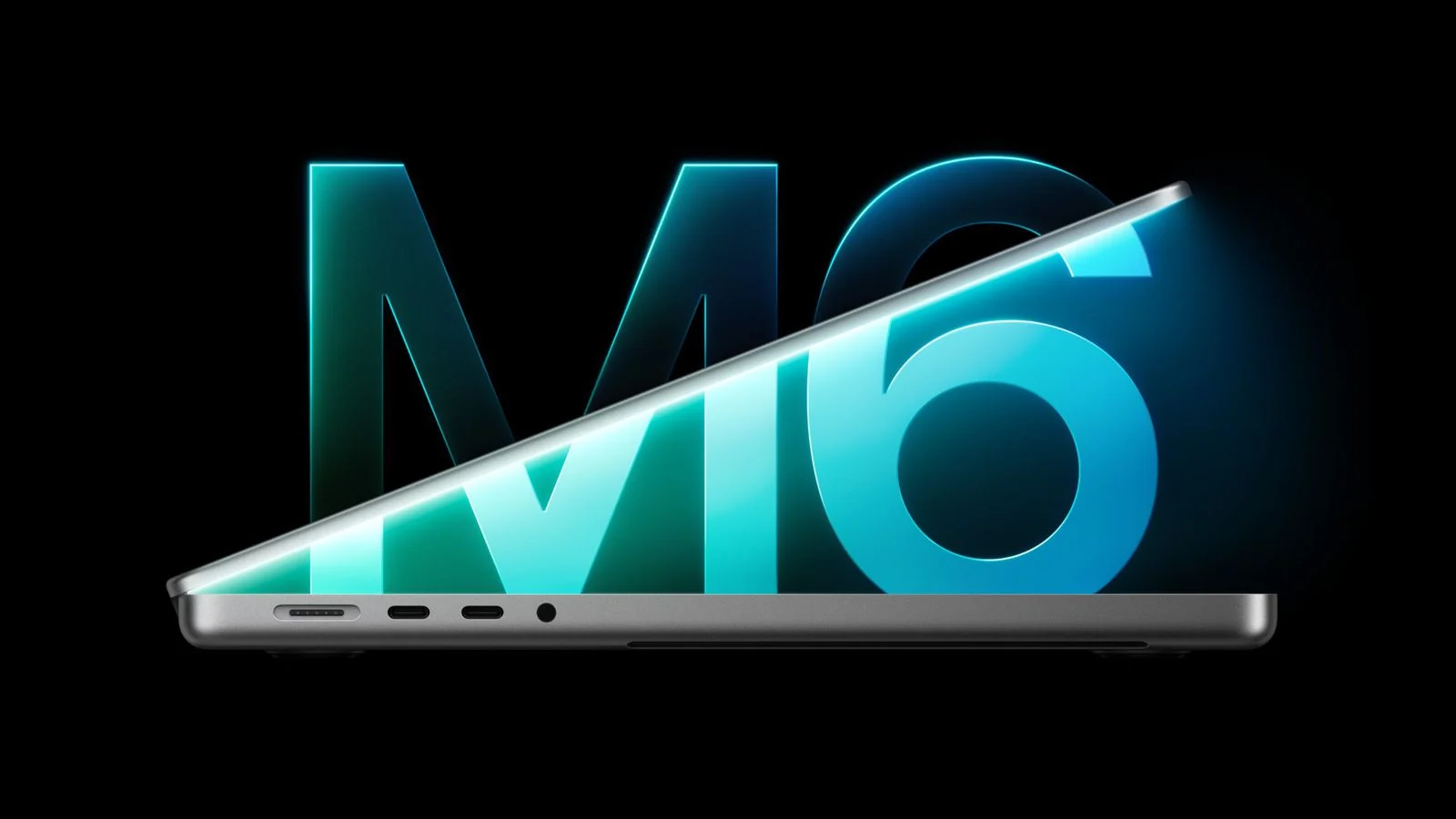
The M6 chip equipped with the new MacBook Pro adopts a 12-core CPU architecture, including 2 super cores, 4 performance cores and 6 energy efficiency cores. In comparison, the M5 chip uses a 10-core CPU, consisting of 4 super cores and 6 energy-efficiency cores. M6 not only increases the number of cores, but also re-adjusts the allocation of core types in an attempt to achieve a better balance between high load performance and daily energy consumption.
In terms of graphics processing, the M6 is equipped with a 12-core GPU, while the previous generation M5 is equipped with a 10-core GPU. Apple said that compared with the M5, the graphics performance of the M6 is increased by up to 30%, and the processing speed of artificial intelligence workloads is increased by up to 25%. These improvements are expected to allow the new MacBook Pro to achieve better performance in graphics rendering, video processing, gaming, and some local artificial intelligence tasks.
Artificial intelligence computing capabilities are also the focus of this upgrade. The M6 uses a dual 16-core neural engine system with a total of 32 cores, while the M5 is equipped with a 16-core neural engine. Apple is also adding additional neural network accelerators to the GPU to improve the efficiency of the device in running artificial intelligence models.
Apple said that M6 will further enhance MacBook Pro’s ability to run Apple Intelligence functions and local large-scale language models. Compared with relying on cloud servers to process data, running the model locally can reduce the dependence on network connections for some tasks and help protect user privacy. However, actual performance still depends on model size, unified memory capacity, and how well the software is optimized for new hardware.
Memory bandwidth has also been improved. For configurations equipped with 24GB or 32GB memory, the memory bandwidth of the M6 reaches 170GB/s, which is higher than the 153GB/s of the M5, an increase of about 11.1%. Higher memory bandwidth helps CPUs, GPUs, and neural network engines access shared data faster, which is especially important for graphics computing and artificial intelligence workloads. However, the increase announced by Apple only applies to 24GB and 32GB memory versions, and cannot be directly applied to all configurations.
In terms of wireless connectivity, the new 14-inch MacBook Pro adds support for Wi-Fi 7 and Bluetooth 6, and implements related functions through Apple’s self-developed N1 wireless chip. Wi-Fi 7 can provide higher transmission capabilities and lower latency when compatible with routers and network environments, and Bluetooth 6 further updates wireless connection standards.
External monitor capabilities have also been slightly improved. The new MacBook Pro can drive two 4K external monitors at the same time, with a refresh rate of up to 165Hz, which is higher than the 144Hz supported by the previous generation. This improvement provides greater flexibility for users who need multi-screen productivity, video editing or high refresh rate display devices.
In terms of storage, the new 14-inch MacBook Pro continues to start with a 1TB solid-state drive. Apple has previously canceled the 512GB entry configuration of the previous generation product in March 2026. Therefore, this release is not a direct increase from 512GB to 1TB, but a continuation of the existing storage capacity arrangement.
Compared with internal hardware upgrades, appearance changes are quite limited. Apple said that other configurations of the new 14-inch MacBook Pro basically follow the design of the previous generation, without simultaneously introducing a comprehensively redesigned body, nor adding the long-rumored OLED touch screen in this update.
The starting price of the new product in the United States is US$1,999. Pre-orders will begin on October 28, and the official launch will be on November 6. Unlike the entry-level MacBook Pro price cuts that some consumers are looking forward to, the new models are still positioned in the professional laptop market.
It is worth noting that this release does not mean that Apple has completed updating the entire MacBook Pro product line. The market has continued to report that Apple is preparing a high-end MacBook Pro with an OLED display, support for touch operations and a redesigned body. However, these products are expected to use M5 Pro and M5 Max chips, rather than directly launching M6 Pro and M6 Max versions.
Previous reports also pointed out that Apple may skip the M6 Pro and M6 Max and directly launch the M7 series of high-performance chips in 2027. If this plan is true, the product cycle of the standard M6 MacBook Pro may be relatively short, and the real large-scale design changes will be reserved for the next generation of high-end models.
From the perspective of product positioning, this update is more like a regular iteration with the chip as the core. The M6 brings more CPU and GPU cores, more neural network processing power, and next-generation wireless connectivity, but whether it's worth the upgrade for existing users still depends on the workload. For users who are still using earlier Apple Silicon or Intel processors, the new model may have obvious performance appeal; while users who are already using the M5 MacBook Pro need to consider whether the up to 30% increase in graphics performance and improvements in artificial intelligence computing are enough to offset the upgrade cost based on actual application needs.
Comments