
Abstract:
HP has officially launched the new OmniBook 5 14 notebook computer. The product positioning is very clear, mainly targeting the entry-level thin and light notebook market where Apple's MacBook Neo is located. The new machine starts at US$699.99 and is equipped with Intel's latest Wildcat Lake processor, providing 8GB of memory and 256GB SSD. At the same time, one of the biggest product selling points is that the entire series comes standard with OLED screens.
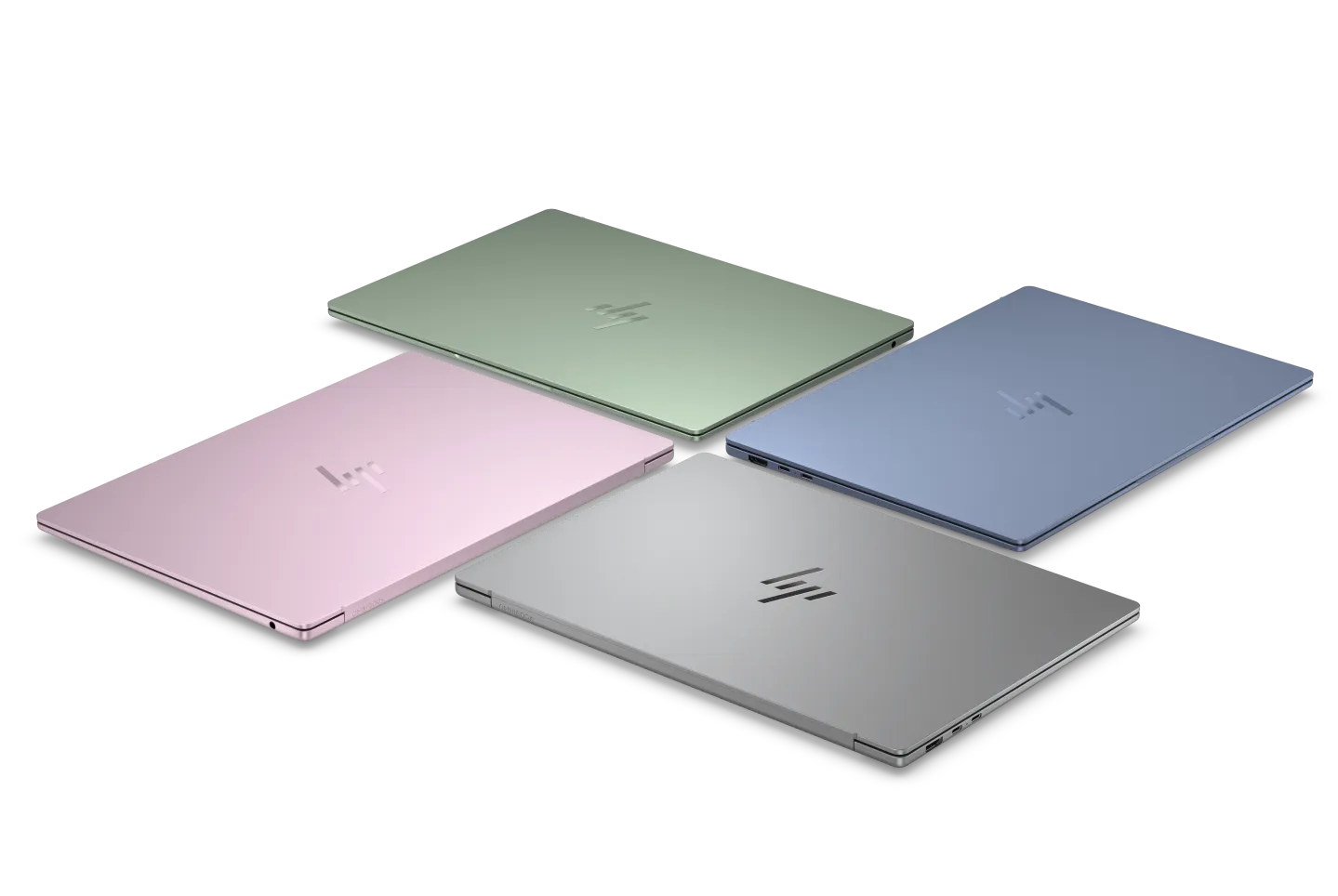
From the perspective of product positioning, HP obviously hopes to use the Windows ecosystem, OLED screens, and richer interfaces to directly compete with MacBook Neo. The new OmniBook 5 14 even offers four body colors of silver, pink, blue and green. The overall product strategy is relatively close to Apple’s emphasis on youthfulness and colorful bodies in recent years.
The base model is powered by Intel Core 5 315 processor, equipped with 8GB LPDDR5-6400 memory and 256GB PCIe 4.0 NVMe solid-state drive, priced at US$699.99. Higher-spec versions can choose up to a Core 7 350 processor, 16GB of memory, and a 1TB SSD, but the specific configuration and price will vary according to the market.
Intel Wildcat Lake is one of the core hardware of this new batch of low-priced thin and light notebooks. The Core 5 315 used in the OmniBook 5 14 has 6 cores, 6 threads, a maximum frequency of 4.4GHz, and an integrated Intel AI Boost NPU, providing 15 TOPS of AI computing power. The higher-end Core 5 320 and Core 7 350 provide NPU performance of 16 TOPS and 17 TOPS respectively.
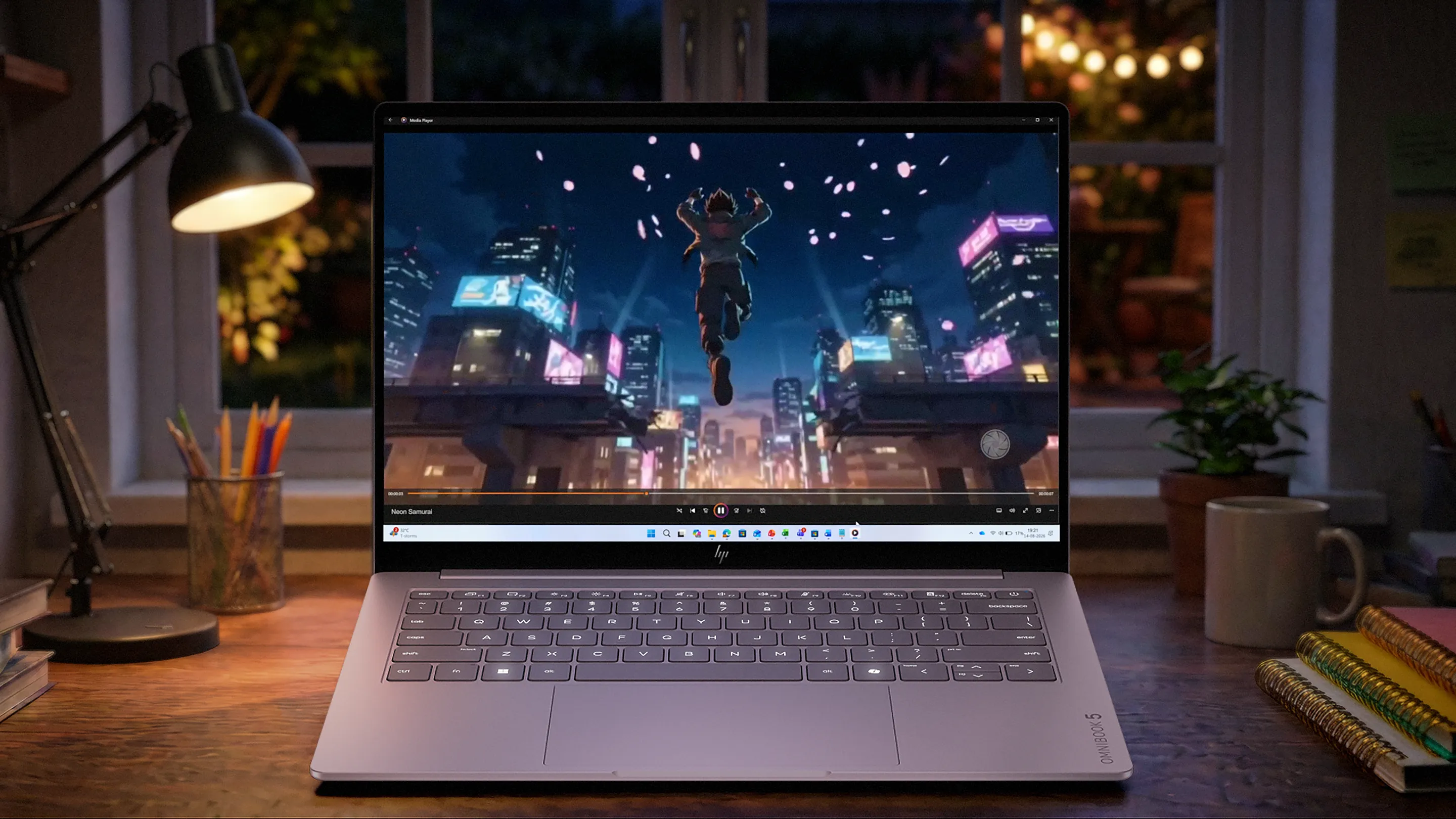
The most eye-catching change from HP this time is the display. Unlike a large number of similarly priced Windows notebooks that still use LCD panels, all OmniBook 5 14 configurations are equipped with OLED displays. The basic version uses 1920×1200 resolution, 60Hz refresh rate and 300 nits brightness, while covering 100% DCI-P3 color gamut.
However, basic OLED screens are not particularly high-standard panels. The peak brightness of 300 nits is basically sufficient for indoor use, but its performance is limited in strong light environments. HP will also launch a higher specification 2560×1600 OLED version in the future, with brightness increased to 400 nits, but this configuration will not be available until March 2027.
The touch version will also be launched after the OmniBook 5 14 is officially launched, so consumers can choose between ordinary non-touch OLED and touch OLED in the future.
In terms of portability, the OmniBook 5 14 performs quite well. The starting weight of the whole machine is only 2.56 pounds, which is about 1.16 kilograms, and the thinnest part is only 11.7 mm. In comparison, the weight and thickness of the Apple MacBook Neo are slightly higher, so HP's product has certain advantages in terms of size and weight.
HP has also redesigned the appearance of the fuselage. The new machine adopts a simpler metal shell and uses a new logo design that usually appears on HP's mid-to-high-end products, so that its visual effect is not like that of traditional cheap Windows notebooks.
In terms of interfaces, OmniBook 5 14 provides two 10Gbps USB-C interfaces, while retaining the HDMI interface, 3.5mm headphone jack and dual speakers. All models are equipped with 1080p cameras, so there is no significant reduction in basic applications such as video conferencing.
Battery life performance is the key to whether the Wildcat Lake platform can truly compete with MacBook Neo. Wildcat Lake is positioned in the low-power thin and light notebook market, and HP expects the new machine to have better battery life. OmniBook 5 14 is equipped with about 60Wh battery and supports USB-C charging.
However, the 8GB of memory is still one of the most concerning issues with this machine. Since the memory is designed onboard, users cannot upgrade it themselves after purchase, so choosing the 8GB version means that only 8GB of memory can be used throughout the product life cycle.
This is also a problem currently faced by the entire entry-level Windows notebook market. As Windows 11 itself, as well as browsers, instant messaging software, and productivity applications, take up more and more memory, 8GB is getting closer and closer to the minimum capacity actually used. Many low-priced Windows laptops using Wildcat Lake processors have already shown this problem. Light web browsing and office work are acceptable, but when running a large number of browser tabs, chat software and other programs at the same time, 8GB can easily become a bottleneck.
In comparison, the 16GB version of OmniBook 5 14 is obviously more suitable for long-term use, but the price will also be significantly higher. HP also offers the highest configuration of Core 7 350, 16GB memory and 1TB SSD. However, the current price of this high-end version has reached US$1,299, forming a considerable gap between it and the basic version.
HP is actually preparing to launch the ProBook 4 G2iS, which is positioned more towards the business market. It is also equipped with a Wildcat Lake processor. The basic configuration is 8GB memory and 256GB SSD. The thinnest part of the fuselage is about 12 mm. The machine is expected to be launched in December, and the price has not yet been announced.
The launch of OmniBook 5 14 also reflects that MacBook Neo is having an increasingly obvious impact on the entire PC market. After Apple extended the price and performance positioning of MacBook Neo downwards, traditional Windows manufacturers began to focus on launching thin and light notebooks with prices ranging from 600 to 800 US dollars, and competed through OLED screens, more interfaces, Windows ecosystem, and more flexible hardware configurations.
Dell has previously launched the XPS 13 for MacBook Neo, and Asus, Acer and other manufacturers have also launched low-priced thin and light notebooks equipped with Wildcat Lake. HP has chosen OLED as its main differentiating point this time, offering an OLED display while maintaining a starting price of $699.99, making it more attractive on the spec sheet than many similarly priced products.
However, what really determines the competitiveness of OmniBook 5 14 is Wildcat Lake’s actual performance, battery life, and the running experience of Windows 11 in an 8GB memory environment. For users who only do web browsing, document processing, video playback and light office work, this configuration can already cover basic needs; but if you want to use it for a long time, especially if you need to run a large number of applications at the same time, the 8GB onboard memory may become the most obvious limitation of the entire machine.
Overall, the OmniBook 5 14 is not simply a low-priced Windows notebook, but a positive response from HP to the new round of entry-level PC competition brought by MacBook Neo. Being as light as about 1.16 kg, as thin as 11.7 mm, and with a full range of OLED screens, it has obvious selling points in terms of portability and display effects, while Wildcat Lake takes on the task of controlling power consumption and cost. The real focus of competition will be whether the $699.99 basic configuration can make up for the limitations of 8GB of memory and entry-level processors in actual experience.
Comments