
Abstract:
Apple’s latest PROLED MacBook Pro brings back the once-recognizable illuminated Apple logo, and a disassembly report from repair organization iFixit reveals the implementation behind the return of this classic design. Although the new model has improved in terms of repairability, disassembly shows that the re-lit Apple logo actually hides a rather complex structural design. Once a fault occurs, repair is still difficult.
In October 2026, Apple officially released the MacBook Pro equipped with a PROLED XDR display. This was the first time that touch screen technology was introduced in the Mac product line. The new phone not only has a stronger hinge design, smart island elements, and a thinner body, but the returning luminous Apple logo on the back has quickly become the biggest highlight in appearance. This design creates a strong sense of nostalgia for many users who have used Apple laptops from 1999 to 2015.
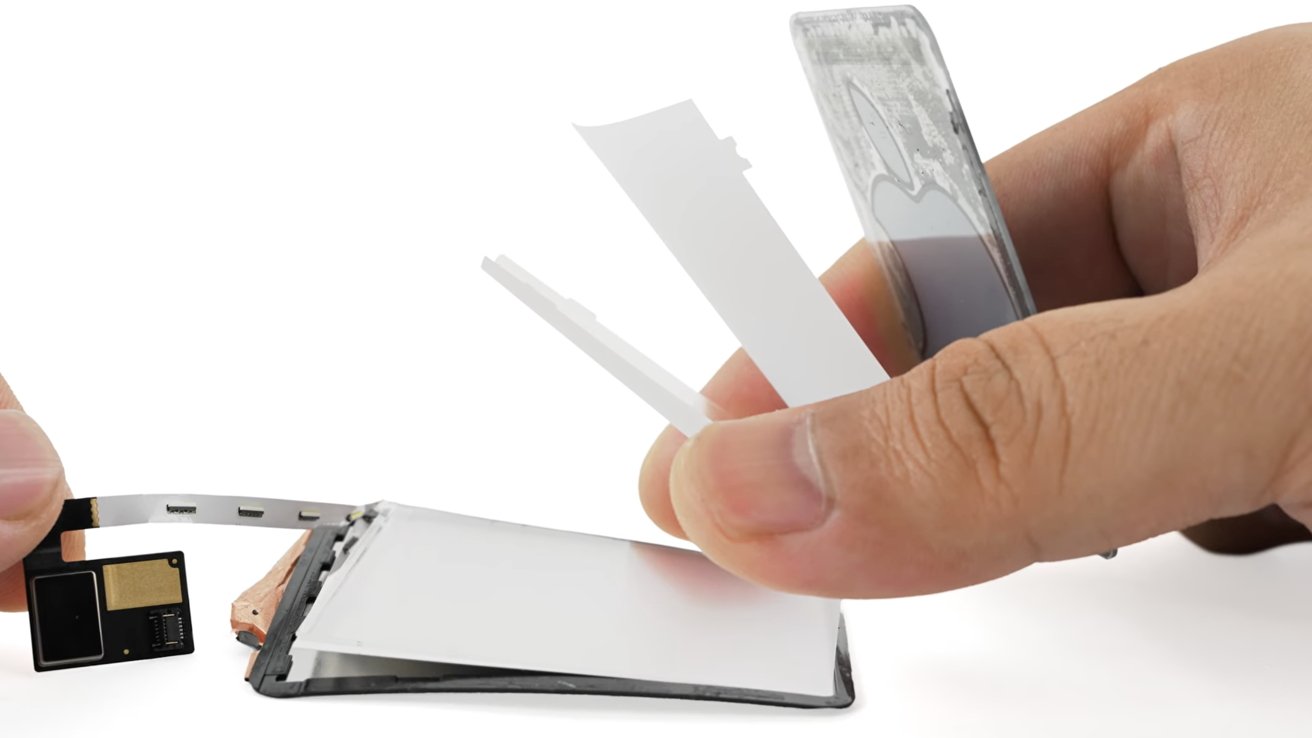
However, unlike early MacBooks, which relied on the LCD screen backlight to emit light directly through the Apple Logo opening, new models using tandem OLED display technology no longer have a traditional backlight layer, so Apple had to redesign the light-emitting scheme. The disassembly results show that Apple has added a set of independent light bars composed of four LEDs behind the display, and works together with the light guide diffusion structure to provide uniform illumination for the logo.
In addition, the Apple Logo body also uses a special reflective coating similar to a "two-way mirror". When the light is turned off, the logo will show the ordinary metal reflective effect; when the LED is turned on, the light can penetrate the coating, allowing the logo to regain its classic luminous state. Because the LEDs work simultaneously when the display is turned on, the Apple logo that users see continues to glow softly.
However, this design also brings new maintenance challenges. In order to check the light-emitting mechanism, iFixit tried to further separate the PROLED XDR display module during the disassembly process, but the glass layer of the display panel cracked and delamination occurred, causing damage to the OLED screen. Since the luminous logo is located behind the series OLED panel, if related components fail in the future, maintenance personnel are likely to need to replace the entire display component instead of replacing the logo lighting module alone.
The disassembly also shows that the new MacBook Pro still retains Apple’s integrated design concept in recent years. The NAND flash memory chip, M5 Pro and M5 Max processors, HDMI interface and SD card reader are all directly welded to the motherboard and cannot be replaced by the user. Although the USB‑C interface and MagSafe 3 charging interface are fixed with screws instead of welding, to replace them, you still need to remove the entire main logic board first.
Compared with the previous generation, the disassembly process of PROLED MacBook Pro has been simplified. The bottom shell only requires the removal of four screws to open, while the standard M6 MacBook Pro previously required eight screws to secure. Apple also achieved weight reduction by redesigning the body structure. The weight of the bottom cover dropped from 456 grams of the previous generation design to 364 grams, a reduction of 44 grams. The entire machine has achieved significant weight reduction with its lighter display module, reduced aluminum alloy usage, and slightly smaller touch panel.
In terms of other design aspects, although the new machine uses an adjusted hinge structure to reduce screen shaking during touch screen operation, the overall layout is not essentially different from the previous MacBook Pro. The motherboard design, internal structure, and most component layouts continue Apple’s design ideas in recent years.
iFixit pointed out in its final evaluation that although the PROLED MacBook Pro is easier to disassemble than some previous models and has improved some parts replacement processes, the overall repair difficulty is still high. In particular, the returning luminous Apple logo has become one of the most eye-catching selling points of the new phone, but it is also the part that users least expect to need repairs.
Comments