
Abstract:
Apple’s upcoming first touch-screen MacBook Pro may be officially announced soon. Apple is preparing for a new product launch event on October 28, which is expected to bring a MacBook Pro with an OLED touch screen, a new iPad mini, and a variety of Mac products equipped with M6 chips. However, Apple has not yet officially announced the event schedule and product list, and the relevant information still belongs to media reports and supply chain rumors.
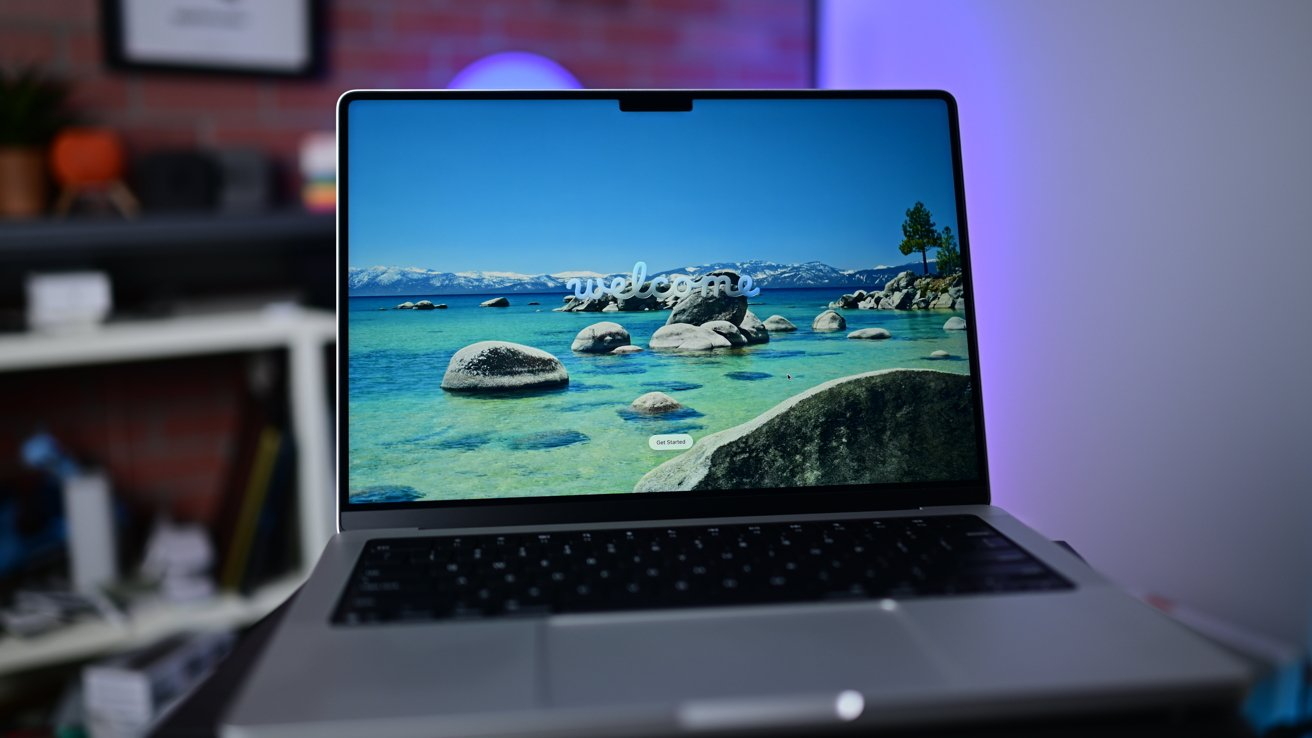
This news comes from Bloomberg reporter Mark Gurman. Gurman revealed that Apple has begun to invite some media to participate in an all-day new product experience event held in Los Angeles, USA on October 28, involving touch screen MacBook, iPad mini and M6 series Mac products. Different from traditional new product launches, Apple may once again adopt the form of online video release combined with live media experience, rather than holding a complete keynote speech for a global audience.
This arrangement continues Apple’s recent practice of adjusting the pace of new product releases. Apple had previously launched smart home-related products in October and introduced new products through media briefings and videos. If the October 28 event is true, Apple will release multiple hardware products in stages within a month instead of concentrating all new products into one conference.
The product that attracts the most attention this time is undoubtedly Apple’s first touch screen MacBook Pro. For many years, Apple has insisted on positioning the Mac as a computer with keyboard, trackpad and mouse as the main interaction methods, which is different from the iPad with touch screen as the core. But as Windows laptops generally offer touch screen capabilities, and users' needs for different interaction methods continue to change, Apple seems ready to reconsider this product positioning.
According to information that has been exposed many times before, the new MacBook Pro is expected to use an OLED display and be available in 14-inch and 16-inch sizes. OLED screens can achieve deeper blacks, higher contrast, and have certain energy consumption advantages when displaying dark content. Compared with traditional LCD screens, OLED also provides more space for Apple to redesign the display area and appearance of laptops.
In addition to changes in display technology, the new MacBook Pro may also introduce a smart island design similar to the iPhone. Related rumors suggest that Apple may use Smart Island to replace the notch area at the top of the existing screen, combining camera openings with system status information, real-time activities and other functions. In this way, Smart Island is no longer just a visual processing solution for hardware openings, but may also become a new entrance for macOS to interact with users.
In terms of body design, early reports have claimed that the new MacBook Pro will be thinner and lighter. However, Gurman recently revised this statement, pointing out that the new phone may not be significantly thinner, and the weight reduction may be more significant than the change in body thickness. Therefore, it is not yet certain at this stage whether the new MacBook Pro will undergo a major redesign in appearance.
In terms of processors, Apple may update multiple Mac product lines at the same time, but there is still uncertainty about the chips used in different models. Previous reports suggested that Apple may launch a 14-inch MacBook Pro equipped with an M6 chip and update the iMac. As for whether the 14-inch and 16-inch MacBook Pros with OLED touch screens will also be equipped with M6 series processors, there is currently not enough reliable information to confirm.
This means that Apple may adopt a layered update strategy: on the one hand, it will launch regular Mac products using a new generation of processors, and on the other hand, it will launch high-end MacBook Pros that have undergone major changes in display technology and interaction methods. For consumers who are ready to buy MacBook Pro, the positioning and upgrade range of the two types of products may be different.
In addition to Mac products, the new iPad mini is also expected to be unveiled at this event. Rumor has it that the new phone will use an OLED display and make adjustments to the front camera and speaker system. Previous news also mentioned that the new iPad mini may use a screen of about 8.4 inches, the refresh rate is still 60Hz, and it does not support ProMotion adaptive high refresh rate technology. However, these specifications have not yet been officially confirmed by Apple.
The new iPad mini will also allegedly adjust the position of the front camera to make it more suitable for video calls when used in landscape orientation. This design idea is consistent with Apple's adjustments to other iPad products in recent years, reflecting the increasing use of tablets for video conferencing, distance learning and productivity tasks.
If this event indeed covers OLED touch screen MacBook Pro, iPad mini and M6 series Mac products, then Apple’s new product lineup at the end of October will be quite rich. However, the product debut time is not necessarily the same as the official launch time. Some Mac products may not open for pre-order or start shipping until November, and the specific arrangements still depend on Apple's final plans.
For MacBook Pro, the addition of touch screens and OLED screens may be the most important product direction adjustment in recent years. Touch operation allows users to directly interact with content on the screen, providing a different way of using the touchpad when browsing the web, viewing pictures, and operating some creative tools. However, touch screens will also bring problems such as screen fingerprints, interactive interface adaptation, and power consumption management. The final experience still depends on how Apple integrates touch functions into macOS.
What is more noteworthy is that Apple has always emphasized the product differentiation between Mac and iPad in the past. If MacBook Pro starts to support touch operations, Apple will need to further explain the differences in usage scenarios between touch-screen Macs and iPads, and how the two types of devices will develop in the future. For professional users, whether a touch screen can truly improve work efficiency is more important than simply adding a hardware feature.
At present, Apple has not officially confirmed the October 28 event date, product list, price or launch time. Therefore, the specific configurations of the OLED touch screen MacBook Pro, M6 series Mac and new iPad mini should still be subject to the final release information. If the relevant news is true, the end of October may become an important turning point for Apple's Mac product line, especially the launch of the touch-screen MacBook Pro, which will mean that Apple's long-standing Mac interaction concept begins to undergo substantial changes.
Comments