
Abstract:
New Apple CEO John Ternus has made design a priority in his first few weeks on the job. In addition, in addition to the touch screen and the switch to OLED technology, Apple's revamped MacBook Pro has another major change. Finally, the company is about to release a new smart home hub, HomePod mini, and Apple TV powered by Siri AI.
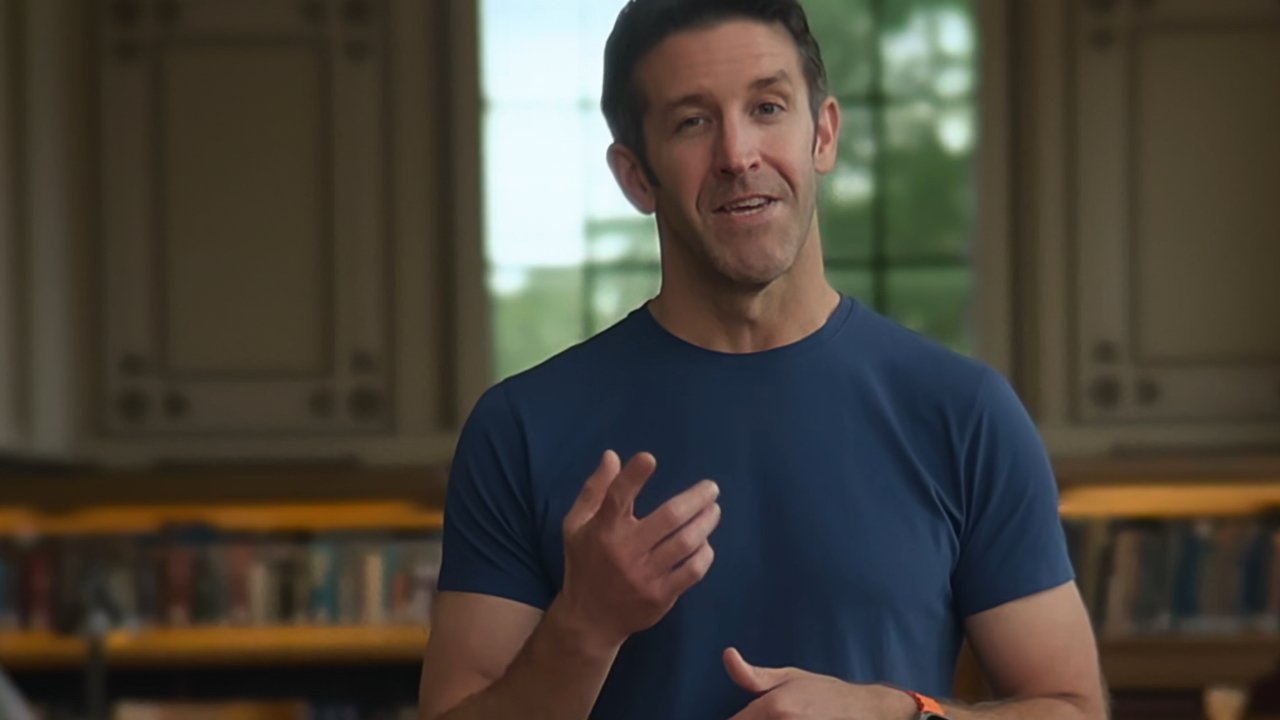
Apple CEO John Ternus spends a lot of time overseeing the company's hardware and software design efforts. In early discussions about John Ternus replacing Tim Cook as Apple CEO, the younger executive questioned whether he was up to the challenge. "I'm not like you," Ternus said to Cook. "You've done so many great things." Cook replied in his usual calm tone: "I know you're not like me." What he meant was that Ternus needed to be himself. Ternus describes the experience as a turning point when recounting it to employees. Ternus said Cook's words "really resonated with me and stuck with me" about spending his time where he could "create the most value" for Apple during his tenure as CEO. “And I need to spend my time where I can create the most value for Apple,” he said, a philosophy that allowed Ternus to approach the role differently. "We will have differences in time allocation, but the mission and goals are the same."
While serving as CEO, Cook spent much of his time on operations, sales, financial strategy and Apple's supply chain. He also frequently addresses public policy, privacy issues, and the company's relationships with the White House and governments around the world. Ternus, who had risen through the ranks as a hardware engineer, was setting significantly different priorities. He essentially handed over the company's financial operations to Chief Financial Officer Kevan Parekh and the supply chain to Chief Operating Officer Sabih Khan. Instead, Ternus spends a lot of time with chief hardware officer Johny Srouji and head of hardware engineering Tom Marieb, getting deeply involved in product engineering. But I learned that he also devoted considerable energy to another area that has long lacked a single top leader: design.
Since Jony Ive’s departure in 2019, Apple has lacked a head of design who would unify responsibility for industrial design — the look and feel of its hardware — and human interface design — the design that shapes the company’s software. In subsequent years, industrial design and human-machine interface design had separate heads, rather than one executive managing both teams. They eventually reported to then-COO Jeff Williams. Williams, a manufacturing expert with no design background, was chosen to run the unit largely because of his close relationship with Cook. That arrangement changed when Williams retired last year. Although Cook announced in the press release that the design team would report directly to him after Williams left - and that was the case on the surface - in reality they began reporting to Ternus. As part of his eventual transition to CEO, Cook had design responsibilities handed over to him. During the CEO transition from April to September, Apple's design chief was effectively Ternus' only direct report until Cook stepped down.
As Apple's head of hardware engineering, Ternus is already somewhat involved in the design studio's work, as the two functions require close coordination. However, since becoming CEO, he has become deeply involved in the industrial design and human-machine interface teams. Several people familiar with the department said he visited the studio multiple times a week, sometimes multiple times a day. Of course, Steve Jobs was also directly involved in design in a similar way during his collaboration with Ive. But Ternus' involvement marks a significant shift from the Cook era. Designers say Cook usually goes to the studio no more than once a month, for about an hour each time.
One of Ternus' first tasks was to restore the design studio's role within the company. The team had a significant exodus of employees to Ive's company LoveFrom, as well as OpenAI's hardware team and other companies. This resulted in a decline in its influence and credibility within Apple. Attrition forced the company to promote junior designers and hire heavily from outside to replenish the team. Alan Dye, Apple’s long-time software designer, left for Meta Platforms Inc. . Ive's successor as head of industrial design, Evans Hankey, also left, eventually joining OpenAI. Hankey was later replaced by Molly Anderson, who is less well-known in the broader design world and had never managed a team of this size at Apple before becoming vice president of industrial design in 2024. By then, many of the team's most senior members had left, narrowing the field of internal candidates at Apple and leaving Anderson as the only realistic internal candidate.
Given the central role of design in developing Apple products and coming up with ideas for future devices, many within and close to the company believe Apple should hire an outside chief design officer to oversee the entire organization. But I was informed that no such search was currently underway. Instead, Apple made a major effort during the iPhone Duo launch to cast Anderson and Dye's successor, Steve Lemay, as its design chiefs. Ternus posed with Anderson and the new phone, while Anderson and Lemay helped introduce the device in a joint video. The company is also continuing to rebuild its industrial design team, hiring Belgian furniture designer Julien Renault last week. But none of this eliminates the need for one leader to unify industrial design and software design, as Apple did in Ive's day. With Ternus making design a big priority and taking such an active role in the department, he appears to have chosen Apple's new design leader and ultimate decision-maker: himself. Whether giving up recruiting from outside the design community is the right choice remains to be seen. Ternus comes from an engineering rather than a traditional design background, but the CEO's close involvement at least ensures that design once again has a meaningful seat in Apple's executive suite — and a strong say in the company's most important product decisions.
There’s another new change to Apple’s touchscreen and OLED MacBook Pro. Apple has more products coming this year that we already know about. The iPhone Duo ships on October 23, while a new smart home hub with a display, an updated Apple TV set-top box, and a new HomePod mini — all designed to showcase Siri AI — are less than two weeks away. But two more products will follow: a major MacBook Pro revamp that brings OLED and touchscreen technology to Macs for the first time; and the first OLED iPad mini. The new iPad mini, expected to be released sometime between late October and November, is a major but immediate upgrade: a better screen, a faster chip, and a landscape-positioned FaceTime camera that would bring it in line with Apple's other iPads. The higher-end MacBook Pro is a bigger attraction. The move to touchscreens is significant, as is the adoption of OLEDs—organic light-emitting diodes—which offer sharper contrast. macOS Golden Gate also has changes to support touch input and smart islands. But I learned there's another big difference: the new MacBook Pro is lighter—significantly lighter. Apple redesigned the machine's internal structure, miniaturizing parts and rearranging components to make the computer more portable. The current 16-inch MacBook Pro weighs 4.8 pounds, while the 15-inch MacBook Air is 3.3 pounds, so any meaningful weight loss will be immediately noticeable. I expect these machines, currently being tested with macOS 27.2, to be available by next month.
Apple's new smart home hub will compete with Amazon's Echo Show. Apple plans to hold an event on October 13 to unveil its long-awaited smart home hub with a screen, a new HomePod mini and an updated Apple TV. All three devices will have Siri AI at their core. Chief Executive Officer John Ternus is seeking to speed up product development, cut costs and offset a slowdown in services as he strives to make the iPhone maker faster and leaner.
Comments