
Abstract:
On October 12th, Apple will release a series of new smart home products on October 13th. Bloomberg published an article saying that Apple is finally ready to announce its new smart home strategy to fill the biggest shortcomings in its ecosystem.
Apple Inc.
Why did previous attempts fail?
Despite Apple having all the ingredients to succeed in the smart home, including selling billions of iPhones, smart speakers, TVs, and an ecosystem that appeals to both consumers and accessory makers, it has somehow been unable to capture the market.
Apple’s first serious attempt to enter the smart home market was in 2014, when it launched HomeKit, a software framework built into the iOS operating system. Its original intention was to provide a platform for manufacturers of door locks, home automation equipment, security cameras and other connected home appliances to enable them to develop products that are compatible with each other and can be controlled by Apple devices.
In 2016, Apple launched the "Home" app for iPhone to provide users with a centralized place to manage their compatible accessories. But neither HomeKit nor the Home app really took off. For third-party accessory manufacturers, developing products that support Apple's platforms and meet its strict requirements is costly and complex.
Apple itself has launched very few hardware products, which have failed to drive the development of the entire ecosystem. Its most important attempt, the HomePod smart speaker, has never become a mainstream best-selling product. At the same time, digital assistant Siri is neither reliable nor functional enough to be the link between the entire ecosystem. Ultimately, this leads to a fundamental problem: Apple has never given consumers a compelling enough reason to fully embrace HomeKit.
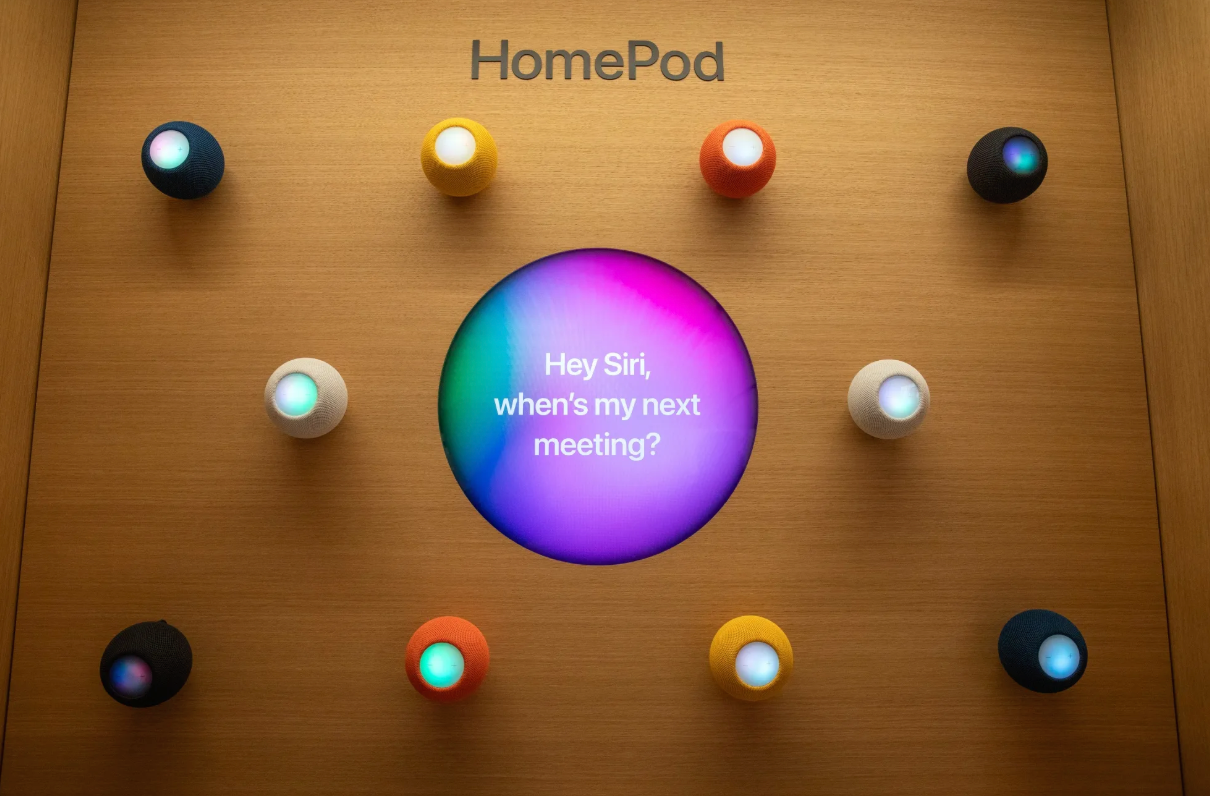
HomePod mini
Amazon and Google have adopted different strategies. They have introduced a large number of their own brand security cameras, smart doorbells, Echo and Nest smart speakers, smart displays and other devices to the market, and equipped them with more powerful voice assistants. They also became more active in partnering with accessory manufacturers, driving their respective ecosystems to grow to include tens of thousands of third-party products.
Many of these products are cheaper, more accessible, and simpler to set up than the devices available within Apple's closed ecosystem. Apple could have followed the model that made iPhone, iPad and Mac successful, building HomeKit into a prosperous ecosystem with its own hardware at the core, supplemented by an excellent software experience and a thriving third-party developer community. But Apple basically only provided the underlying software framework and hasn't done much since then.
Moreover, Apple has hardly vigorously promoted compatible accessories, nor has it established a strong marketing system to make HomeKit a household name. In other words, Apple has ceded the smart home market to competitors for the better part of a decade.
Why try again?
At that time, this problem did not cause much financial losses to Apple, so the company lacked the motivation to change its strategy. If Apple's lack of competition in the smart home field has not prevented consumers from buying iPhones, Macs and iPads, then why invest time, money and resources to solve this problem?
But now, it is increasingly difficult for Apple to stay out of the fray. The rise of AI has clearly put its entire ecosystem at risk.
If a competitor launches a popular AI product, it may persuade consumers to look outside the Apple ecosystem. If someone falls in love with a new device from Amazon, Google, or an upcoming hardware product from OpenAI, it will be much easier to switch to other ecosystems as long as their home is not deeply tied to Apple technology.
This is why Apple's second foray into the smart home market is so important. With the new products set to be released on Tuesday, October 13, Apple is no longer just providing the underlying software and hoping other companies will develop the hardware, but is launching a more comprehensive strategy, a ready-made ecosystem, and an entire set of devices designed to work together.
The core product is a new smart home hub device called HomeView. It has a display and an A18 chip and is essentially the Siri control center for the Apple Intelligence home. In addition, there are two supporting devices: an upgraded HomePod mini, equipped with an S10 chip, which can extend voice control, music playback and other functions to every corner of the home (although HomeView is said to have better sound quality); and a new Apple TV set-top box equipped with a standard A19 chip, bringing this experience into the living room.
HomeView comes in two versions: one is a countertop version with a metal speaker base at the bottom; the other is a wall-mounted version with a flat square base under the display that can be installed against the wall. The countertop version is available in space gray, silver, starlight and pink, while the wall-mounted version is available in space gray and silver.
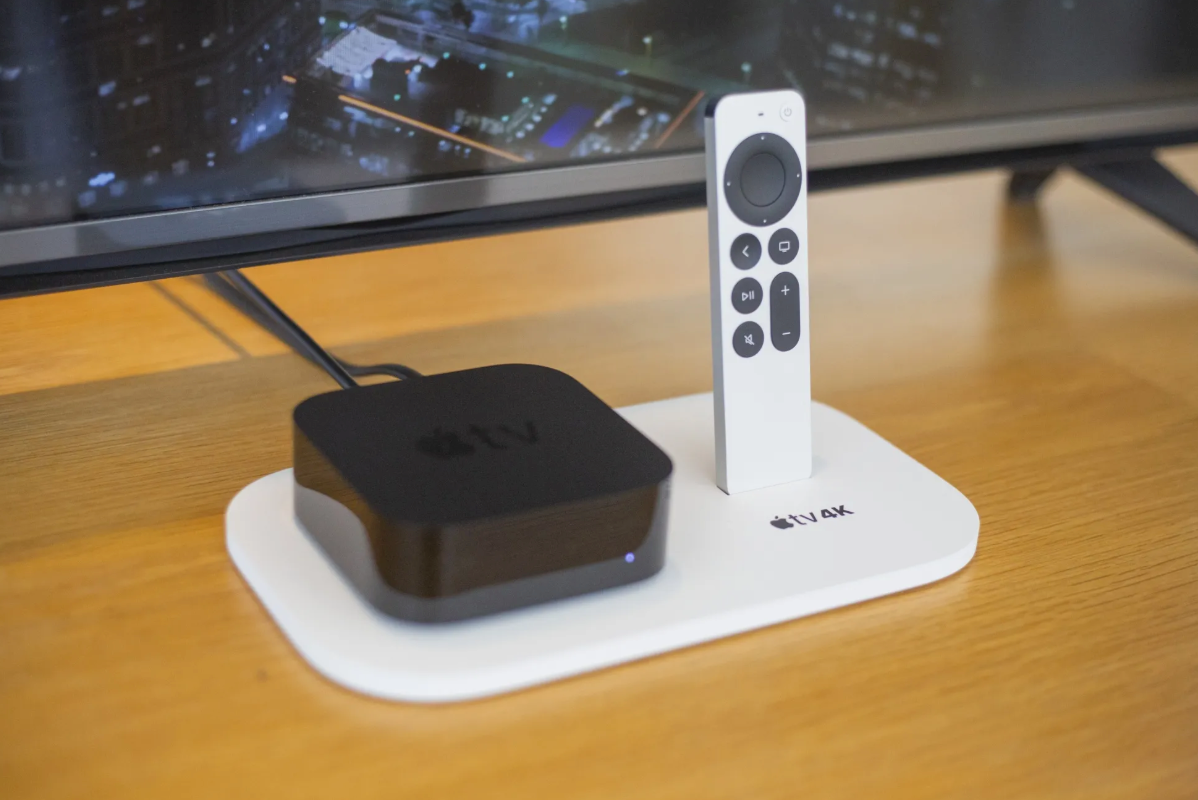
Apple's current Apple TV and its set-top box
Apple is also testing two features for the new Apple TV, the first update to the product in years: a built-in microphone that allows users to shout Siri commands directly into the set-top box without having to speak into the remote or a paired HomePod; and a redesigned remote with a built-in speaker that makes it easier for users to find the remote among the sofa cushions. In addition to being equipped with a new chip that drives Siri AI, HomePod mini’s major upgrades also include the launch of a series of new colors: pink, white, green, blue and midnight.
As for the name HomeView, the "View" in it reflects the purpose of the device: it is a display for people to watch and is controlled mainly by voice. Although the screen supports touch, if it is named HomePad, it will remind people of an iPad-like experience with direct touch-screen interaction as the core. MacRumors reported on Friday that the name HomeView first appeared in a trademark application filed by a shell company.
The new HomePod mini and Apple TV are scheduled to begin shipping to users on October 30 and be available in retail stores. As for HomeView, it's currently expected to launch around mid-November, which means it will be available about a month after launch.
Joining forces with third parties
Unlike the iPhone, HomeView is not designed for a wide variety of applications. The device will support a limited set of Apple apps and there will be no App Store for downloading additional software. Instead, the company is betting on a range of third-party accessories that can connect to HomeView and be controlled through Siri, the Home app and other Apple devices.
Crucially, Apple does not leave the construction of the entire ecosystem entirely to the market. The company has launched an unusual collaboration with LG Electronics to design and develop a range of smart home products, including smart doorbells, door locks, thermostats, temperature sensors, as well as indoor and outdoor security cameras and floodlight cameras. Apple is also working with Schneider Electric to develop energy-related equipment for the European market.
Together, these products form a smart home starter kit that includes nearly everything most consumers need to create a connected home. Apple calls it the "Apple Home Collection." Rather than waiting for third-party manufacturers to fill the gaps for years, Apple helped build the entire system from the start. However, LG's products won't be shipped until later this year at the earliest.
The partnership with LG also addresses another major weakness of Apple's original HomeKit strategy: cost. Apple can influence the functionality, performance and overall experience of these so-called "second-party accessories" to ensure they work well with Apple's own hardware and software. But manufacturing and product support will be handled by LG, which will also bear most of the financial burden.
This means that these accessories can be sold to consumers at a much lower price than those accessories that Apple designs entirely in-house, produces through its own supply chain, and pursues the 40% to 50% gross profit margin that its hardware business typically enjoys. By letting LG do most of the heavy lifting, Apple can deliver a more affordable lineup without sacrificing control over the experience.
Two other developments make this strategy feasible today: upgrades to Siri's AI capabilities, and advances in smart home communications protocols. Both would help make up for the shortcomings of Apple's initial attempts.
Siri finally works
It took Apple years to get Siri ready for this. Apple has been trying to launch this new batch of smart home devices since late 2024 (the original HomeView trademark application was indeed submitted in September of that year), but due to repeated delays in the upgraded voice assistant, the entire product release plan has been repeatedly blocked. It would be a disaster to launch attractive new hardware but still be powered by unreliable Siri.
Although Siri AI is nowhere near as capable as ChatGPT, it finally delivers on many of the promises Apple made when it launched its original version in 2011: to become an assistant that understands user intentions and actually executes user commands. At the same time, the Matter and Thread standards have also helped solve the compatibility and connectivity issues that have long plagued HomeKit. Apple's new products will be compatible with a wider range of existing accessories, rather than forcing consumers to build smart home systems from scratch.
For Apple, success in the smart home business does not necessarily mean surpassing Amazon or Google, nor does it mean making doorbells and thermostats a new major source of revenue. These goals will be elusive, at least for the next few years. What Apple really wants to do is to make smart home an indispensable part of its product system, provide existing iPhone users with reasons to buy more Apple products, and at the same time increase the threshold for them to switch to other brands.
If Apple can convince millions of households to adopt the new HomeView, speakers and accessories, it could fill one of the biggest remaining shortcomings in its product lineup. More importantly, it will ensure that the next generation of AI-powered devices doesn't give customers a reason to abandon Apple for the competitors that already control their homes.
Comments