
Abstract:
Apple’s first MacBook Pro equipped with an OLED display is getting closer to release. Bloomberg reporter Mark Gurman recently stated that Apple is expected to launch this significantly redesigned MacBook product in October or November 2026. This means that the long-rumored OLED MacBook Pro may be officially unveiled as soon as this month, but the specific release time is still variable, and it is not ruled out that it may be postponed to November or even later.
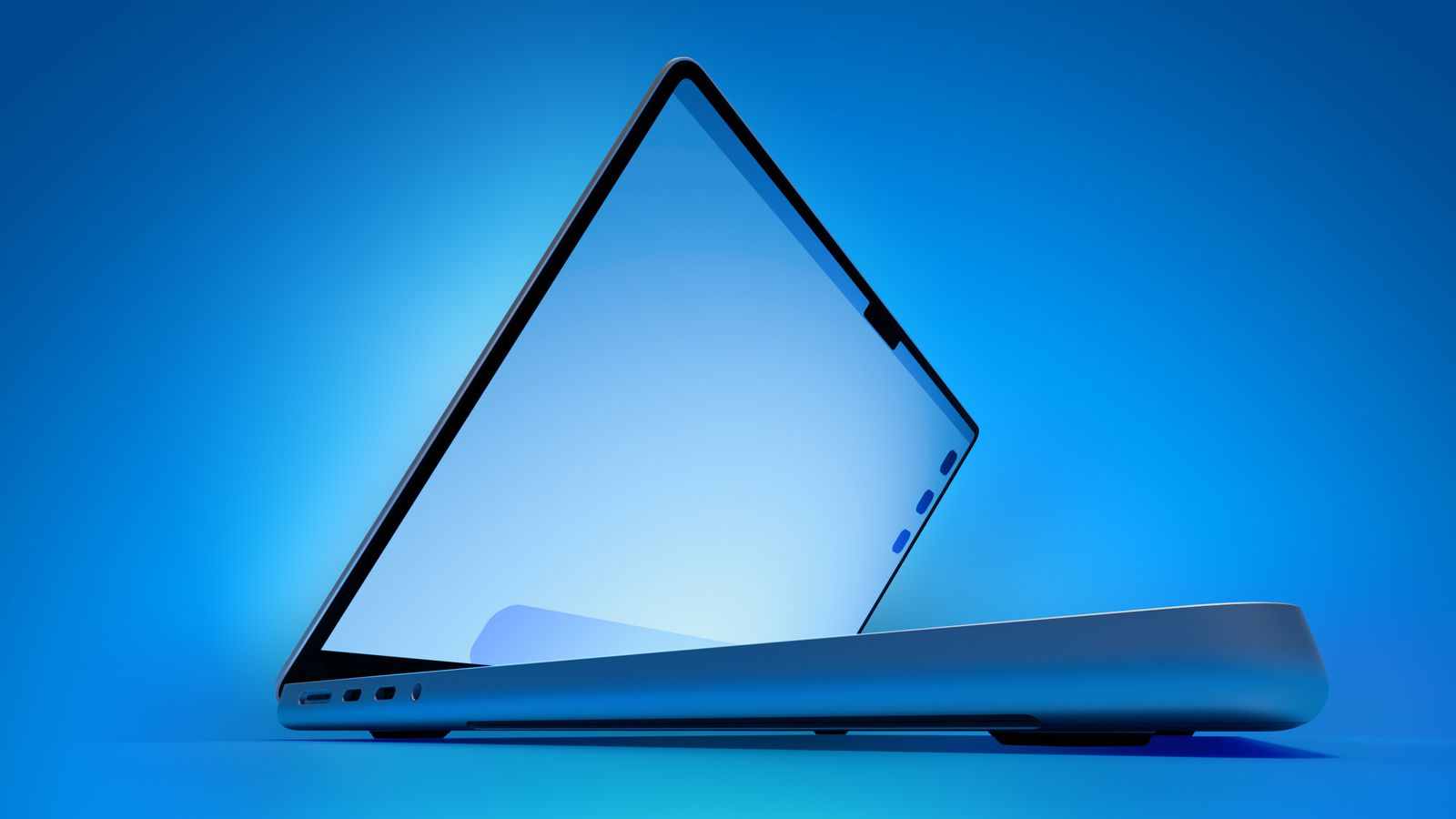
According to current reports, Apple plans to launch OLED models in two sizes, 14-inch and 16-inch. This will be the first time the MacBook Pro has received such a large-scale redesign since it adopted the M1 Pro and M1 Max platforms in 2021. Compared with the current MacBook Pro, which still uses an LCD display, the new machine will not only replace the OLED panel, but also adjust the body thickness, screen structure and camera area.
The OLED display will be one of the core hardware changes of the new MacBook Pro. Compared with the current Mini-LED backlight LCD, OLED can achieve independent light emission at the pixel level and can directly turn off the corresponding pixels when displaying a pure black screen. Therefore, it can provide higher contrast and deeper black, and is also expected to further improve response speed and display effect.
Previous supply chain news said that Samsung Display is producing a new generation of OLED panels for Apple, and the relevant panels use the 8.6th generation OLED production line. Apple is expected to use 14-inch and 16-inch sizes, and may use more advanced panel technologies such as tandem OLED to meet the MacBook Pro's brightness, lifespan and power consumption requirements. Early supply chain reports had expected Samsung Display to supply approximately 2 million related OLED panels to Apple in 2026.
In addition to the OLED screen, the touch function will become the most controversial change in this MacBook Pro update. For many years, Apple has insisted that Macs use keyboard, trackpad and mouse as the core operation method, and does not add touch functions to the screen like Windows notebooks. However, the new OLED MacBook Pro will reportedly be equipped with a touch screen for the first time, allowing users to click, slide and other operations directly on the screen.
Apple has no plans to replace trackpads and keyboards with touch screens. According to the information currently exposed, the touch function is mainly used as a supplement to existing interaction methods, such as directly operating the interface, sliding and selecting in some applications, while the traditional keyboard and trackpad will still be retained.
The reason why Apple finally decided to add touch functionality to the MacBook is reportedly related to its long-term observation of the usage habits of iPad users. Apple believes that in some productivity scenarios, directly touching the screen can improve operating efficiency and user experience, so it began to try to introduce this interaction method to Mac. Analyst Ming-Chi Kuo has previously said that the new OLED MacBook Pro will use On-Cell touch technology, which means the touch sensor is directly integrated into the display panel structure instead of adding a separate touch layer.
In order to adapt to touch operations, Apple is said to have redesigned the screen structure and hinges. Since traditional laptop screens are primarily designed for viewing, the screen may shake if the user touches the display directly. Therefore, the new MacBook Pro will adopt a strengthened hinge structure and adjust the internal structure of the screen so that the display panel can remain more stable when users touch the screen.
The body will also be further thinned. Apple is not simply replacing the display panel this time, but plans to redesign the internal space of the entire machine by taking advantage of the more compact structure of the OLED panel. Therefore, the new machine is expected to be thinner and lighter than the current MacBook Pro.
The camera area at the top of the screen may also change significantly. The current MacBook Pro adopts a notch design, while the new OLED model is said to cancel the traditional notch and use a punch-hole camera area similar to the iPhone Smart Island. This can reduce the area occupied by the top of the screen while retaining the camera and sensor, making the overall display area more complete.
As for the processor, there are currently certain changes between different revelations. Multiple reports previously linked the OLED MacBook Pro to the M6 series chips, believing that it will be launched as a new generation of high-end MacBook Pro products. However, with the adjustment of Apple's product route, some of the latest reports believe that this high-end OLED model may use M5 Pro and M5 Max, while the ordinary 14-inch and 16-inch MacBook Pro will later be upgraded to M7 Pro and M7 Max.
Therefore, it is currently not completely certain which generation of chips will be used in the final product. Compared with the processor model, changes such as OLED display, touch function, thinner body and new screen structure have been repeatedly mentioned by multiple sources.
It is worth noting that this product may no longer even use the traditional MacBook Pro product positioning. There are reports that Apple may name it "MacBook Ultra" and place the OLED touch screen model above the regular MacBook Pro. According to this idea, the existing 14-inch and 16-inch MacBook Pro will not be directly replaced, but will continue to assume the positioning of mainstream professional notebooks, and the OLED touch screen models will become a higher-end product line.
If Apple ultimately adopts this product strategy, the MacBook product line may form a more obvious hierarchy. The ordinary MacBook Pro continues to provide traditional LCD screens, keyboards, and trackpad operations, while the new high-end models widen the gap through OLED, touch screens, thinner bodies, and new display area designs.
Prices may also rise further as a result. The current high-end model of the 14-inch MacBook Pro starts at about US$1,999, and the 16-inch model starts at about US$2,499. The OLED touch screen model is expected to be positioned above the existing high-end models, so the price may be significantly higher than the current MacBook Pro. However, as of now, Apple has not announced any official price information.
In terms of release time, the most noteworthy change currently is Gurman’s latest judgment. He had previously believed that the OLED MacBook Pro might be launched in late 2026 or early 2027, but the latest news has further narrowed the time window to October to November 2026. If this judgment is accurate, Apple will officially announce the product in the next few weeks. At the same time, Apple is currently reported to be planning to launch other new products in October, so the OLED MacBook Pro may become an important part of this fall's Mac product updates.
Apple has not yet officially confirmed the OLED MacBook Pro, nor has it announced a specific release date, final name, chip model or price. Therefore, at this stage, information about the touch screen, smart island camera area, M5/M6 series chips, and MacBook Ultra name should still be regarded as leaks and supply chain news.
If it is finally launched according to the current rumored plan, this will be the most thorough hardware change of MacBook Pro since its 2021 major refresh. The OLED display solves display technology problems, and the touch screen represents the first time that Apple has officially changed the interaction logic that MacBook has long adhered to. The thinner body and new screen structure mean that Apple is redefining the product form of high-end MacBook.
Comments