
Abstract:
An international archaeological team recently announced that they have discovered what may be the oldest known shipwreck in the world off the southern coast of Türkiye. Based on clues such as pottery in the cargo left on the ship, researchers initially determined that the ship was between 2700 BC and 2400 BC, about 4500 years ago. If this conclusion is ultimately confirmed, it would be hundreds of years older than the approximately 4,200-year-old shipwreck that was previously thought to be the world's oldest shipwreck, located near the Greek island of Dokos.
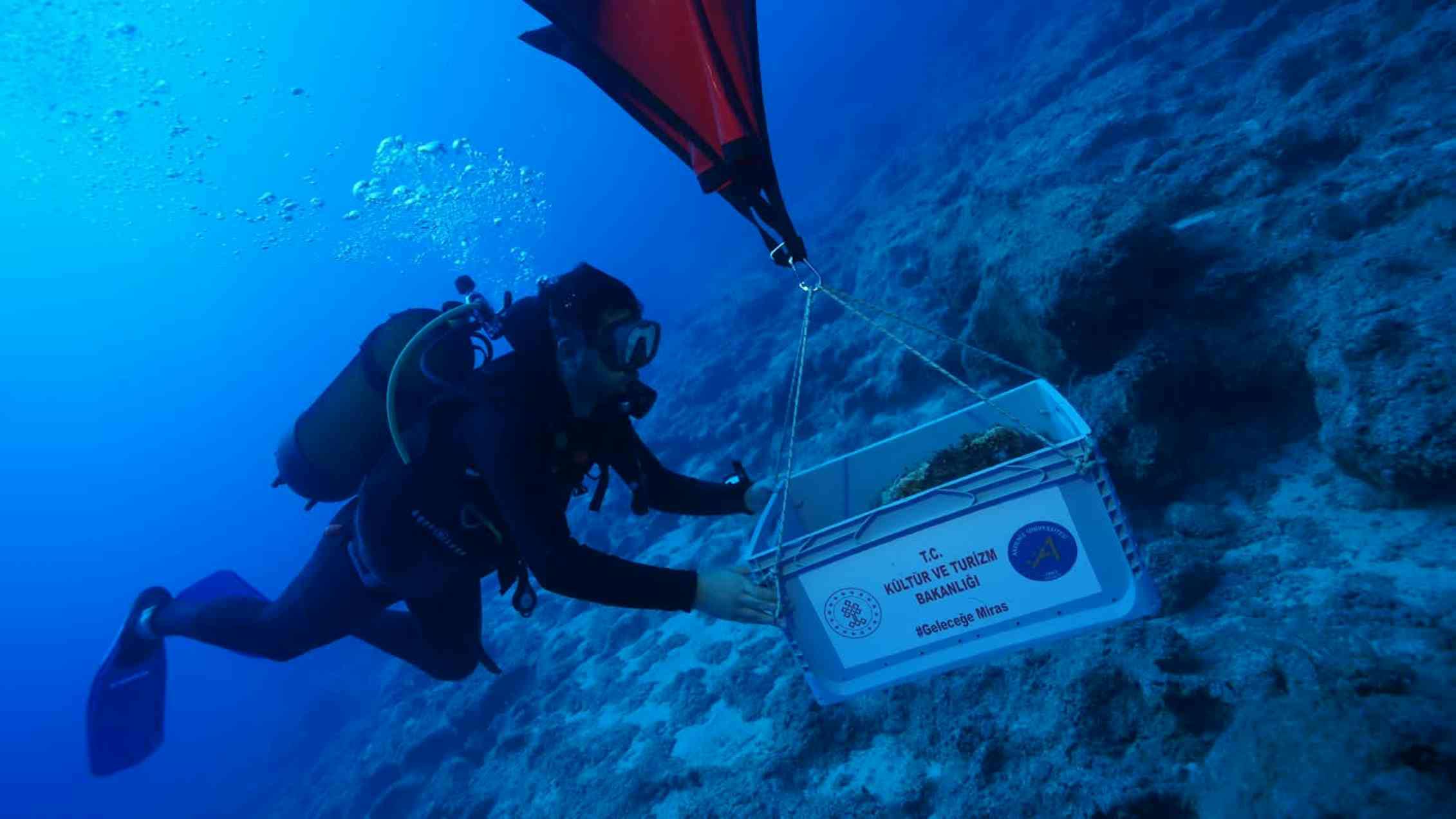
The researchers said that the relevant conclusions still need to be further verified, and the detailed research results have not yet been published in peer-reviewed academic journals. However, the discovery is expected to revolutionize understanding of connections and trade networks in the early Bronze Age Mediterranean and shed light on an earlier stage in the development of the prototypes of modern maritime trade routes.
This discovery stems from the shipwreck investigations carried out in local waters by Hakan Oniz, an associate professor at Akdeniz University in Türkiye for many years. Based on clues provided by local navigators, he discovered this shipwreck site in 2024 in the shallow waters west of Antalya, Türkiye, near Kekova. He then invited a team of relevant experts to participate in the dating and cargo analysis work.
Due to long-term immersion in seawater, the wooden structure of the hull has completely disappeared, and no trace of the ship itself can be seen. However, based on the characteristics of the preserved cargo and pottery, the research team speculated that the sunken ship and its cargo belonged to the period from 2700 BC to 2400 BC. Of course, the researchers stress that the final date is still likely to be adjusted based on the results of future research.
Scholars believe that this shipwreck provides key evidence for studying trade networks about 4,500 years ago and is an important missing link in understanding the commodity exchange system in the Eastern Mediterranean. It was during the Pyramid Era of ancient Egypt, and the Pharaonic Kingdom was developing rapidly, and the remains of this ship are like a sealed time capsule, recording the true appearance of cross-regional trade activities of that era.
While the exact direction of the ship's voyage is unclear, researchers believe it was sailing along the southern coast of Türkiye. The sunken ship finally rested on the seabed between the two islands. There are various indications that the ship may have tried to take shelter in the leeward waters during the storm, but unfortunately hit the rocks and sank.
The research team speculates that the crew is likely to come from the Levant region on the east coast of the Mediterranean. They may have tried their best to save the ship during the storm, but ultimately failed to prevent disaster. Although the hull has long since disappeared, the precious cargo is scattered and embedded in the rocky slopes along the coast of Kekova.
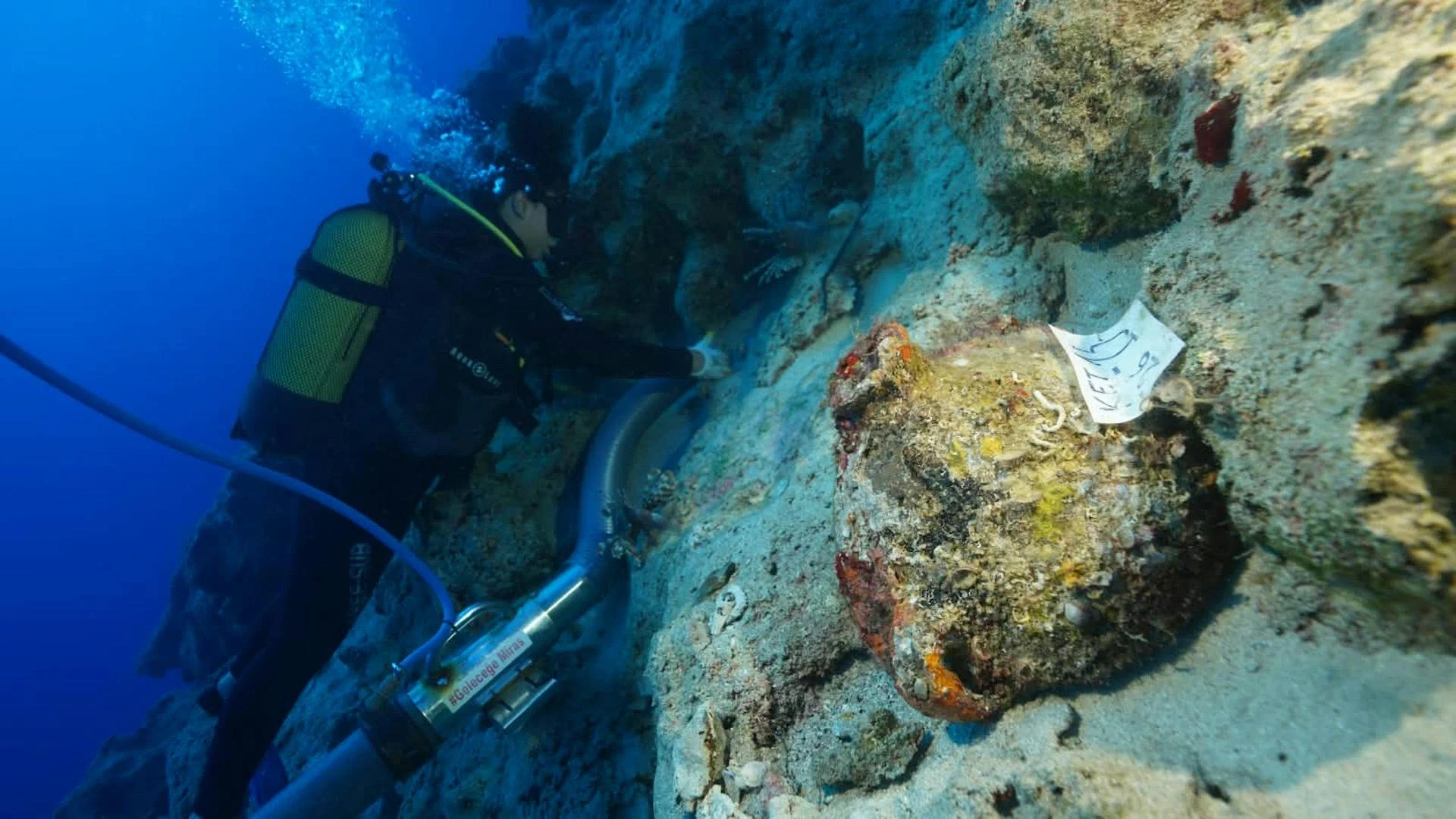
For the past four months, diving archaeologists have been clearing away barnacles and marine sediments clinging to the rocks and pottery surfaces, and have been pulling relics out of the water.
In this discovery, pottery became key evidence to interpret the history of the shipwreck. Archaeologists point out that the characteristics of pottery are similar to modern plastics. Although they can break, they are extremely difficult to completely disappear, so they can preserve historical information for a long time.
The exported goods mainly include large ceramic storage containers, namely amphora. These containers were once used to transport important commodities in the Eastern Mediterranean. Most of them are large oval in shape, with a flat bottom and handles on both sides. Many of the objects are also surrounded by a raised horizontal pottery belt at the widest point.
By analyzing the pottery, researchers can not only speculate on where it was made and where it was transported, but also what types of goods were traded at the time. More importantly, the shape and production process of the pottery itself provide an important basis for dating the shipwreck, and also help researchers establish chronological connections with pottery from other sites of the same period.
Archaeologists say that compared with later historical periods, understanding of trade in the eastern Mediterranean between the third and second millennium BC is still limited. Existing evidence comes mainly from ancient Egyptian texts, pottery remains, and raw material finds in ancient tombs.
At the approximate time of the ship's sinking, ancient Egypt was conducting trade with the Eastern Mediterranean via the Lebanese port of Byblos. Scarce local Egyptian resources such as cedar wood, tin, lead, oil, resin, lapis lazuli, and silver will all be imported into Egypt through the trade network.
Scientific research in recent years has also shown that around 2600 BC, ancient Egypt had obtained silver from the Aegean Sea region. Relevant analysis shows that the silver may have come from the Lavrion mining area east of modern Athens.
The research team believes that although ancient Egyptian ships may not have personally sailed to such distant areas, merchant ships like the Kekova shipwreck likely undertook key transportation tasks in the international maritime trade network, connecting different regions together.
As for what cargo was loaded in the amphorae on the ship, it still needs to be confirmed by laboratory analysis. However, archaeologists can still directly see residual sediments inside some containers. Researchers speculate that it may have contained commodities mentioned in ancient Egyptian texts, such as olive oil, wine or resin.
The research team also pointed out that the pottery may not have all come from the same port, but was loaded one after another during the voyage. Judging from the information currently available, some of the amphora decorated with raised pottery ribbons, or the pottery used to make these utensils, may have originated from the central Jordan Valley region.
The southern coast of Türkiye is dotted with ancient shipwreck sites. Although maritime archeology is still a relatively young discipline, some of the world's most famous ancient shipwreck discoveries have come from this sea. Researchers said that this discovery is just the beginning. As the investigation deepens in the future, this sea area may reveal more secrets about the exchanges and trade activities of ancient civilizations.
Comments