
Abstract:
There has been a rumor on the Internet that "200 grams of gold can be extracted from one ton of used mobile phones." Is this true? Let’s look at the core data first. Experts said that the legend on the Internet has changed the concept: 200 grams of gold corresponds to a ton of pure mobile phone motherboard waste that has been dismantled, sorted, and removed from the outer casing, screen, and battery, not a ton of complete scrap mobile phones. A complete mobile phone includes shell, screen, battery and other components, and the overall gold content will be greatly reduced. Moreover, after 2010, the gold-plated layer of smartphones continued to become thinner, with a modern mobile phone containing only 0.02-0.03 grams of gold.
Reporter’s direct report
The truth behind the “alchemy” of mobile phones at 1300°C
How do regular companies recycle precious metals from used mobile phones? The reporter takes you to the recycling production base in Guiyu, Guangdong.
The pretreated waste mobile phone circuit boards are sent to the 1300°C smelting furnace through a fully enclosed conveyor belt. At high temperatures, high-value metals such as copper, gold, silver, and palladium are separated from harmful substances such as lead and mercury. This production line adopts a three-stage treatment system, with a comprehensive metal recovery rate of over 98%, and an annual processing capacity of 12,000 tons of waste circuit boards.
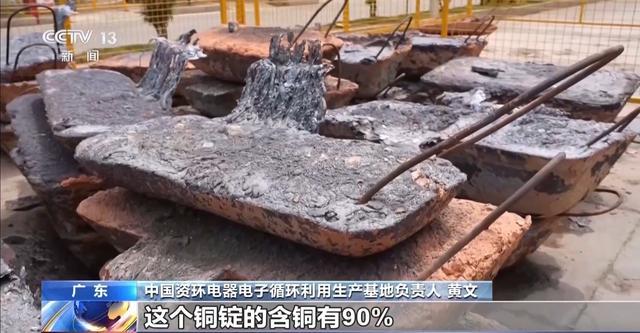
Huang Wen, person in charge of China Zihuan Electrical and Electronics Recycling Production Base:
This is a copper ingot smelted from a smelting furnace, containing 90% copper, containing approximately 100 grams/ton of gold and 1,000 grams/ton of silver. One ton of circuit boards can produce approximately 300 kilograms of copper.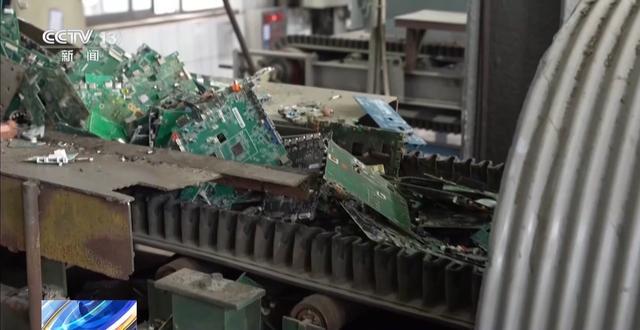
The reporter saw at the scene that the smelted copper ingots were solidified in metal containers, and gold was only contained in the copper as a trace by-product. There was no separate process for refining gold from mobile phones. The so-called "mobile phone alchemy" is essentially an industrial-grade comprehensive recycling of multiple metals, of which gold is only one of the by-products.
A total of more than 4 billion units
Recycling of used mobile phones is imminent
Refining precious metals is only the final step in the disposal of used mobile phones. The bigger question is: How many old mobile phones do we have idle?
Data from the China Circular Economy Association shows that in the past five years, our country has produced about 400 million used mobile phones every year, of which about 250 million are idle at home, and only 150 million have entered the market. Superimposing the historical stock, the current total of used mobile phones nationwide is estimated to be about 4 billion.
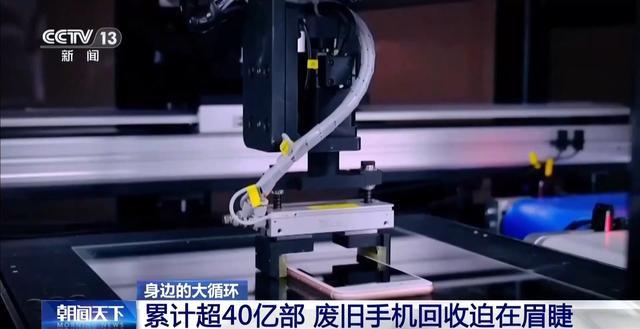
What is the concept of 4 billion units? This is almost equivalent to nearly 3 per capita in the country. A large number of idle mobile phones not only waste precious resources such as copper, gold, and palladium, but also contain heavy metals in batteries and circuit boards, and also pose risks to environmental pollution. It is urgent to let the sleeping old mobile phones circulate.
Trade-in for new popular second-hand mobile phone recycling
Store volume and price both increased
As of August 30, the trade-in of consumer goods for new ones in 2026 has driven the sales of related goods to more than 1.54 trillion yuan, benefiting more than 206 million people. With the support of policy dividends, the waste mobile phone recycling industry continues to heat up.
In a mobile phone recycling store in Qingdao, Shandong, the reporter saw that there is a standardized process for recycling old mobile phones: the staff first tests and evaluates basic functions such as appearance, calls, and networking, and then starts the privacy clearing process on the spot after confirmation. Many consumers said that they would watch the data clearing throughout the process and complete the transaction only after confirming that it is correct.
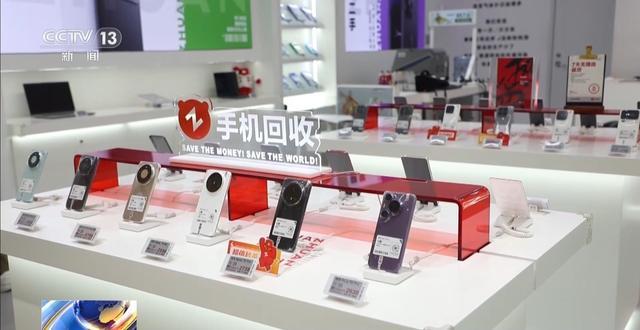
Industry data shows that for every second-hand mobile phone transaction completed, the average service life of the mobile phone is extended by more than 2 years, and about 25 kilograms of carbon emissions can be reduced, which is equivalent to the carbon sequestration of a tree for more than a year.
AI verifies second-hand mobile phones
Reporters visit mobile phone quality inspection center
Store recycling is only the first step. These old mobile phones will then be sent to the quality inspection center. How will they be processed before they can be put on the market again? The reporter visited the mobile phone quality inspection center in Huangdao, Qingdao.
On the fully automatic assembly line, robots work in an orderly manner: on the one hand, they perform deep data clearing on each mobile phone to ensure that the original data cannot be recovered; on the other hand, they complete hardware testing, covering key components such as screen sensitivity, buttons, and cameras. The X-ray scanner on the side penetrates the fuselage and accurately detects whether internal parts have been repaired or replaced. During the cleaning process, staff use high-pressure spray dry ice to remove stains without leaving any residual liquid.
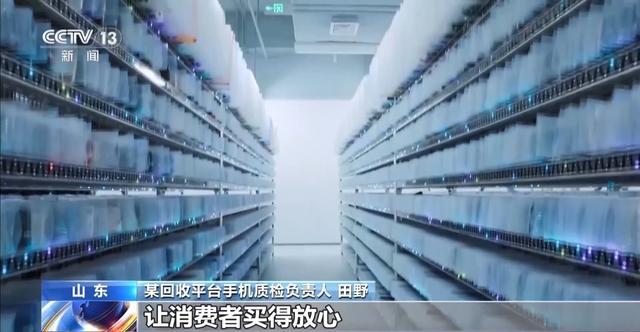
Tian Ye, head of mobile phone quality inspection at a recycling platform:
Through technological upgrading and transformation, the processing capacity of this production line has increased by 30% compared with last year, and it can detect more than 30,000 electronic devices every day. Like this newly deployed hardware testing equipment around me, through artificial intelligence algorithms, it can detect millimeter-level differences, allowing consumers to buy with confidence.How to recycle 4 billion used mobile phones requires not only policy guidance, but also technological upgrades. Only in this way can used mobile phones fully release their resource value, become an important part of resource recycling, and inject lasting power into green development.
Comments