
Abstract:
Long before the rise of the Inca Empire, people were living with a unique breed of hairless dogs on the northern coast of Peru. Archaeologists recently discovered the bones and mummified remains of this type of dog at the Castillo de Valme site in Peru, providing the first direct evidence that Peruvian hairless dogs once lived there. The research was published in the Journal of Anthropological Archaeology.
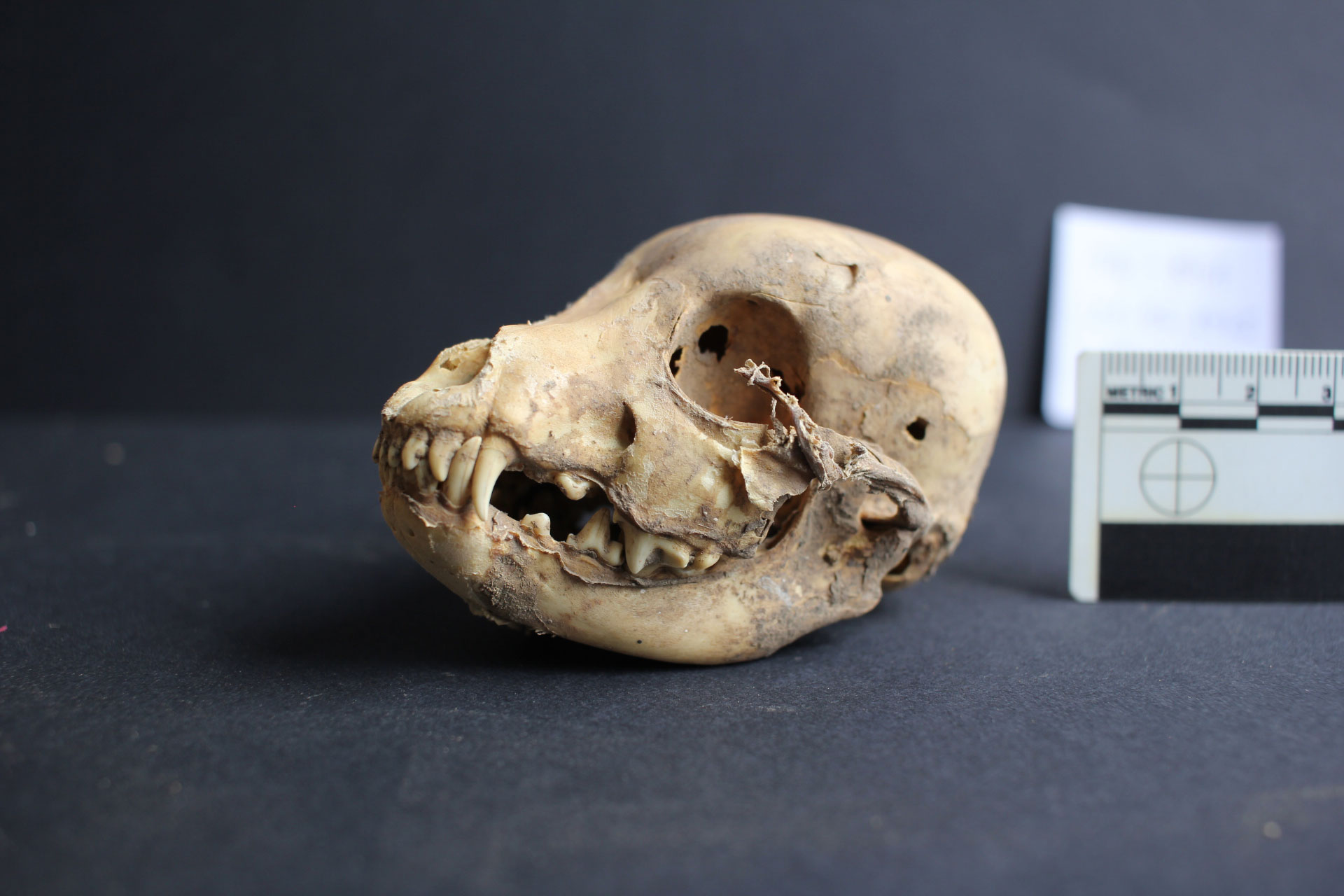
The Peruvian Hairless Dog is a medium-sized native dog with pointed ears that often appears in decorative patterns on ancient Andean pottery. Today, a modern variant of this breed of dog, the Peruvian Inca Orchid, is recognized by the American Kennel Club. The Peruvian government also announced in 2000 that this dog is a national cultural heritage.
The Castillo de Valme site is located approximately 190 miles (approximately 305 kilometers) north of Lima and covers an area of approximately 110 acres (approximately 45 hectares). Between 600 and 1050 AD, this was the administrative and burial center set up by the Wari Empire, about 400 years after the rise of the Inca Empire. To date, this is the only Wari Empire site found on the coast of northern Peru.
Many important archaeological discoveries have been unearthed at the site. In 2012, researchers discovered the first undisturbed noble tomb in the area, which contained 58 prominent women, 1,300 grave objects, and 6 human victims. In 2022, archaeologists discovered the tombs of elite craftsmen with gold, silver and bronze tools, providing more evidence for understanding how the Wari Empire managed its local provinces.
The study's first author, Veronica Tomczyk, a research assistant in the Department of Anthropology at Dartmouth College and a postdoctoral fellow in the Ecology, Evolution, Environment and Society Program, said the findings indicate that humans and dogs once lived together at this Wari site. However, because it is difficult for archeology to restore human emotions in the past, researchers still have difficulty accurately reconstructing the relationship between humans and dogs. She points out that ancient people's attitudes toward animals may be as complex and even contradictory as those of modern people: what is considered a pet by one group may also be considered a pest by a neighboring group.
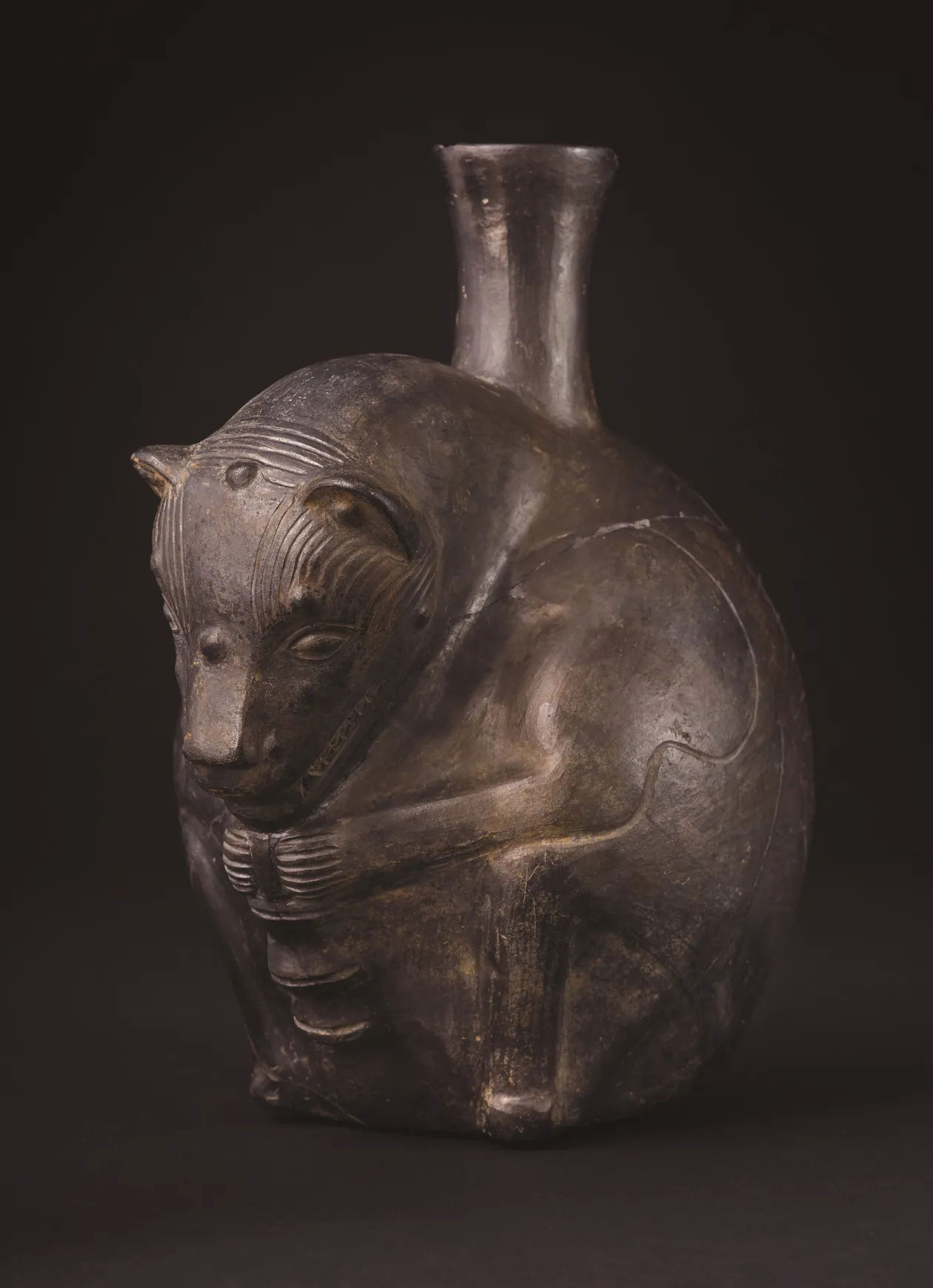
The Castillo de Valme site is located near an extremely arid desert on the Pacific coast. The special natural environment has preserved fragile organic materials and artifacts such as hair, bones, painted pottery, paint, fabrics and leather. A piece of pottery was also unearthed from the site, the shape of which imitates a sitting Peruvian hairless dog with human characteristics, and the dog is holding an object similar to a musical instrument in its arms.
Between 2010 and 2025, archaeologists discovered a large number of South American camelid remains at the site. They were likely domesticated llamas and alpacas, and may have been used as funeral offerings or simply discarded food remnants. At the same time, dog skeletons were also found at the site.
But because the site has experienced earthquakes and looting, it is not easy to interpret the animal remains. In 1970, an earthquake caused one side of the Castillo de Valme to collapse, exposing burial chambers filled with pottery and other artifacts and fueling widespread looting. The deeper, unexcavated layers still retain a clear Wari cultural background, while the upper sediments, which contain most of the animal remains, have been mixed with each other.
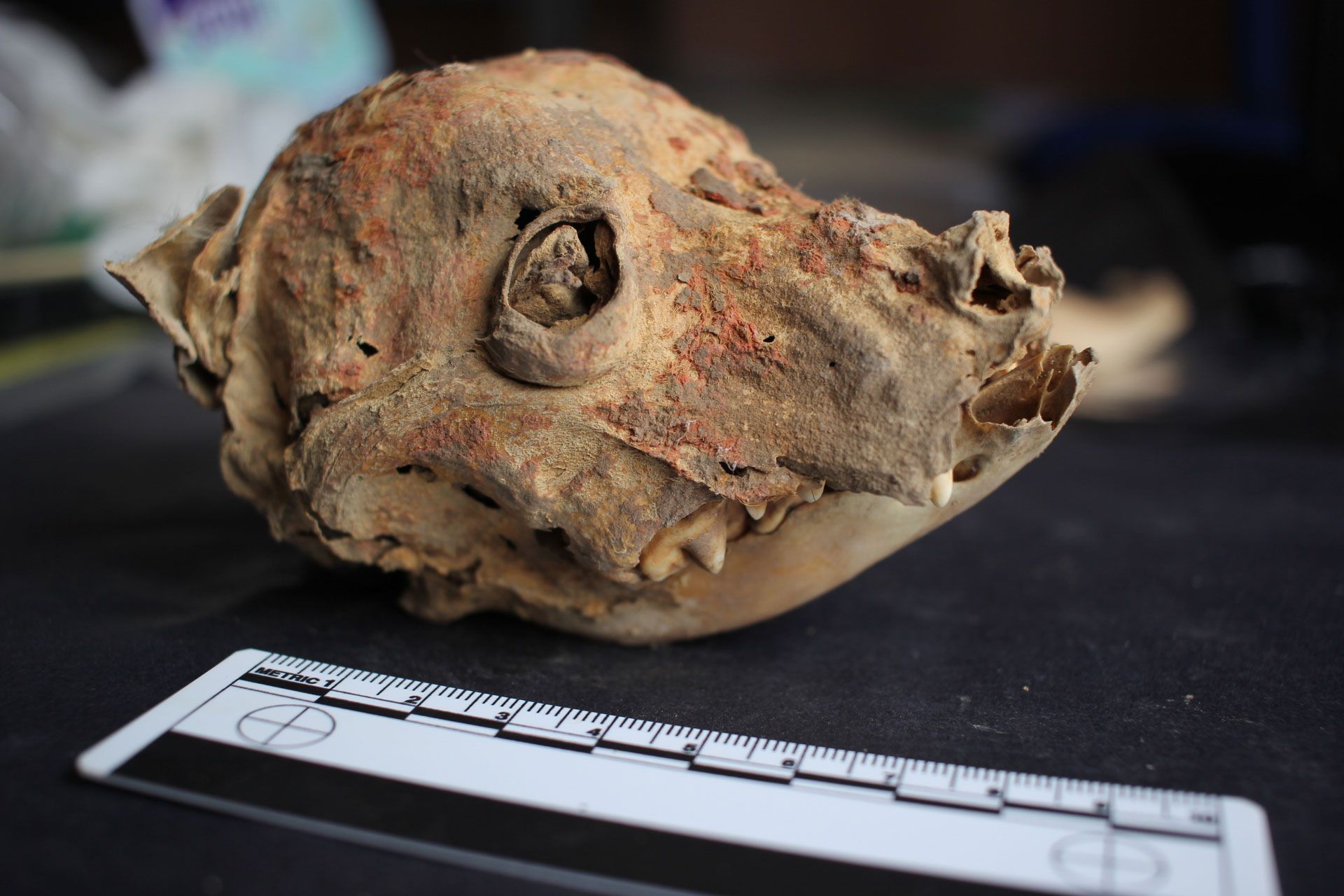
Three sets of canine remains found north of the main ceremonial area are of particular interest. One group is a naturally mummified skull, with hairless skin still visible on the skull and well-preserved ears covered with cinnabar. Cinnabar was a pigment commonly used in ancient Peru to decorate the dead.
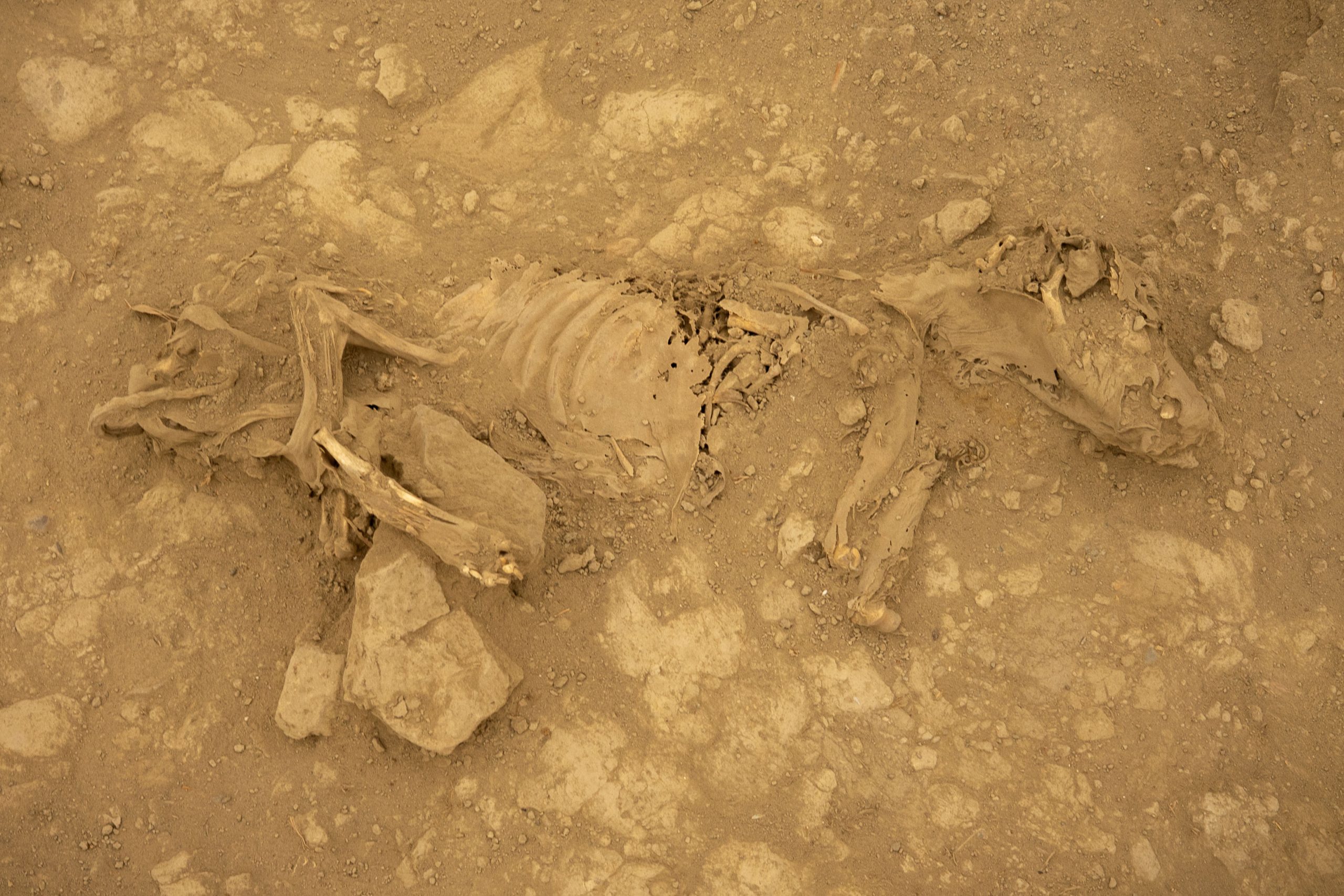
Archaeologists also discovered a larger dog skull and a naturally mummified adult male dog skeleton. The skeleton was buried in a shallow pit, with only the lower parts of its forelimbs missing. Initially, researchers suspected that it might have been buried here during excavations about 50 years ago. But Tomczyk discovered that the dog had no hair and that all three dogs were missing first premolars.
Tomczyk said she noticed that some of the dog skeletons were missing teeth, and that these teeth were not lost during the dog's lifetime. Some of the teeth, especially the first premolars and some of the last molars, actually never erupted. She then discovered in the literature that the same gene that causes dogs to be hairless also causes a reduced number of teeth, indicating that the remains belong to Peruvian hairless dogs.
The researchers estimated the dogs' age using standard zooarchaeological methods and conducted isotope analysis of their bones and teeth. Carbon, nitrogen, oxygen and strontium isotopes can preserve information about what an animal ate, drank and where it lived. Strontium, in particular, is incorporated into animals as tissues form and reflects local geological features, so it can help researchers determine where animals come from and whether migration has occurred.
The team also compared the dog analysis with data from humans and camelids excavated from the Castillo de Valme site. Tomczyk explained that dog teeth form and erupt very quickly, so tooth isotopes mainly record the life signals of puppies during their puppy years; the bones roughly reflect their life conditions about a year before death. Using this sampling method, the researchers were able to analyze the signals dogs leave behind at different stages of their lives.

The researchers found a total of 341 dog skeleton specimens, representing at least 19 different individuals, in addition to a complete mummified adult male dog. Among them, a puppy that was about 6 to 8 weeks old was buried with an elite craftsman called the "basket master" by archaeologists; an adult dog was buried in the palace; and part of the puppy skeleton was buried with a male tombkeeper numbered "XY". Researchers believe the man may have been sacrificed guarding the tomb.
Most dogs are adults when they are buried. Some of the remains appear to have been intentionally buried, while others appear to have been discarded as trash or food scraps. Only a few bones showed signs of butchery, indicating that dogs were not widely eaten at this site.
Radiocarbon dating shows that the mummified dog remains are at least 1,200 years old and are the earliest radiocarbon dating data currently obtained from the Castillo de Valme site. This result could have important implications for re-dating the site.
Isotope measurements also showed that most dogs had eaten some amount of corn. Corn was one of the staple foods in the Andes in pre-Hispanic times, so there is overlap in the dog's diet with that of humans. Individuals considered to be hairless dogs have a diet that is more similar to that of children as puppies; as adults, their diets become more varied.
Researchers are currently unable to determine whether the dogs were specifically fed corn or whether they simply ate human leftovers and garbage. However, the unique dietary patterns displayed by the hairless puppies may provide clues to the existence of organized dog breeding activities at the time.
Tomczyk said researchers will never be sure whether the three dogs were pets or exactly how they were treated. But what is clear is that they were treated differently to other dogs at the site.
Comments