
Abstract:
A new study is challenging long-held beliefs about the social structure of bees. Researchers from Lund University in Sweden and the University of Oulu in Finland believe that a bee colony is not just a group of tens of thousands of bees, but more likely a complete living entity with its own development process, reproduction method and life cycle. If this idea is further recognized, it may change some of the basic concepts of modern beekeeping.
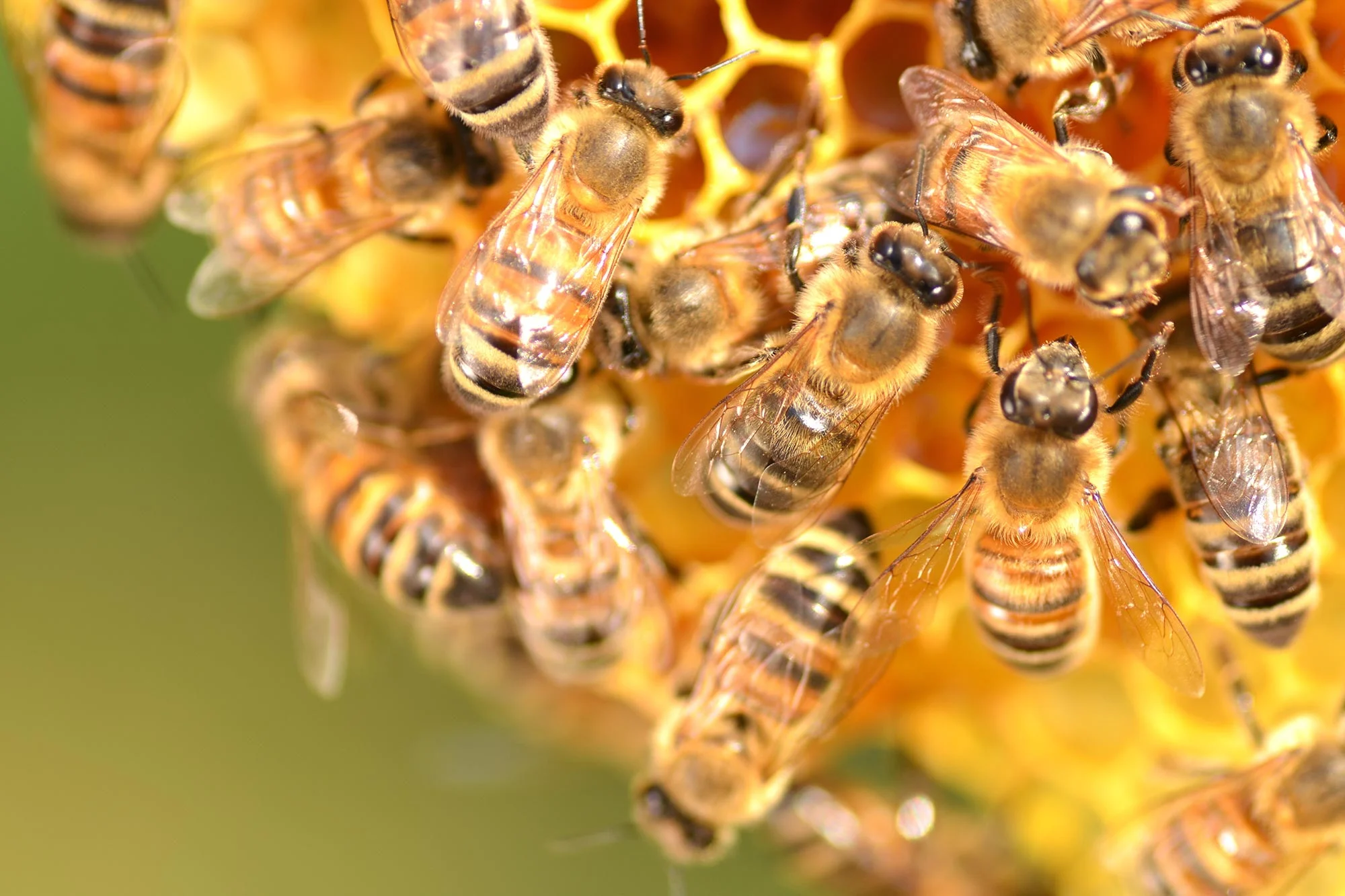
According to the traditional view, a bee colony consists of a queen bee, about 200 to 300 drone bees, and tens of thousands of worker bees. Each bee assumes different responsibilities and jointly maintains the operation of the bee colony. However, the researchers proposed that the queen bee and the entire bee colony should be regarded as a "superorganism". In this framework, each bee in the swarm is similar to a cell in an animal's body, and the entire swarm is equivalent to a complete individual animal.
Hannes Bonhoff, the lead author of the study, said that the team analyzed the biological significance of treating the bee colony as a single living organism. This perspective provides a new way to understand the complex and unique life process of bees.
According to the explanation of the research team, if a bee colony is regarded as a living organism, its growth process has many similarities with mammals. In a sense, bee colonies will go through developmental stages similar to embryos, fetuses, larvae, and adults, accompanied by the inevitable biological aging process. Researchers believe that a bee colony does not exist forever, but eventually dies after developing for several years. Unlike the previous focus on the life span of a single bee, this view emphasizes the life course of the entire bee colony as a whole.
Although the concept of "superorganisms" was not proposed for the first time, the research team further applied it to the analysis of the life cycle of bees, including reproduction, raising offspring, and group behavior. They believe that many phenomena that were regarded as collective behaviors in the past may actually be performing the physiological functions of a higher-level living body.
The study also reinterprets the famous "swarming" phenomenon of bees. Normally, when a bee colony reproduces, the original queen leaves the hive with about half of its members to find a new nesting site, while the new queen stays in the old nest and becomes the breeding center of the next generation of bees. Researchers believe that this process is more similar to animals reproducing offspring and implementing parental care, rather than simple group migration.
According to this theory, the new generation of bee colonies can directly inherit the already built hive, stored food and safe habitat, and gradually grow with the help of experienced worker bees. It can even be said that in order to continue the offspring, the mother bee colony will leave all its mature nests and resources to the offspring, while itself bears huge risks during the migration process. The researchers noted that this level of "parental care" is rare in nature.
The research team believes that re-understanding bees from the perspective of "superorganisms" may have a profound impact on modern beekeeping practices. For example, some of the beekeeping industry's current practices for parasite control and artificial intervention in bee colony behavior may need to be re-evaluated in the future for their impact on the entire life process of the bee colony.
This research result, published in the journal "Insectes Sociaux", provides a new biological framework for people to understand bee society, and also opens up a new research direction for understanding how social insects form highly coordinated living systems.
Comments