
Abstract:
Scientists have discovered that it is possible to delay aging and extend lifespan by directly activating a key "energy sensor" in cells. In a recent study, researchers used drugs to directly activate AMPK (AMP-dependent protein kinase) and found that this operation could extend the lifespan of fission yeast, nematodes, and fruit flies, with some experiments extending the lifespan by more than 25%. The study also found protein changes related to longevity in mice, but there is currently no evidence that this method can extend human lifespan.
AMPK is a highly conserved enzyme that regulates cell metabolism and can be understood as the "energy meter" inside the cell. When cells see a drop in available energy, AMPK is activated and helps the cells switch from a high-energy-consuming state to a more energy-conserving state.
In this state, cells reduce energy-consuming activities such as protein synthesis and fat storage, while enhancing processes such as energy production, breakdown of reserve materials, and internal recycling of cells. Exercise, starvation, and other metabolic stresses can naturally activate AMPK.
Research on the relationship between AMPK and aging has continued for many years, but an important question has not been completely resolved: whether AMPK itself is the direct cause of extending lifespan, or whether other metabolic changes indirectly cause the so-called longevity effect.
The important thing about this study is that the researchers did not use drugs such as metformin that can indirectly affect AMPK through multiple mechanisms. Instead, they used a compound called 991 to directly activate AMPK, thereby more directly observing the impact of AMPK itself on lifespan.
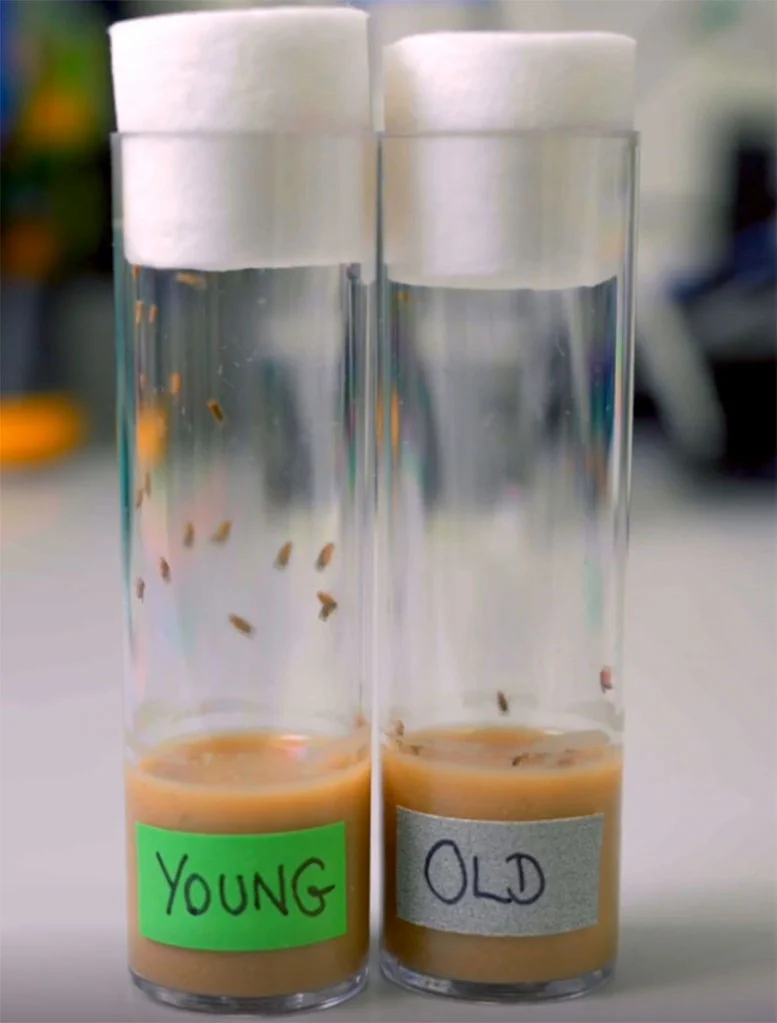
Experiments were first conducted in fission yeast and subsequently expanded to Caenorhabditis elegans and Drosophila. The researchers found that in these evolutionarily distant organisms, direct activation of AMPK can produce life-extending effects.
Among them, experiments on Drosophila and C. elegans are of particular concern because these two organisms are the most commonly used model animals for studying aging mechanisms. Although they are vastly different from humans, many of the basic mechanisms that control cell metabolism, stress response, and lifespan have strong evolutionary conservation.
The researchers therefore believe that these results indicate that AMPK may not be an aging regulatory mechanism unique to a certain organism, but an ancient metabolic system that plays an important role in different species.
The research team then further observed the effects of 991 in mice. Unlike yeast, nematodes, and fruit flies, this part of the experiment did not prove that the lifespan of the mice had been extended. Instead, they found that drug treatment induced a protein expression pattern associated with longevity.
In other words, mouse experiments currently provide evidence that "biological mechanisms may have cross-species continuity" rather than evidence that "already allow mammals to live longer." This is very important because there is still a very long research and clinical verification process between lifespan extension in lower model organisms and actual extension of human lifespan.
The reason why AMPK may affect aging is closely related to the energy management problems faced by cells during the aging process. As we age, our cells' ability to maintain normal function, remove damaged material, and respond to various stresses changes. If cells continue to be in a state of high energy consumption and high growth, but cannot obtain enough energy and raw materials, damage may gradually accumulate.
After AMPK is activated, cells will shift from "growth priority" to "maintenance and repair priority". This change may help cells use energy more efficiently while promoting processes related to cellular cleanup and stress resistance.
The researchers vividly describe this state as similar to turning on the cell's "energy-saving mode." This mode does not simply slow down all cellular activities, but reallocates limited energy resources and devotes more resources to maintaining basic cell functions.
This also explains why exercise and energy restriction have long been associated with healthy aging. Exercise, short-term energy deficiency and other conditions can stimulate AMPK, and this study further provides experimental evidence that direct pharmacological activation of AMPK may affect lifespan.
The study also further shows that AMPK may be closely connected with another important cell growth regulatory system such as TOR. TOR is responsible for regulating cell growth based on nutritional and energy conditions, while AMPK is more likely to remind cells to reduce energy-consuming activities when energy is insufficient.
Both systems work together to determine whether cells should use resources to "continue growing" or to "maintain, repair and cope with stress." Aging researchers have long studied such metabolic pathways because they may be key nodes linking nutritional status, cell damage and lifespan.
However, this research is still very far away from a true "anti-aging drug". First, 991 is currently primarily an experimental research tool rather than a drug that has been approved to extend human lifespan. Secondly, although AMPK has a potential protective effect, it is involved in a large number of normal physiological processes. Whether long-term and excessive activation will cause side effects still needs to be carefully studied.
In addition, the extension of animal lifespan does not equate to the extension of human health lifespan. Even if an intervention helps experimental animals live longer, it needs to be confirmed whether it can simultaneously reduce disease, maintain cognitive and motor abilities, and improve quality of life in later life.
What researchers really hope to achieve is not simply to make humans "live longer", but to find ways to delay the decline of aging-related functions so that people can stay healthy for longer.
The most important significance of this current study is to further prove that AMPK may become a direct target worthy of focus in future anti-aging research. The research results span yeast, nematodes and fruit flies, and molecular changes related to longevity were observed in mice, providing new basis for further research on whether AMPK can produce real life-extending effects in mammals.
If future research can prove that direct activation of AMPK can not only change the metabolic status of cells and animals, but also safely extend the healthy lifespan of mammals, then this metabolic pathway may become an important direction for the development of anti-aging drugs. However, at the current stage, "life span extension by more than 25%" is only applicable to some model organisms in this experiment, and there is still a very obvious distance from human anti-aging treatment.
Comments