
Abstract:
A latest study from Monash University proposes that all human species that lived in the past 5 million years, as well as fossil groups closely related to humans, should be included in the genus "Homo". This idea means that the traditional way of classifying human evolutionary lineages may need to be reexamined.
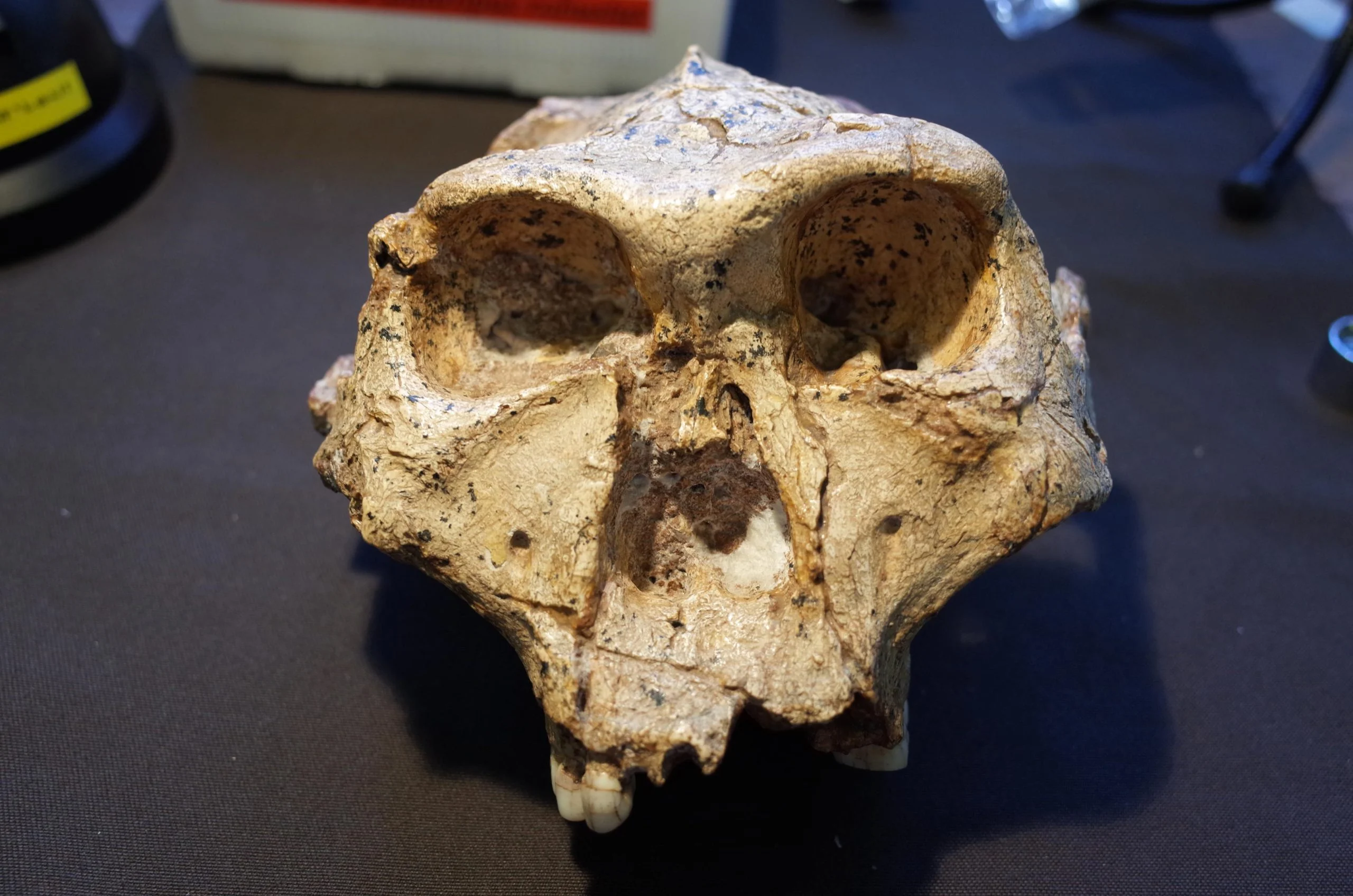
For a long time, human evolution has often been depicted as a clear linear sequence: starting from ape-like ancestors, passing through Australopithecus, developing to early members of the genus Homo, and finally evolving into modern humans. However, more and more fossil discoveries show that human evolutionary history is far more complicated than this description, and it did not unfold along a neat and straight route.
This study published in the "American Journal of Biological Anthropology" believes that fossil discoveries in recent years, as well as the development of evolutionary biology and genetic analysis techniques, are continuing to blur the seemingly clear boundaries between human ancestors and closely related fossil taxa. The researchers therefore suggested that all human species that appeared in the past 4 million to 5 million years, as well as closely related taxa such as Australopithecus and Paranthropus, should be unified into the genus Homo.
Study leader Dr. Ian Toll, a researcher at Monash University's Biomedical Discovery Institute, said that existing classification systems are becoming increasingly difficult to accurately reflect human evolution. He points out that species currently classified as Homo, as well as Australopithecus and Paranthropus, all lived within the past 5 million years, and accumulating evidence suggests that the traditional divisions between these groups may not still be valid.
Toll said recent fossil discoveries and advances in evolutionary and genetic analysis provide an ideal time to reassess whether traditional taxonomy can accurately represent human evolution. These groups do not necessarily represent independent evolutionary branches, so-called "clades." The behavioral traits and ecological differences that once distinguished them are increasingly difficult to maintain rigorously.
He proposed that expanding the scope of the genus Homo to include other related groups can more accurately and stably present the complex evolutionary relationships revealed by fossil records.
Over the past 50 years, developments in evolutionary biology have changed the way scientists organize and classify the living world. Modern taxonomy pays more and more attention to the true evolutionary relationship between species when naming and classifying organisms, and tends to classify species based on common ancestors.
In recent years, classification work has increasingly emphasized the concept of "clades". A clade is a group that contains a common ancestor and all its descendants. However, the application of this classification idea in the study of human evolution has been relatively slow.
Traditionally, members of the genus Homo have been distinguished by their larger brain sizes, their ability to use complex tools, and by specific body structure and behavioral traits. But as research deepens, these standards become increasingly difficult to use as strict boundaries. Some species that have been accepted as members of the genus Homo have very small brain sizes, and evidence of complex behavior may also be present in Paranthropus and Australopithecus .
Toll believes that including related species of Australopithecus and Paranthropus into the genus Homo would give a more consistent picture of human evolutionary history and reduce the need to repeatedly adjust classification boundaries as new fossils and new evidence emerge.
He said that the more humans know about the fossils of their ancestors and their close relatives, the more they will find that the human family tree is extremely complex and is not a simple linear development path. If species such as Australopithecus and Paranthropus are also included in the genus Homo, the evolutionary relationship between them can be better explained while retaining their differences, and there will be no need to frequently reclassify specific groups.
Comments