
Abstract:
Moving artificial intelligence data centers to space is becoming a controversial new direction in the technology industry. Elon Musk's SpaceX plans to use Starship to deploy large-scale orbital computing satellites, hoping to use solar energy in space to provide energy for AI computing. However, Matt Garman, CEO of Amazon's cloud computing business AWS, is cautious. He believes that it will be difficult for space data centers to meet the requirements of economic feasibility and practical application in the next ten or even twenty years.
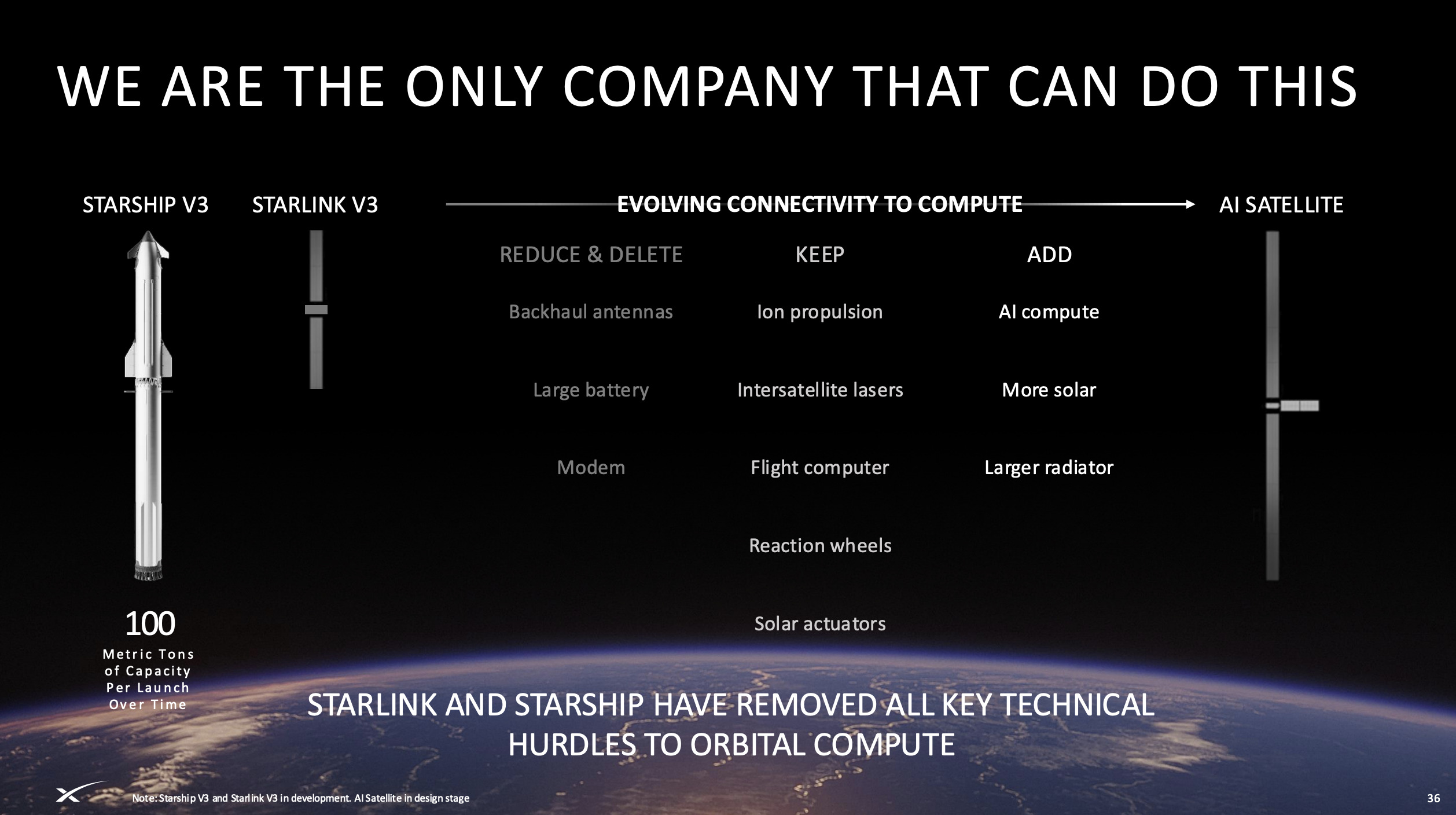
Garman spoke about this issue in an interview with Sources Podcast. He admitted that deploying data centers in space sounds attractive, but there are still a lot of difficult problems to solve from an engineering implementation and commercial operation perspective. He specifically pointed out that launch costs, carrying capacity, heat dissipation and equipment maintenance are all key factors restricting this idea.
The first is the launch ability. Building a large-scale space data center requires sending a large number of servers, GPUs, solar panels, cooling equipment and communication systems into orbit. Garman believes that the current frequency of rocket launches is still too low and the cost is very high, which is far from enough to support such a huge infrastructure construction.
He pointed out that if the space data center is to be truly commercially viable, the transmission frequency may need to be at least once a day. Even if SpaceX is working hard to improve the launch capabilities of its Starships, it cannot expect that one company alone will quickly solve the industry-wide carrying capacity bottleneck.
Equipment weight is also a real issue. For example, Garman said that a complete GPU server rack may weigh up to one ton. Even if the starship can deliver about 100 tons of payload to orbit in the future, it means that the deployment of large-scale computing facilities will require a large number of launch missions.
More importantly, the data center is not just the server itself. Ground data centers also require power supply systems, cooling equipment, network facilities and backup systems, and these equipment are also indispensable in space. Garman pointed out that solar panels usually provide kilowatts of power, and to build gigawatt-level computing facilities, extremely large-scale energy systems and supporting equipment must be deployed.
Heat dissipation is another issue that is easily underestimated. Many people believe that the temperature of space is extremely low, so placing data centers in space can easily solve the heat dissipation problem. But in fact, space is close to a vacuum environment. There is no air as a medium, and heat cannot be directly discharged to the surrounding environment through air cooling or liquid cooling systems like ground data centers.
In a vacuum, the waste heat generated by the equipment mainly needs to be discharged through thermal radiation. This means that servers must be connected to large cooling panels that release heat into space in the form of infrared radiation. For data centers with power levels reaching hundreds of megawatts or even gigawatts, the cooling system itself can become an engineering facility of considerable size, weight and cost.
Garman also emphasized the issue of equipment maintenance. GPUs, servers and power supply equipment in ground data centers can be quickly replaced by technicians after failure; but in orbit, any hardware failure may mean expensive repair tasks or even having to abandon the entire satellite. In addition, space radiation can also cause damage to electronic components, so servers and computing chips must adopt additional protective designs.
He said that these problems are not completely unsolvable from a technical point of view, but it will take a long time to truly integrate them into an economically viable system.
Musk has a different view on this. In response to external doubts about the heat dissipation capabilities of space, he previously explained on the social platform X that heat dissipation in space is not necessarily more difficult than on the ground. The key lies in the material, temperature and orientation of the radiator.
Musk believes that an aluminum radiator facing away from the sun can achieve a thermal radiation capacity of about 1,300 watts per square meter. Since the radiator mainly faces the cosmic background environment close to absolute zero, it can release its own heat in the form of radiation.
He also pointed out that the power generation capacity of solar panels per unit area is about 250 watts per square meter, so the radiator area of the space AI satellite needs to be approximately one-fifth of the solar panel area. According to this idea, the heat dissipation problem is not impossible to solve through reasonable structural design.
However, the 1,300 watts/square meter proposed by Musk is the radiation capability under specific temperature, surface emissivity and space orientation conditions, and does not mean that any satellite radiator can continue to reach this level. Actual systems must also consider factors such as solar radiation, Earth's infrared radiation, the temperature of the heat sink itself, material properties, and how heat from within the server is conducted to the cooling surface.
SpaceX is currently advancing a space data center satellite program called Starmind. The company hopes to use Starship to deploy a large-scale computing satellite network, with a long-term goal of achieving approximately 100 gigawatts of computing power. To this end, SpaceX is also promoting the research and development of advanced solar panels and other supporting technologies.
This plan is closely related to Musk’s previous vision for space AI infrastructure. He believes that as the demand for artificial intelligence computing continues to grow, the power supply and data center construction space on earth may eventually be unable to meet the demand, and space can provide a broader space for solar energy utilization.
In fact, Amazon itself is not completely exclusive of space computing. Blue Origin, owned by its founder Jeff Bezos, is also exploring related technologies, and Google has announced an orbital data center research plan called Project Suncatcher. However, various companies have inconsistent judgments on technology maturity time and commercialization conditions.
The U.S. Government Accountability Office (GAO) also pointed out in a technology assessment report released in April 2026 that space data centers face multiple challenges such as power supply, heat dissipation, communications, radiation protection, and rail traffic management. In particular, the solar arrays and cooling equipment required by large data centers have not yet been verified for large-scale on-orbit deployment.
For future development, some research institutions believe that space data centers may first be used to process data generated by the satellite itself, such as earth observation, remote sensing and space science missions, rather than directly replacing large-scale AI training centers on the ground. Completing preliminary processing of data in space can reduce the amount of raw data transmitted to the ground, which has practical value in some specific applications.
Thus, the space data center debate actually involves two different issues: first, whether facilities with actual computing power can be established in orbit, and second, whether large-scale commercial operations can be achieved at a competitive cost. The former has seen some technical exploration, while the latter still faces huge engineering and economic obstacles.
Garman does not deny the long-term prospects of space data centers, but believes that there is still a long way to go before they are truly practical. Musk is trying to prove that this idea can be realized faster through the starship's large-scale carrying capacity and satellite heat dissipation design. The differences between the two views ultimately need to be verified by rocket launch costs, on-orbit heat dissipation efficiency, equipment life and actual computing costs.
Comments