
Abstract:
The results of the 2026 midterm elections in the United States have dealt a heavy blow to technology billionaire Elon Musk. The major Republican donor spent approximately $446 million in this election cycle to try to help Republican candidates win key states and congressional seats, but many of the candidates he supported ultimately failed to win. The Democratic Party not only made breakthroughs in many traditionally Republican areas, but also won control of both houses of Congress, causing Musk's political influence and his business layout in the United States to face new uncertainties.
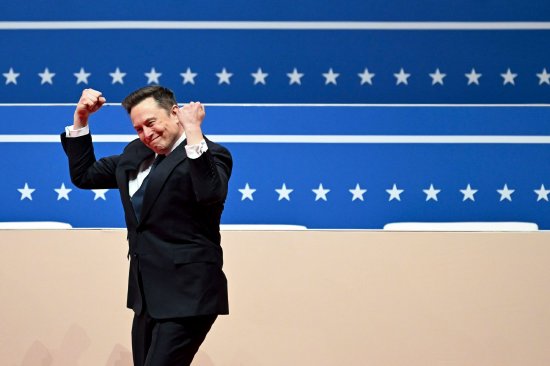
According to Politico, Musk has invested more than US$400 million in this election cycle, of which more than US$200 million has been used for political activities related to Texas. That makes him one of the most significant individual political donors this election cycle and one of the most heavily invested by a single non-candidate in modern U.S. electoral history.
However, the huge sums of money did not translate into the expected electoral results. Candidates backed by Musk suffered defeats in several key districts, including Republican candidates Ken Paxton in the Texas Senate race and Vivek Ramaswamy in the Ohio gubernatorial race. The defeats of the two men meant that Musk's massive investment of political resources in different states failed to achieve the desired results.
The results in Texas are particularly noteworthy. Musk has previously regarded the state as an important base for his business empire, and both his Tesla and SpaceX have important operations there. He not only supports Republican candidates, but also actively uses social platform X to build momentum for relevant election activities, hoping to maintain a local political environment conducive to the development of technology companies.
But Democratic candidate James Talarico ultimately defeated Musk-backed Ken Paxton, helping the Democrats win the Texas Senate seat. Meanwhile, Democratic candidate Gina Hinojosa also defeated Republican Governor Greg Abbott, who was seeking re-election, in the gubernatorial election. This result dealt a double blow to Musk's political layout in Texas.
Changes in the gubernatorial election may also affect plans by Musk and other technology companies to expand artificial intelligence data centers in Texas.
In the past few years, Texas has attracted a large number of technology companies to invest in data centers with its relatively relaxed regulatory environment, land resources and energy supply. Companies such as OpenAI, Oracle, Microsoft, Google, Meta and Amazon are advancing or planning large-scale infrastructure projects locally. Musk's companies also have huge plans to build artificial intelligence computing facilities.
However, as data centers rapidly expand, local residents are increasingly concerned about power consumption, water demand, noise, land occupation, and rising electricity bills. Community movements against the construction of data centers have emerged in many regions of the United States, and some projects have even been suspended or adjusted due to local resistance.
Musk has previously regarded Texas as an important region that can continue to promote the construction of artificial intelligence infrastructure. Democratic gubernatorial candidate Gina Hinojosa has promised to temporarily halt the construction of new data centers until corresponding legal protections are established. Her victory could change the local data center approval and regulatory environment in the future.
Sam Koppelman, publisher of Hunterbrook Media, said that in the face of the expanding wave of opposition to data centers across the United States, Texas was originally regarded by technology companies as a safe haven where they could continue to build AI infrastructure on a large scale, but the election results have changed this expectation.
After the election results were announced, Musk also responded in a sarcastic tone on social platform X. In the early hours of Wednesday morning local time, he wrote: "It seems that my space lasers to interfere with the election did not work this time." This was obviously a joke on outside criticism of his political influence and huge campaign investment.
Subsequently, he posted another post: "Now it seems that building data centers in space is quite attractive." These remarks not only continued his promotion of the idea of space data centers, but were also seen by the outside world as a response to the changes in the political environment in Texas.
The pressure on Musk is not limited to state-level politics. As Democrats win control of both houses of Congress, congressional scrutiny of big tech companies and their leaders is likely to increase significantly over the next two years.
Some Democratic lawmakers have publicly stated that the huge investment of technology billionaires in political activities deserves further investigation. Texas Rep. Greg Casar said that voters made their choice in part because they resented the influence of artificial intelligence billionaires on Republican politicians. Democrats should next hold these entrepreneurs accountable rather than continue to accept their political donations.
After the Democrats regain control of Congress, they may further investigate Musk’s previous involvement in the work of the Department of Government Effectiveness (DOGE) and the contractual relationship between his companies and the federal government. Tesla’s autonomous driving business, SpaceX government projects and federal regulatory issues may also become the focus of future congressional hearings and investigations.
However, Democratic control of Congress does not mean that all relevant policies can be changed immediately. The President of the United States still has executive power and veto power over bills, and policies involving artificial intelligence, the defense industry, and space projects may continue to receive support from some members of both parties. How much impact the change in congressional control will have on Musk's companies still depends on subsequent investigations, legislation and regulatory actions.
The most noteworthy thing about this election is not only that the hundreds of millions of dollars invested by Musk failed to help the Republican Party achieve the expected results, but also that the relationship between technology capital and local politics is changing. In the past, technology companies could obtain local government support through investment, employment and tax incentives; now, as the demand for energy and land resources for data centers has increased dramatically, community residents' concerns about project costs and environmental impacts have begun to be directly reflected on the ballot.
For Musk, this election is both a major setback for political investment and the beginning of a more complex regulatory environment for his U.S. business landscape. Huge sums of money can help candidates obtain campaign resources, but they may not change voters' judgments on energy costs, local development and the influence of technology companies.
Comments