
Abstract:
This week, California voters will vote in a referendum on whether to impose an asset tax on California’s super-rich for the first time. But these super-rich people, especially the new tech nouveau riche from Silicon Valley, don’t intend to just hand over the money. "To Brin, $100 million is like a middle-class family going to the Olive Garden restaurant chain for a sumptuous meal. This amount of money is nothing to him."
This is San Francisco political consultant Eric Jaye’s evaluation of Brin’s spending to block the wealthy tax. Democrats may not think it's a big deal that the super-rich pay more taxes, but Breen certainly doesn't think so.
Every Tuesday in the past few months, more than 20 of the world's top wealthy people or their advisers will join a conference call on time to discuss how to fight a war. According to foreign media reports, their enemy is California Proposition 40, a wealth tax specifically targeting billionaires.
The rich are so nervous because most of this tax is concentrated on a very small number of people. According to foreign media analysis, Brin, Huang Renxun, Page and Zuckerberg will collectively bear about 40%, accounting for US$42.8 billion of the total of approximately US$107 billion.
On November 3rd, US time, California voters will vote on this proposal. If passed, this will be the first state-level wealth tax in the United States. California residents with a net worth of more than $1 billion will be levied a one-time 5% tax on their net assets, based on their resident status on January 1, 2026. The wealth is calculated at the end of the year and can be paid in five years.
In order to prevent the referendum from passing, about 80 of the top wealthy people have donated more than $333 million to the opposition organization "Building a Better California", making it one of the most well-funded political operations in California history. Supporters have only raised about $32.7 million, less than one-tenth of their opponents.
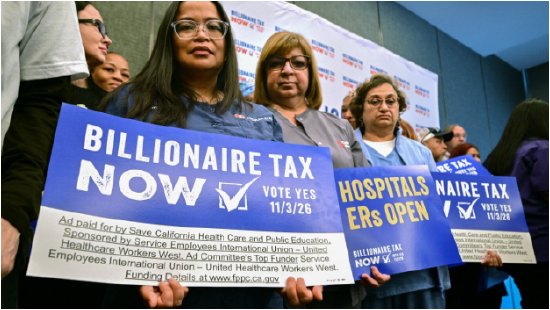
The rich people don’t show up and donate stocks directly
This conference call is organized by "Building a Better California" to update donors on the progress of polling, advertising and opponent research every week. It often ends with a sentence: Can you donate more?
The list of donations is a who’s who of Silicon Valley: Google co-founder Sergey Brin, former Google CEO Eric Schmidt, Stripe CEO Patrick Collison, and legendary investor John Doerr. Partners of top venture capital firms such as Sequoia, Coatue, General Catalyst, and Benchmark, as well as founders of companies such as Robinhood, DoorDash, Reddit, Figma, and Coinbase, these ultra-rich individuals have all contributed money. Silicon Valley investor Trevor Traina described this as an "Avengers-level" operation.
The super-rich are well aware of how sensitive this matter is. At a time when the polarization between rich and poor has triggered populist anger, billionaires need to be extra cautious when they spend money to oppose the billionaire tax. A circulated internal memo emphasizes that it must be other supporters, not the rich man himself, who stand on stage as the "face".
The organization's own polls acknowledge that the public views billionaires in a negative light on almost every issue. To this end, they hired an influencer marketing company to produce content that looked more newsy and left-leaning in order to reach the circle of Democratic voters.
Even the donation methods are unique to technology tycoons. Fundraisers are advising tech upstarts to donate their appreciated stock directly so they can avoid paying capital gains taxes. More than two-thirds of the money the organization has received in the past six weeks has been in stock. Using tax avoidance to oppose tax increases is probably the most shrewd political operation in Silicon Valley.
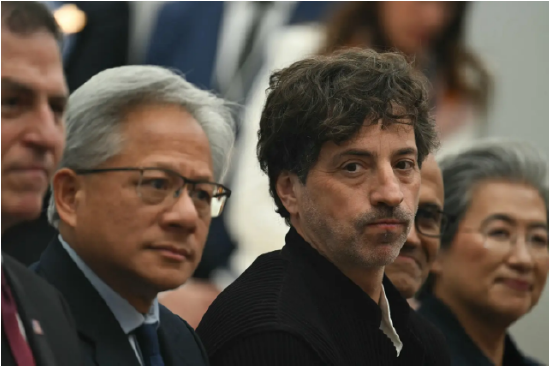
Brin becomes the leading brother
Brin is the leader of this counterattack. Because of this wealthy tax, he moved his residence and business to Nevada at the end of last year. But Brin was unwilling to give up. This year, he formed a team and arranged family office head George Pavlov and two senior election traders to deal with this proposal. Another group of people organized by cryptocurrency tycoon Chris Larsen later merged into Brin’s camp.
In the first six months, Breen wrote a total of seven checks and spent $102 million to fight against it, becoming the largest individual donation to a single proposal in California history. Based on a net worth of approximately US$260 billion, his potential tax bill is approximately US$13 billion, and the US$100 million blocking fee is less than one percent of the tax bill.
However, Brin no longer wants to pay the bill alone. He has not donated again since July. His advisers made it clear they wanted someone else to pay more this fall. This month, Building a Better California told donors that the budget was about $25 million short, and an anonymous donor was willing to contribute an additional $13 million if others came up with the same amount.
Former Google CEO Schmidt has donated more than 40 million US dollars, becoming the second largest donor. Doerr and Collison ranked third and fourth with donations of $40 million and $33 million respectively. Collison's situation was particularly awkward. Most of his wealth is in Stripe stock, and the payments company, valued at $159 billion, has not yet gone public, making it difficult to cash in the stock. Rippling CEO Parker Conrad also complained on social media that this tax is unfair to founders of unlisted unicorns because they have to pay taxes on stocks that cannot be sold.
It is worth mentioning that the personal assets of Page and Brin, another co-founder of Google, are almost equal. Once he is recognized as a California resident, he will also face a tax bill of tens of billions of dollars, but there is no direct donation from Page in public records. Page is the most mysterious billionaire in Silicon Valley. He has barely appeared in public for many years and only operates an AI manufacturing startup Dynamics in a low-key manner behind the scenes.
Set up reverse sniper proposal
The real trump card of this group of rich people is to launch two countermeasures. In response to Proposition 40 promoted by the union, "Building a Better California" specially designed Proposals 41 and 42. Proposition 42 prohibits retroactive taxation and blocks future wealth taxes from a constitutional level. According to California law, if two conflicting proposals are passed at the same time, the one with more votes takes effect. In other words, even if Proposal 40 passes half the vote, it may be blocked by opponents.
The internal document states the goal very straightforward: win both games, and defeat Proposition 40 by an overwhelming margin, thereby pouring cold water on the wealth tax movement across the United States.
The rich are so nervous because most of this tax is concentrated on a very small number of people. According to foreign media analysis, Brin, Huang Renxun, Page and Zuckerberg will collectively bear about 40%, accounting for US$42.8 billion of the total of approximately US$107 billion.
They pay almost no personal income tax. Page and Brin have not disclosed taxable income for three years since 2019. California billionaires pay only about 0.2% of their wealth in state income taxes each year. This is because almost all of their wealth is in stocks. If the stocks are not sold, they are not considered income, and they do not need to pay taxes. And when they want to use money, they don't need to sell stocks to cash out, they just need to use existing equity as collateral.
This is exactly the core argument of the California Medical Workers Union SEIU-UHW, the sponsor of the proposal: Trump’s “Big and Beautiful Act” cut federal funding for Medi-Cal but cut taxes for the rich. Now it’s time for the richest people to fill this hole.
Huang Renxun values long-term interests, and Musk ran away long ago
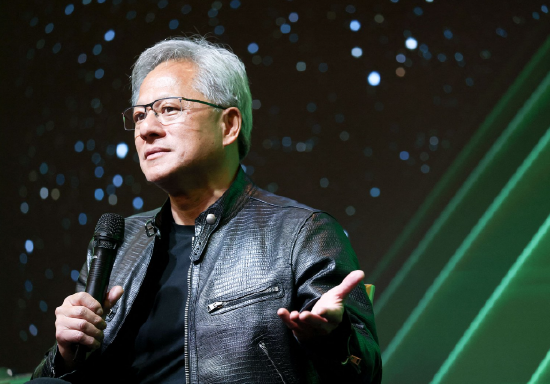
The opposite of Brin's attitude is Huang Renxun. In an interview with foreign media, he said that based on his net worth of approximately US$184 billion, it would be an honor for him to pay approximately US$8 billion in five years.
Lao Huang said that he is not afraid of paying taxes, but is afraid of becoming poor. He also said, "I am the ultimate version of the American dream." He went from being a dishwasher at Dennis' Restaurant to being the head of the world's most valuable company. This sentence carries a lot of weight. As early as January, he said that he had never considered this matter once. Just pay the taxes. Nvidia stays in Silicon Valley because the talents are here.
Perhaps Huang Renxun sees further. It is impossible for him or Nvidia to move out of Silicon Valley. As long as Nvidia grows steadily and its stock price continues to rise, a tax bill of nearly 10 billion US dollars will not be a big problem for him. Being an enemy of the California government and people and disrupting Nvidia's normal business will be a waste of more money than gain.
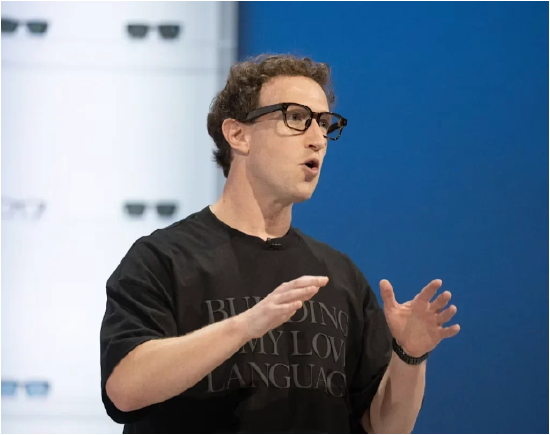
Zuckerberg, another super rich man, chose to bargain with the board of directors. When Meta released its financial report on October 21, it disclosed that in July this year Zuckerberg told the board of directors that the tax might force him to sell shares and reduce his voting rights from 60.6% to about 53%. He also considered selling his Palo Alto residence. With a net worth of approximately $225 billion, his tax bill exceeds $11 billion.
Under Zuckerberg's threat, Meta's board of directors finally agreed: to issue new non-voting Class C shares, Zuckerberg could immediately sell 20% of them, equivalent to 10% of his total economic rights, to pay taxes. In exchange, Zuckerberg promised to stay in California for the next eight years.
After Page and Brin moved to California, only Zuckerberg and Jen-Hsun Huang still live in California among the technology super-rich with a net worth of more than 100 billion US dollars.
More super-rich people are leaving California. Before the January 1 deadline, Page and venture capitalist Peter Thiel moved to Miami, and director Spielberg became a New York resident. Page also bought two luxury properties in Miami for $173 million. According to statistics from the Hoover Institution, the exodus of wealthy individuals took away $536 billion from the tax base, nearly 30% of taxable wealth.
The first person to foresee all this was Musk, the world’s richest man. He announced his move to Texas as early as December 2020, then sold out all seven properties in California, and has since rented a house in Texas. If he had not left California, Forbes estimated his net worth at nearly $1 trillion, and 5% would be nearly $50 billion. He left the field early and perfectly dodged the knife.
Super rich become targets of blue states
In fact, this trend of taxing the super rich has been brewing for a long time. During the Biden administration, the "billionaire minimum income tax" was proposed, requiring those with a net worth of more than $100 million to pay a minimum tax of 25%, including unrealized capital gains. However, this super-rich tax has been included in the White House budget proposals every year starting from 2022, but it has never become law.
Unable to move the needle at the federal level, Democrats turned to states and cities. Raising taxes on the rich is not just an agenda in California, but has become a common direction in states and cities governed by the Democratic Party. Washington state, where Microsoft and Amazon are headquartered, has always had no personal income tax. Now it has changed its tradition and targeted the wealthy with tax increases. Washington State Governor Bob Ferguson signed a bill in March this year to impose a 9.9% tax on annual income exceeding $1 million starting in 2028.
Newly-appointed New York City Mayor Zohran Mamdani and New York Governor Kathy Hochul jointly launched New York State’s first “second home tax,” which imposes a surcharge on second homes worth more than $5 million held by non-New York City residents. This means that even if they do not live in New York, the ultra-rich who own real estate in New York will have to pay additional taxes.
But there are huge differences within the Democratic Party as to whether to target the super-rich. The California Democratic Party supported Proposition 40 in August with a narrow margin of just over the 60% threshold, but the San Francisco Democratic Party subsequently voted against it and publicly sang against it.
California Governor Newsom has made it clear that he opposes raising taxes on the super-rich. In June this year, he said that he could negotiate with labor unions to remove the proposal from the ballot, but in the end the negotiation failed. On October 9, he publicly supported Proposition 42. Newsom's argument is that the wealth tax should be levied at a national level, with California competing with 49 other states. It should be noted that Newsom is very likely to run for president in 2028. He needs to win the support of the super-rich, and he does not want to be regarded as a radical Democrat.
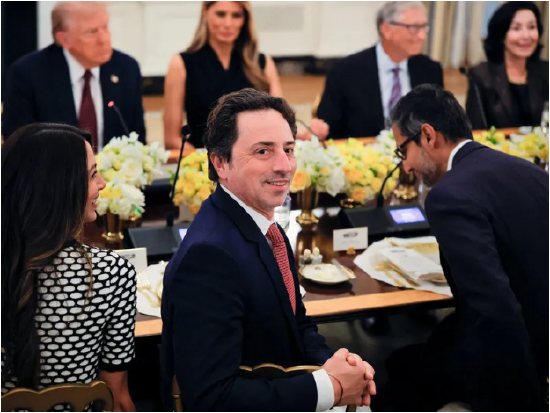
But Newsom also faced criticism from the progressive wing of the Democratic Party. Progressive U.S. Senator Bernie Sanders made a special trip to California to campaign for the proposal, and U.S. Representative Ro Khanna from the Silicon Valley district directly called on Newsom to stop focusing on his donors. Many of the super-rich people who oppose the proposal are Newsom's old sponsors. Larson has donated more than 12 million US dollars to oppose the proposal. He also said that he will support Newsom in 2028.
Whether California passes this proposal or not, imposing a wealth tax on the super-rich may continue to push the Silicon Valley rich to the other side of the political balance. Former White House AI director and Silicon Valley technology investor David Sacks publicly announced on X that after years of blindly funding the left, Silicon Valley finally saw the situation clearly.
According to Americans for Tax Fairness, billionaire families’ political expenditures in 2026 will be approximately US$1.7 billion, with approximately 69% going to the Republican Party. Doerr was originally a major donor to the Democratic Party, but now he is openly boycotting the California Democratic Party. Breen once openly opposed President Trump, but now he has become a good friend of the Republican White House. On the 16th of this month, he also attended the pro-Trump super political action committee MAGA Inc. at Mar-a-Lago. sitting next to Trump at a fundraising dinner.
Comments