
Abstract:
British single-board computer manufacturer Raspberry Pi announced that due to the continued sharp rise in memory prices, the company has to once again raise the prices of some high-memory products. Among them, the price of the 16GB version of Raspberry Pi 5 will increase by US$80, with the latest price reaching US$385; the price of the 16GB version of Raspberry Pi Compute Module 5 (Computing Module 5) will increase by US$40.
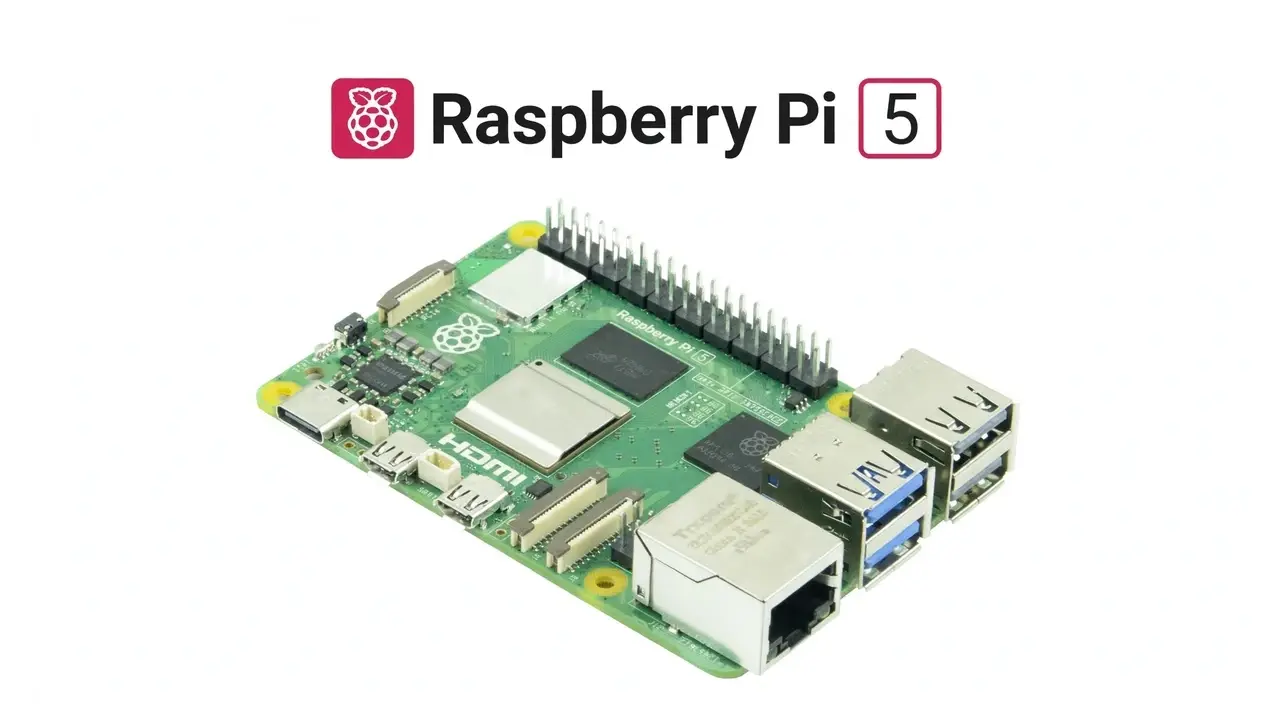
Raspberry Pi stated that this price adjustment does not target all products, and the company will try to avoid implementing comprehensive price increases. For example, the Raspberry Pi 500+ all-in-one computer product for desktop applications will still maintain its original price. This device integrates a mechanical keyboard with a computing host and is one of the important consumer products launched by Raspberry Pi in recent years.
Regarding this price adjustment, the company admitted that this is not good news for users, but emphasized that related price increases are unavoidable. Raspberry Pi recommends that consumers choose products based on their actual needs. If a lower memory version or an older Raspberry Pi device can meet their needs, there is no need to pay a higher cost to purchase a large-capacity model.
Raspberry Pi pointed out that the fundamental reason for this round of price adjustments is that memory market prices continue to soar, and this situation is closely related to the rapid expansion of the global artificial intelligence industry. As demand in the AI market surges, memory manufacturing resources are becoming increasingly tight. Not only Raspberry Pi, but also various computer and hardware manufacturers are facing similar cost pressures. Although the company has been working hard to reduce production costs by finding alternative components, there are currently almost no alternative sources of supply for the DRAM chips used in the 16GB capacity, so it can only respond to rising costs by increasing selling prices.
The company also mentioned that under the current background of tight memory supply, there has been some speculation in the market. Some merchants take advantage of the imbalance between supply and demand to sell Raspberry Pi products at prices much higher than the official recommended retail price, and even sell products that are inconsistent with the promotional content. Raspberry Pi emphasizes that all its products are available through official certified reseller networks and at official pricing channels.
It is worth noting that this is not the first price increase of Raspberry Pi in the past year. Just last month, the company increased the price of the 2GB versions of Raspberry Pi 5 and Raspberry Pi 4; in February 2026 and December 2025, Raspberry Pi also adjusted the prices of multiple product models due to rising memory costs.
Although Raspberry Pi has always stated that the current memory crisis is only a phased phenomenon and that prices are expected to be lowered again in the future after the market returns to stability, the industry is not optimistic about this prospect. As a large number of AI data centers continue to be built around the world, high-bandwidth memory (HBM) is gaining more and more production capacity resources, and supply pressure on traditional DRAM products may exist for a long time. At the same time, inflationary factors have also emerged again, putting further pressure on electronic hardware manufacturing costs. In such a market environment, there is still great uncertainty as to whether the Raspberry Pi can return to its past low price levels in the future.
Comments