
Abstract:
California recently passed a new law targeting autonomous vehicles, requiring Robotaxi operators to provide on-site support to police, firefighters and other first responders when their vehicles malfunction, cause an accident or impede emergency operations. Operators may also face fines from local governments if autonomous vehicles continue to impede first aid or law enforcement operations during an emergency for more than 30 minutes. The new regulations will further increase the responsibility of Waymo, Tesla, Zoox and other Robotaxi operators in handling emergencies.
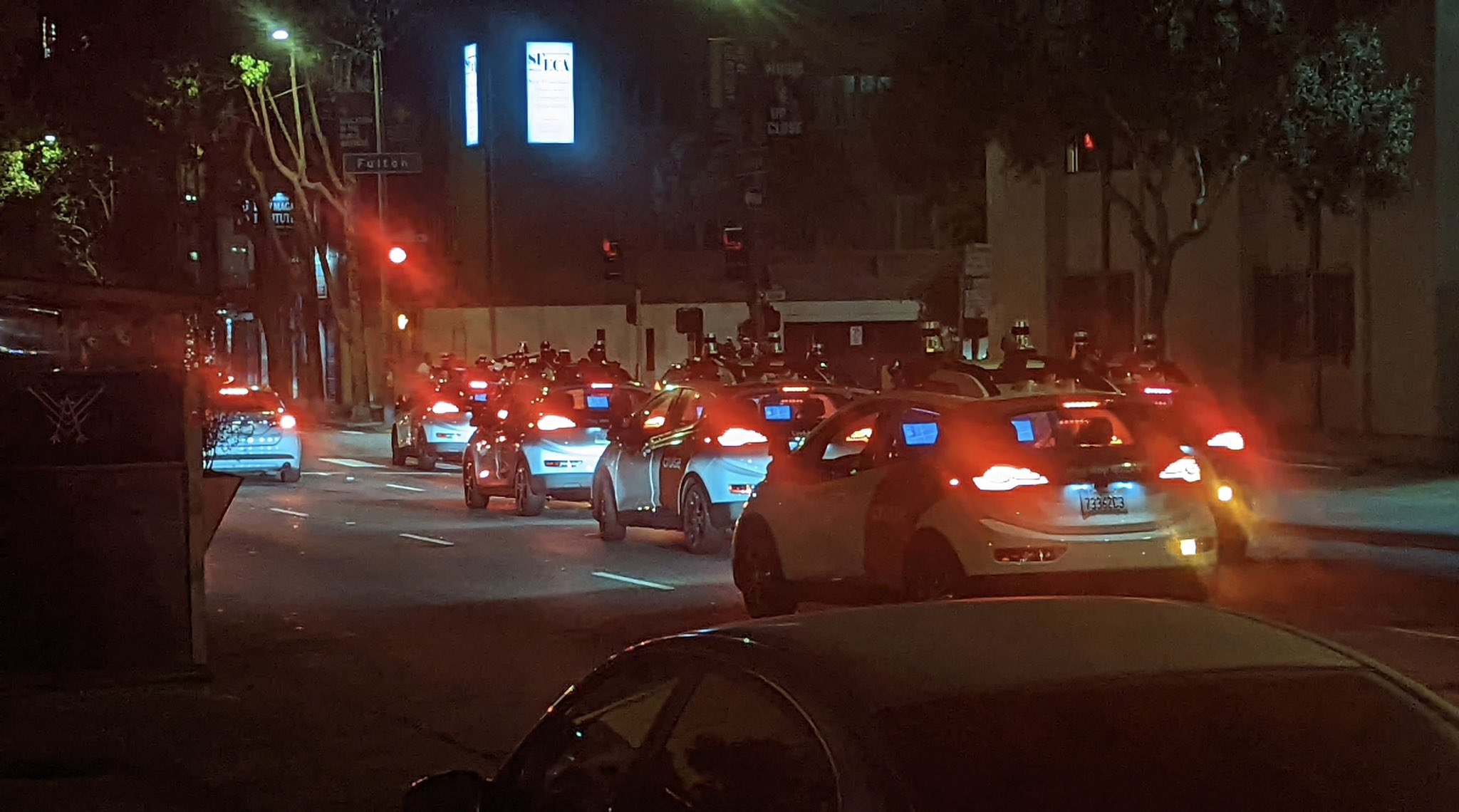
This law is California Senate Bill 1246 (SB 1246), introduced by State Senator Dave Cortese and has been signed by California Governor Gavin Newsom. The law addresses the issue of coordinating with police, fire departments, first responders and local governments after self-driving vehicles malfunction on public roads or enter the scene of an emergency.
According to regulations, starting July 1, 2028, autonomous vehicle operators must provide local first responders with on-site contacts, also known as "local incident technicians." When a self-driving vehicle causes an accident, blocks a road, or interferes with emergency operations, these personnel need to go to the scene to help deal with the problem, rather than allowing firefighters, police, or other first responders to deal with the immobile Robotaxi themselves.
The new law also requires operators to report the location and operating status of vehicles to relevant local governments when systemic failures occur. If a widespread system failure leaves large numbers of self-driving vehicles on the road, local governments would have more direct channels for coordination without having to track down vehicle operators on a vehicle-by-vehicle basis.
The law also imposes new requirements for remote operators. Remote drivers and remote assistants responsible for monitoring, directing, or controlling commercial autonomous vehicles need to be located in the United States and hold a valid U.S. driver's license. For autonomous passenger service vehicles, operators must also maintain a staffing staffing of at least five autonomous vehicles for each remote driver or remote assistant and ensure that these personnel can respond immediately to accidents and emergencies in the vehicles.
At the same time, the technicians responsible for handling the accident on site must also rush to the scene in time. According to relevant requirements, after receiving an accident notification or a request from the first responder or 911 dispatch center, on-site technicians need to be dispatched immediately, and in at least 90% of the cases, arrive at the accident scene within 20 minutes after receiving the notification or request.
The direct background of this legislation is that a series of incidents involving autonomous vehicles interfering with emergency operations have occurred in California in recent years. In the past year, some Robotaxi have been unable to make normal detours near fire, police or other emergency scenes, parked in inappropriate locations, or entered the accident area directly.
The one that is more involved is Waymo. TechCrunch’s previous investigation found that after some self-driving vehicles experienced problems, first responders had to take over the vehicles themselves and move them off the road or from emergency areas. In some cases, firefighters and police officers actually took on vehicle disposal duties that should have been the responsibility of autonomous driving operators.
A large-scale incident also occurred in San Francisco in December 2025. At that time, a substation fire caused a widespread power outage in the city. A large number of Waymo Robotaxi stalled on the road due to power and traffic signal problems, and some vehicles blocked roads and intersections. An analysis document of the relevant California Senate bill stated that when the local government tried to contact Waymo for emergency coordination and technical support, it waited 53 minutes for a response.
In July this year, the U.S. National Highway Traffic Safety Administration (NHTSA) also began to directly put pressure on the autonomous driving industry. NHTSA Administrator Jonathan Morrison sent a letter to self-driving car developers at the time, saying regulators had discovered a "clear pattern" of self-driving cars interfering with the work of police and other first responders, including entering the scene of ongoing emergencies, blocking ambulances and firefighting vehicles, and failing to properly recognize safety signals such as warning lights, traffic cones, flares, smoke and fire. NHTSA requires autonomous driving companies to propose solutions.
California has also strengthened the supervision of autonomous vehicles through other means. New regulations that took effect in April this year require autonomous vehicle operators to establish more complete first responder interaction plans, including providing two-way communication channels, and require companies to respond within 30 seconds after receiving contact from first responders. Local emergency officials can also set up temporary electronic geofences during public safety incidents, requiring self-driving vehicles to leave specific areas or prohibiting new self-driving vehicles from entering.
Therefore, SB 1246 is not the first time that California has strengthened the supervision of Robotaxi emergency response capabilities, but it is to further clarify corporate responsibilities based on existing rules. The previous focus was mainly on establishing communication, remote control and emergency area management mechanisms, while the new law further increases on-site personnel, staffing and local penalty mechanisms.
The new regulations are particularly important for the robotaxi industry because there is a clear difference between self-driving cars and traditional human-driven cars when they malfunction. After an ordinary car breaks down, police, firefighters or tow trucks can usually communicate directly with the owner or driver; but in a self-driving car without a driver inside, first responders may be faced with a vehicle that cannot move according to human instructions. If the operator's remote personnel cannot respond in time, the disposal work that should have been undertaken by the enterprise may be transferred to the public safety department.
Currently Waymo is one of the largest commercial Robotaxi operators in the United States. It has approximately 4,000 commercial self-driving vehicles in the United States, of which approximately 1,200 are located in the San Francisco Bay Area. In addition to Waymo, companies such as Tesla and Zoox are also advancing commercial Robotaxi operations, so the impact of the new law is not limited to one company.
For the Robotaxi industry, another important change is that the relationship between autonomous vehicles and the public safety system is gradually shifting from companies formulating their own emergency plans to the government clearly stipulating minimum standards. Previously, the industry could establish cooperation methods with fire and police based on its own technical system, but the new law requires operators to meet unified response, personnel and on-site support requirements.
This also means that Robotaxi’s operating costs may increase. Not only do companies need to maintain vehicles and autonomous driving systems, they must also establish a 24/7 remote response system and deploy technicians in operating cities who can quickly arrive at the scene of an accident. For smaller self-driving companies with limited fleets, such personnel and infrastructure requirements are particularly likely to increase the fixed costs of commercial operations.
However, the new law does not prohibit Robotaxi from continuing to operate in California, nor does it require self-driving companies to withdraw from specific cities. It does so by allowing autonomous driving services to continue to develop while increasing corporate responsibility and response capabilities in emergencies. The California government has previously made it clear that it hopes to establish clearer rules between the development of autonomous driving technology and public safety through a new regulatory framework.
As Robotaxi gradually enters the stage of large-scale commercial operation from experimental services, how the vehicles cope with fire trucks, ambulances, police cars and accident scenes is likely to become an important practical issue in whether autonomous driving technology can further expand its scale. For the public, what really needs to be verified is not only whether Robotaxi can complete the driving task in a normal road environment, but also when a fire, power outage, traffic accident or other emergency suddenly occurs in the city, whether these cars without drivers can recognize the situation in time, give way to the road, and effectively cooperate with human first responders.
Comments