
Abstract:
A research team from the State University of Campinas in Brazil found that in obese mice, strength training for 7 consecutive days can change some of the molecular signals related to fat decomposition and storage, even if the weight has not yet dropped. The study focused on mesenteric fat - the part of visceral fat that surrounds the intestines. The results showed that the mice in the training group had lower amounts of this type of fat and smaller fat cells; however, the experiment did not prove that short-term training would have the same effect in humans.
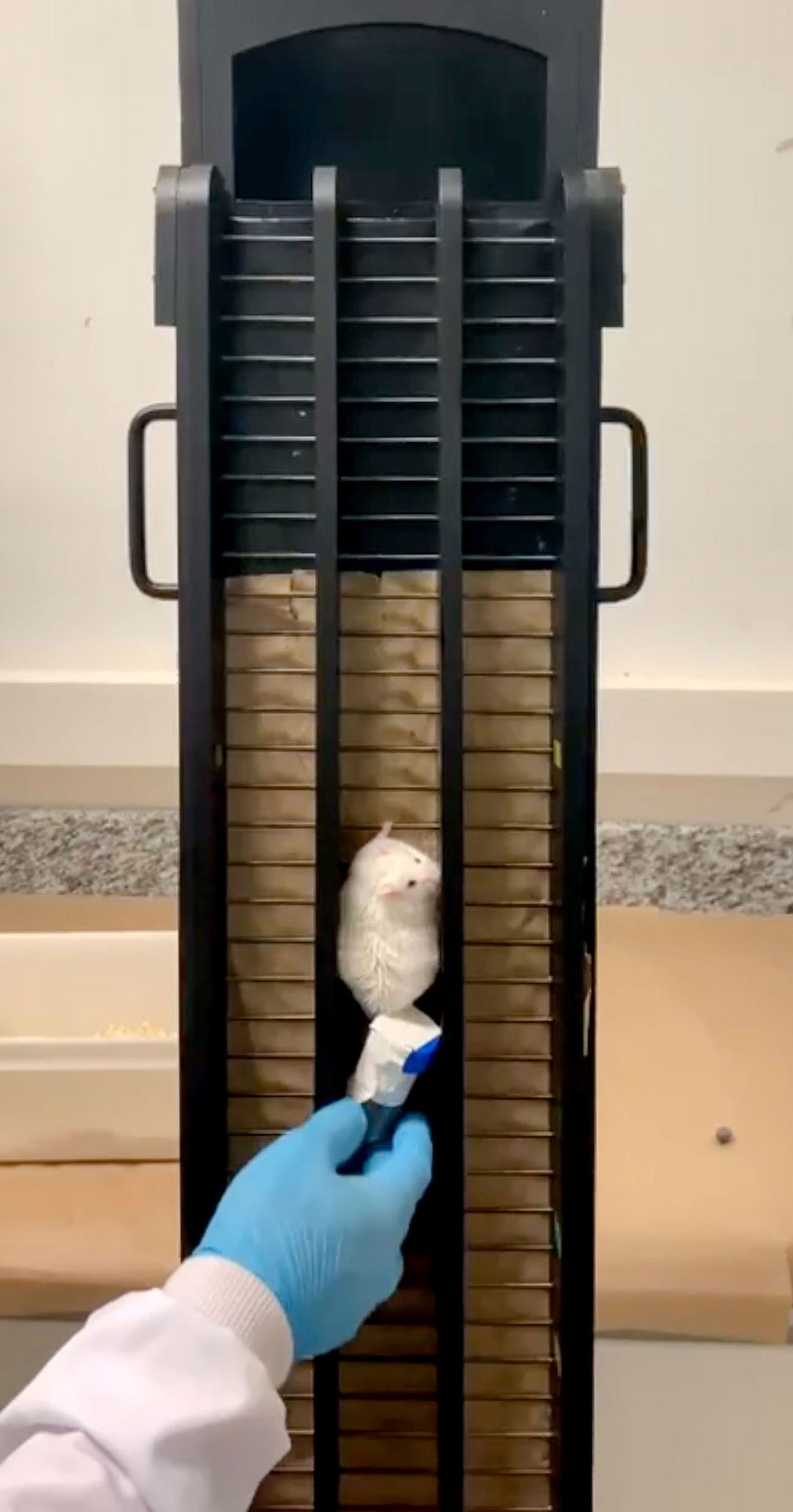
The researchers first let male Swiss mice eat a high-fat diet for 14 consecutive weeks to induce obesity, and then divided them into a sedentary group and a strength training group. The two groups continued to eat the same diet during the experiment to try to distinguish the changes caused by exercise itself. The training simulation method is to let the mice climb a 70-centimeter-high ladder with a tail weight on their backs. Each time they climb 70% of their maximum weight-bearing capacity, they climb 20 times. They rest for 60 to 90 seconds between groups. They train once a day for 7 consecutive days. There is also a normal diet control group.
The research team analyzed the process by which fat cells break down and store fat. Obesity weakens lipolysis signals involving proteins such as PLIN1, ABHD5, and ATGL; after training, ABHD5 gene expression and protein content in mouse adipose tissue increased, and phosphorylated HSL and PLIN1 also increased, indicating enhanced lipolysis-related signals. At the same time, the expression of Scd1 gene, which is involved in fat synthesis, decreased. The researchers also observed a reduction in mesenteric fat mass and adipocyte size, but the mice did not experience a significant decrease in overall body weight or immediate changes in fatty acid composition.
ABHD5 can help activate ATGL, which is involved in breaking down triglycerides in adipocytes; PLIN1 is involved in regulating this process. Research results suggest that strength training may partially restore the lipolysis regulatory mechanism damaged by obesity and reduce fat synthesis-related signals. However, the paper mainly detects molecular indicators such as genes, proteins and phosphorylation, and does not directly measure lipolytic flux, so these changes cannot be simply equated to proven whole-body fat burning or clinical weight loss effects.
The research was published in the journal Life Sciences. The authors pointed out that the experiment only included male mice, analyzed only one type of fat tissue, and the training period was only one week; the research conclusions still need to be verified in longer training periods and other models, and it cannot be inferred that humans will lose weight after one week of strength training. The team plans to continue tracking changes after long-term training and study other fat deposits, such as around the heart. Researchers say that strength training and aerobic exercise activate partly similar and partly different mechanisms at different intensities. If the goal is weight loss, combining the two types of exercise is still a more appropriate strategy.
Comments