
Abstract:
Siemens recently decided to terminate the OpenRadioss project and close its official website and code repository. This means that this professional finite element solver, which was once free to the public and used for car collision, impact and other highly nonlinear dynamics simulations, will no longer continue to develop in its original open source model. For users who rely on OpenRadioss for scientific research, engineering development and performance testing, this decision means the official end of an important open source engineering software project.
OpenRadioss was first launched by Altair and opened to the public in 2022 under the GNU AGPL license. It is derived from Altair's long-standing Radioss solver. Radioss itself is a professional finite element software for explicit dynamics problems. It has long been used in automobile collision safety, explosion impact, drop testing, occupant protection and other complex dynamic load scenarios. OpenRadioss provides a considerable part of its capabilities in open source form to scientific research institutions, developers and engineers.
After being opened, OpenRadioss quickly formed a community around code, documentation, testing and scientific research. Users can directly download the precompiled version for Windows or Linux platforms, or they can compile the source code themselves. Its open source model is especially popular with universities and scientific researchers, because researchers can directly study the internal implementation of the solver and modify the code according to their own research needs without purchasing expensive commercial licenses.
OpenRadioss uses Fortran as the core code language and has a large number of mature functions related to finite element calculations. Its applications include vehicle collision simulation, high-speed impact of materials and structures, lightweight design, battery research, composite materials, human body models, and virtual testing related to autonomous driving. For researchers who need to conduct large-scale numerical simulations, it provides a relatively rare open source explicit dynamics computing platform that can approach industrial-level application scenarios.
However, with Siemens completing its acquisition of Altair in 2025, the future of OpenRadioss is beginning to change. Siemens has now decided to re-centralize Radioss-related research and development into its own Simcenter product system.
Siemens currently states on its official website that OpenRadioss is entering a "new stage". The original OpenRadioss website will be taken down, and users will be directed to Simcenter Radioss and new Radioss R&D projects in the future. Siemens explained that after four years of community-driven research and development, the company hopes to focus future investments on the Simcenter system to accelerate innovation while providing more complete support for production-level simulation users.
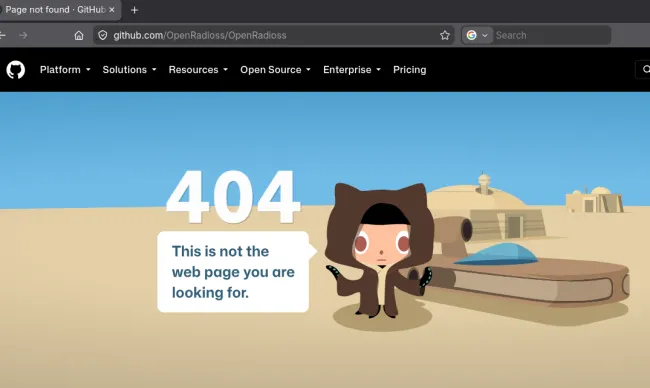
This change not only means that the official website is closed, but OpenRadioss’ previously public GitHub code repository was also inaccessible for a time. For the open source community, the most concerning thing is not the cessation of development of the project, but whether the previously disclosed source code will continue to be saved and provided in an open source manner. Compared with freezing and archiving the project, directly removing the public code will make it difficult for new users to continue to obtain the original version, and will also make it more difficult for the community to maintain their own branches in the future.
The alternatives provided by Siemens are mainly divided into two routes. For production environments, users can turn to the commercial version of Simcenter Radioss. The product continues to provide complete explicit finite element solving capabilities and includes commercial technical support, materials libraries and integration with other Simcenter engineering tools.
For scientific researchers and companies that want to participate in research and development, Siemens has launched the Simcenter Radioss Research and Development Program, also known as SCRDP. Siemens describes it as a company-managed "Shared Source" environment that allows approved universities and industry partners to participate in the development of future explicit dynamics technologies.
SCRDP is significantly different from the traditional open source model. Participants can obtain Simcenter Radioss source code and high-performance computing environment, and can cooperate with Siemens R&D personnel, conduct technical reviews, and participate in discussions on future technology directions. However, this access is not unconditionally open to the public, but requires application and approval.
This also means that the original most important feature of OpenRadioss has undergone fundamental changes. In the past, anyone could download the source code, compile the program, run calculations and participate in development. However, the new Shared Source model controls source code access rights and R&D participation qualifications within Siemens and its approved partners.
From a business perspective, this decision is not difficult to understand. Radioss itself is a professional engineering software that has long been used in the fields of automobiles, aerospace, industrial manufacturing and other fields. The value of commercial simulation software not only comes from the solver itself, but also includes material models, verification systems, technical support, pre- and post-processing tools, and integration with enterprise engineering processes. Siemens concentrates development resources on the commercial Simcenter platform, which can reduce the cost of maintaining two different product systems, and can also allow the technical achievements accumulated by the OpenRadioss community to serve commercial products again.
But from the perspective of the open source software ecosystem, the closure of OpenRadioss still has considerable symbolic significance. It is not a simple experimental open source project, but a solver derived from mature industrial-grade commercial software and once had a complete engineering application background. Its openness allows universities, independent researchers, and small teams that cannot afford expensive commercial licenses to access industrial simulation technologies that were relatively closed in the past.
OpenRadioss is also an important tool in the field of hardware performance testing. Since explicit finite element solving involves a lot of CPU calculations, OpenRadioss can be used for processor performance testing and high-performance computing benchmarks. Michael Larabel, head of Phoronix, has previously included OpenRadioss in his performance testing work, and pointed out that compared with expensive commercial Radioss, the open source version makes CPU testing of such real engineering loads easier to perform.
At present, OpenRadioss will not completely disappear from the Internet instantly. Previously released source code, binaries, and other images may still exist in local archives, caches, and third-party storage, and GitHub historical versions may also continue to be saved through various Internet archiving methods. However, as the official project ceases maintenance, new code, new features, bug fixes, and optimization of new hardware will face uncertainty.
It is worth noting that Siemens has not announced that it will give up Radioss itself. On the contrary, the company is further integrating it into the Simcenter system and has made it clear that the commercial version of Simcenter Radioss and new R&D projects will be the future development direction. Therefore, it is more accurate to say that what ends is the life cycle of OpenRadioss as a public open source project, rather than the industrial simulation technology of Radioss itself.
The experience of OpenRadioss also once again reflects a long-term problem faced by enterprise-led open source projects: even if the software has been made public under an open source license, enterprises may still stop official maintenance due to acquisitions, business strategy adjustments, or product line integration. For users who already rely on such projects to establish scientific research or engineering processes, the real issue is not whether the software can run today, but whether the source code, fixes and support for new platforms will be available in the next few years.
Currently, Siemens hopes to continue to retain the original OpenRadioss user and developer groups through commercial Simcenter Radioss and controlled SCRDP R&D projects, but neither of these two models can completely replicate the free development environment that OpenRadioss opened to everyone in the past. For the open source finite element computing community, a once very influential industrial-level open source project has come to an end.
Learn more:
https://www.siemens.com/en-us/products/simcenter/mechanical-simulation/radioss/rd/
Comments