
Abstract:
European open source office software project Euro-Office has officially expanded its business to desktop platforms and launched independent applications for Windows, macOS and Linux. Previously, this set of office software was mainly run through a browser. The launch of the desktop version means that users can edit documents, spreadsheets and presentations on their local computer just like using traditional Microsoft Office or LibreOffice.
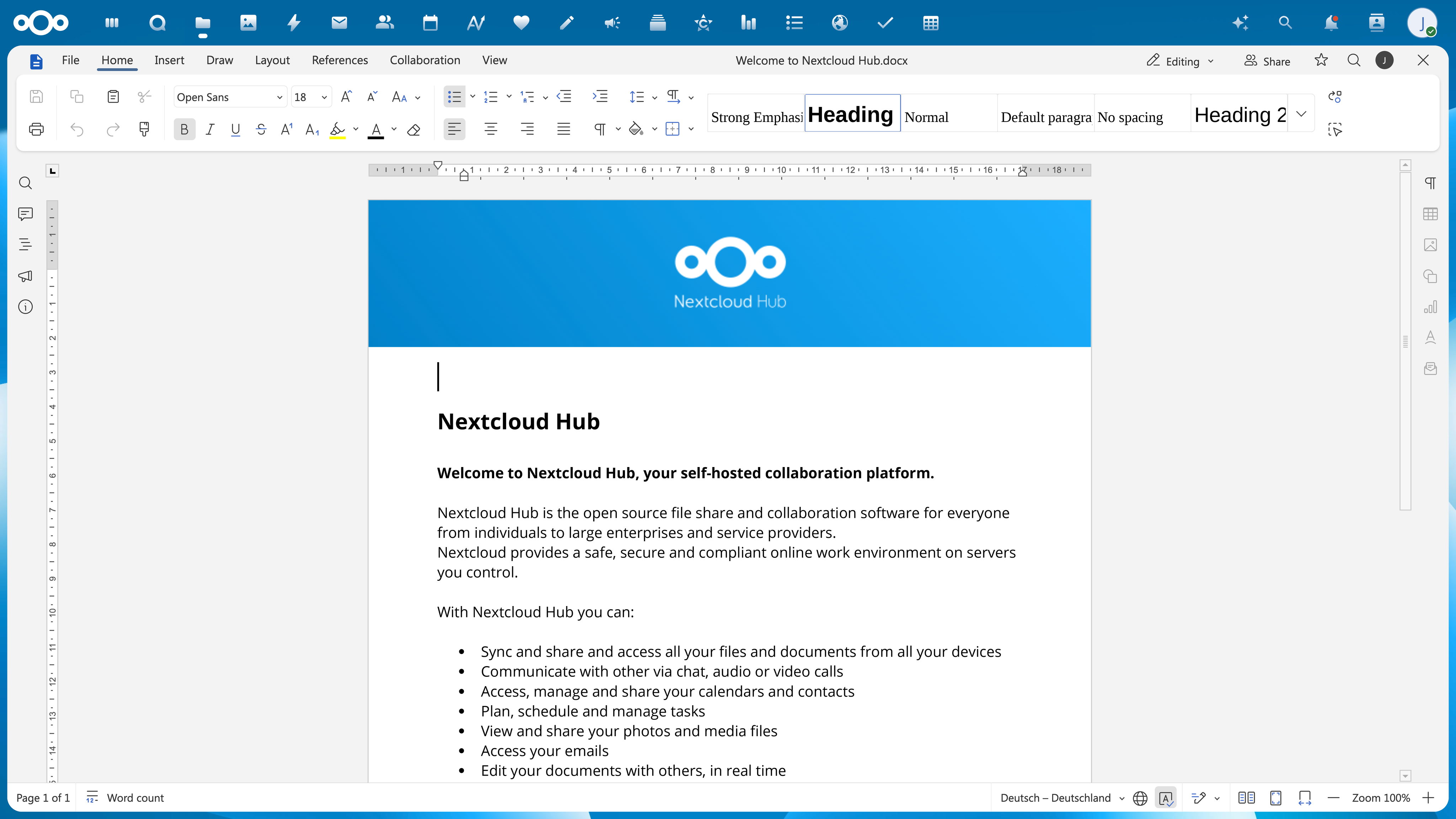
Download address:
https://nextcloud.com/install/#desktop-office
The Euro-Office desktop version is developed by Nextcloud and its partners as an important part of the Nextcloud Hub 26 Summer version. Nextcloud hopes to use this product to provide European enterprises, government agencies and individual users with an office software option that does not rely on large American technology companies.
Euro-Office was initially launched in 2026. It is an open source office software project participated by a number of European companies and organizations. The main participants include Nextcloud, IONOS, Open-Xchange, Office.eu, etc. The project adopts an open source collaboration model and aims to build a European office solution that can compete with Microsoft Office, with particular emphasis on data sovereignty, privacy protection and reducing dependence on non-European software suppliers.
Before the launch of the desktop version, Euro-Office mainly provided services in the form of a browser editor, and users needed to access documents through platforms such as Nextcloud. Although this method is suitable for multi-person collaboration, there is still a certain threshold for users who are accustomed to running Word, Excel and PowerPoint software directly on their computers.
The new desktop app changes that. Users can open and edit documents, sheets, and presentations directly on Windows, macOS, and Linux computers, while still being able to connect to Nextcloud cloud storage for file synchronization and multi-person collaboration. For users who do not need cloud collaboration, files can also be saved locally for use.
In terms of platform compatibility, the software supports the AMD64 and ARM64 architectures of Windows and Linux, and also provides a 64-bit macOS version. Nextcloud said that the desktop client is an important step in bridging the experience gap between Euro-Office and traditional office software.
In addition to the desktop application, Nextcloud Hub 26 Summer also made performance optimizations for the office suite, including improved document filtering and file thumbnail display, allowing users to find and open the files they need faster. Nextcloud said these adjustments make the overall office experience smoother.
The technical foundation of Euro-Office is also worthy of attention. This project is actually a branch project based on the OnlyOffice source code, using the AGPL-3.0 open source license. On the basis of retaining the core functions of the original office software, the development team conducts independent development and adjustments, and jointly promotes product evolution through European companies and open source communities.
However, Euro-Office has been accompanied by controversies about digital sovereignty and open source licensing from its inception. OnlyOffice has questioned the licensing and branding issues of this branch project. At the same time, the Document Foundation behind LibreOffice also criticized Euro-Office for using the OOXML format developed by Microsoft as the default file format, believing that this is somewhat inconsistent with the European digital sovereignty concept emphasized by the project.
OOXML is a document format system long used by Microsoft Office, including common file formats such as DOCX, XLSX and PPTX. Euro-Office supports these formats, which helps users directly open and edit existing Office files, but it also means that it still relies on Microsoft-led document standards.
In contrast, the open document format ODF includes ODT, ODS and ODP, which emphasizes maintenance by open standards organizations and does not rely on a single commercial supplier. Nextcloud said that in reality, a large number of enterprises and individuals still rely on Microsoft Office format, so the project first needs to lower the user migration threshold, and in the future, it hopes to gradually promote users to switch to ODF.
With the launch of the desktop version, the application scope of Euro-Office is expected to be further expanded. This type of product provides a new option for European government agencies and enterprises that want to reduce their reliance on Microsoft software but are unwilling to give up the traditional desktop office experience.
However, whether Euro-Office can truly become a strong competitor to Microsoft Office still depends on long-term compatibility, stability, functional perfection and enterprise-level support capabilities. Not only does office software need to be able to open common files, it must also perform reliably with complex layouts, macros, formulas, collaborative processes, and cross-platform use.
The release of the desktop version at least means that the European open source office software project has taken a step forward from a browser-centered product form to a more complete cross-platform desktop office environment. As European governments and public institutions continue to focus on digital sovereignty, Euro-Office has also gained opportunities to further expand the market.
Comments