
Abstract:
Nowadays, sending express delivery is a very convenient thing. Place an order on your mobile phone, fill in the addresses and phone numbers of the sender and recipient, indicate what you are sending, and then choose a pick-up time. The courier will basically do the rest. After sending it, we can check the logistics at any time, or temporarily block and change the address. It can be said that this set of interlocking processes makes sending express delivery a worry-free task.
But convenience is convenience, and sometimes it can be annoying. The problem lies in some seemingly ordinary operations. For example:
Temporarily changing the door-to-door time, or calling customer service to inquire about the whereabouts of a package, may be recorded as a "complaint order" in the back-end system of some express delivery companies, and then become an assessment of the courier, or even a fine.
It was just a normal consultation or order modification, so why did it become a complaint? How should the rights of all parties be protected?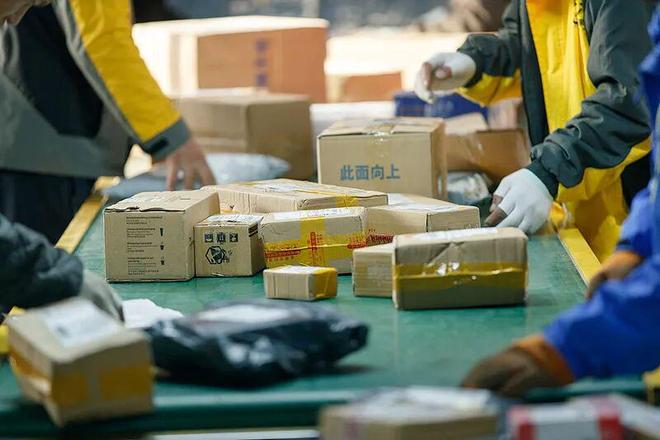
When Mr. Tong from Beijing was returning goods from an online purchase, the merchant complained to the courier company. The courier responsible for the order came to him to ask for an explanation. However, the confused Mr. Tong had no idea what was going on.
Mr. Tong:
The courier started banging on the door with emotion. He was not communicating normally. I later found out that the merchant complained to him for no reason, and then it was an "own goal" between them. The company itself did not verify it clearly and created a "right or wrong work order".The reporter consulted with many couriers and found that it is not uncommon for "incoming calls" - customers calling the customer service hotline, and the system recording an incoming consultation may trigger assessments or even fines.
A courier reflected this:
If there is a problem with your express delivery, please contact me as soon as possible and we will help you solve it as soon as possible. Please do not contact the platform or merchants, because every time you enter a line, a work order will be generated - a false signature or complaint work order. The minimum fine for each work order starts at 50 yuan.Nowadays, express delivery fines are really varied. Just asking is considered a complaint.
There are even cases online where consumers, after learning the truth, took the initiative to find the platform to explain clearly and request the withdrawal of the complaint, but the courier was still not exempted from punishment.
The reporter consulted couriers from different express companies about canceling orders and changing shipping times. The responses were not entirely unanimous. A courier from a large direct-operated express delivery company told reporters that no matter what customers want to consult, they should try not to call customer service and go to him directly if they have any questions. As for whether or not there will be a penalty after entering the line, and how much, his answer is "maybe".
A courier:
Sometimes the fine is 200, sometimes the fine is 100, and sometimes the client doesn't fine him even if he comes to him several times, maybe.Another courier told reporters that even if it is a normal cancellation of shipment, do not operate it on the APP, just tell them.
B courier:
If you want to cancel the express delivery order, we can just cancel it. You don’t need to cancel it. During our peak period in the first two days, there will be penalties for cancellation.However, this regulation does not apply to all express delivery companies. Some couriers said that customers will not penalize the courier if they change the pickup time through the platform. The courier will only be assessed if he changes it himself.
C
Courier:
It's okay for you to change it, but we can't change it. We can't time out or change the time.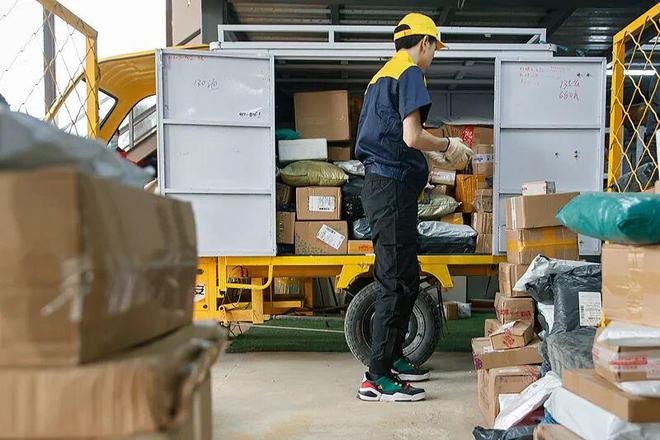
The rules and enforcement methods vary, but many couriers have expressed the same concern: when customers enter the line, they may have to pay the price. Faced with unreasonable deductions, why don't they appeal through corporate channels, but instead ask consumers not to call customer service?
Labor law expert Huang Leping:
Compared with the platform, the courier is relatively weak. Even if he has claims to assert his rights, he may not dare to express his willingness to protect his rights. It may also be directly related to whether he will be blacklisted by the courier company in the next step, or his delivery qualifications will be cancelled. Industry associations also lack necessary supervision over express delivery companies' management methods that are not standardized or do not comply with legal requirements.Huang Leping also pointed out that this management method harms not only the rights and interests of couriers. As a result, consumers may not dare to consult or complain normally, and problems between companies and consumers may also turn into disharmony between couriers and consumers.
Why does "assessment upon entering the line and custody with penalties" appear repeatedly at the end of express delivery?
Yang Daqing, Secretary General of the Port and Shipping Supply Chain Branch of China Federation of Logistics and Purchasing
It is believed that direct-operated companies are also likely to undergo in-line assessment; while in franchised express delivery companies, there is still a layer of management and income distribution relationships between the headquarters, franchise outlets and couriers, making it easier for "penalty management" to occur.Yang Daqing:
The headquarters, franchisees and couriers are actually three independent stakeholders. The outlet owner is responsible for his own profits and losses. He contracts an area in batches and pays the bills and fines to the headquarters. His income mainly comes from distribution fees. Relatively speaking, the profits are relatively thin and the risks are large. Therefore, in this case, fines will be used as escrow.Yang Daqing said that the key to resolving conflicts is not to make consumers make fewer phone calls, but to dismantle the automatic binding between incoming calls and penalties. The first thing to change is the work order classification of customer calls.
Yang Daqing:
The first thing companies should change is to classify intentions at the source of customer service tickets. Cutting off incoming lines is equivalent to a negative assessment and a hard binding that automatically triggers the penalty process. First, users should set clear user intention options when entering the line to avoid misjudgment. The second step is to manually review the details to solve the problem where users cannot explain clearly or even choose the wrong category. Branches and headquarters are prohibited from re-labeling, and back-end personnel are not allowed to privately change consultation work orders into complaint work orders to make up for the assessment, and couriers will be fined. Changes to background labels must be logged, and postal supervision can conduct spot checks.The State Post Bureau’s work plan for 2026 has clearly stated that it will balance the distribution of interests among corporate headquarters, franchisees, and couriers, and protect the legitimate rights and interests of practitioners. Implement "penetrating" supervision to correct unreasonable management behaviors of enterprises such as differentiated payment of fees and "immediate punishment upon complaint".
Yang Daqing suggested that express delivery companies should tighten their fine authority and establish a reverse accountability mechanism to give couriers room to appeal.
Yang Daqing:
The pressure on the headquarters' indicators is still there, and with the thin profits of the outlets, fines are a low-cost control method. Therefore, in order to control the disguised fines of outlets, the core idea is to withdraw the power of fines, and the entire link of fines must be traced. The other is a channel for couriers to appeal, which goes directly to the headquarters. Supervision must establish a reverse accountability mechanism, that is, whoever violates the regulations will be fined by the outlets, together with the person in charge of the outlets, instead of just relying on the headquarters to verbally notify the outlets to self-discipline.Source
| CCTV News (Voice of China, China Central Radio and Television)WeChat editor
| Su Xiao
Comments