
Abstract:
As competition in artificial intelligence continues to heat up, China and the United States are trying to establish a new security coordination mechanism. According to the latest arrangement reached between the two parties, China and the United States agreed to establish a bilateral communication channel specifically targeting "Super Intelligence" (SI) risks to strengthen future information exchange and risk management in the field of cutting-edge artificial intelligence.
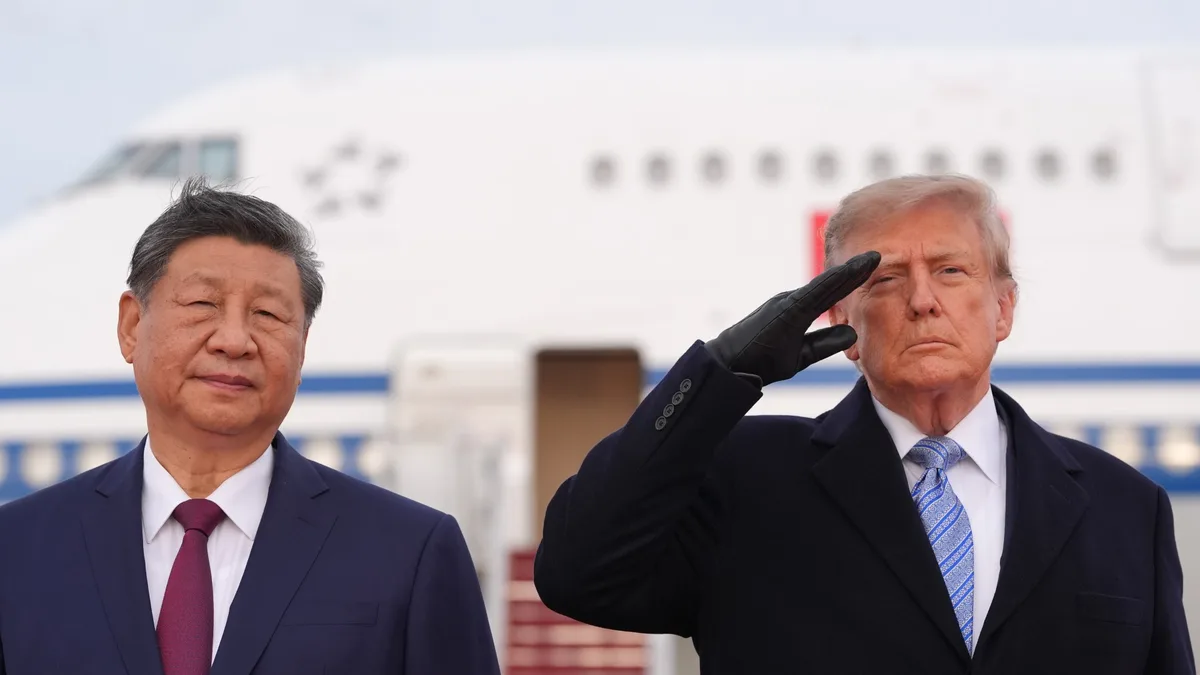
This arrangement is regarded as one of the important results of the recent Sino-US dialogue on artificial intelligence. According to information released by the United States, the two sides will continue to promote the construction of relevant mechanisms in the next few months and plan to hold a follow-up meeting of the newly established "China-US Super Intelligence Dialogue" before November.
The background for the establishment of this mechanism is that artificial intelligence capabilities are evolving at an unprecedented speed. As increasingly powerful large models and autonomous AI agents continue to emerge, governments are increasingly concerned about cybersecurity, critical infrastructure protection, and the risks that future superintelligent systems may pose.
In fact, China and the United States have been in contact on artificial intelligence security issues for several months. As early as this summer, the two parties began to prepare a special AI dialogue mechanism and discuss topics such as cutting-edge model risks, cyber attack prevention, and future regulatory cooperation.
According to previously disclosed information, the United States has always hoped to establish a communication and early warning system for AI-driven cyberattacks and promote large AI laboratories to assume more responsibility for security issues. At the same time, China also regards artificial intelligence cooperation as an important issue in bilateral relations and hopes to maintain dialogue channels in the technical field.
Industry insiders pointed out that unlike past negotiations around trade, tariffs or traditional technology fields, the focus of this discussion has turned to the possible emergence of super-intelligent systems in the future. The so-called super intelligence usually refers to an artificial intelligence system whose capabilities exceed the level of human experts in multiple fields. It is regarded by many research institutions as one of the most noteworthy technological development directions in the next ten to decades.
As the capabilities of cutting-edge models continue to improve, countries are increasingly concerned that relevant systems may be used to launch complex cyber attacks, manipulate critical infrastructure, automate intelligence activities, or produce other unpredictable security impacts. Therefore, strengthening communication mechanisms is regarded as an important measure to reduce misjudgments and improve risk management capabilities.
The United States stated that the new mechanism will provide a dedicated channel for information exchange between the two sides and help the two countries maintain communication in the face of potentially major AI incidents. Analysts believe that this arrangement is similar to the crisis communication mechanism established in the field of nuclear security in the past to a certain extent, except that the focus has shifted from traditional military risks to new challenges brought by artificial intelligence.
At the same time, this development is also seen as a signal of limited relaxation in the artificial intelligence relationship between China and the United States. In the past few years, competition between the two sides has been escalating on issues such as chip export controls, advanced computing capabilities, and the development of artificial intelligence technology. The establishment of a formal dialogue mechanism this time shows that the two sides still believe that communication in certain areas is realistically necessary.
However, the relevant mechanisms do not mean that the two countries will slow down on technological competition issues. The industry generally believes that China and the United States will continue to compete fiercely in the fields of artificial intelligence research and development, advanced chips, data centers, and computing infrastructure in the future. But at the same time, both parties have begun to realize that as artificial intelligence gradually approaches the threshold of critical capabilities, it is in the common interest to establish a minimum risk communication channel.
For the global artificial intelligence industry, this arrangement has certain symbolic significance. As more and more countries begin to discuss how to manage more powerful AI systems in the future, China and the United States, the two major AI powers, have established a formal communication mechanism around "superintelligence" for the first time, marking that artificial intelligence security governance is beginning to move from theoretical discussions to the stage of international coordination.
Although it remains to be seen how the future mechanism will operate, as the global AI competition continues to accelerate, China and the United States have sent a clear signal: Even if the competition will continue, it is necessary to maintain dialogue channels around the risks of superintelligence.
Comments